ABSTRACT
Rapid population aging, urbanization, and changes in family structure across Asia have reshaped social problems. Although earlier policies focused on alleviating material poverty, many Asian societies now face growing challenges related to social isolation, loneliness, and the care gap among older adults. In Japan, the decline in multigenerational households and the rise of single-person elderly households have substantially reduced everyday social interactions. Consequently, many older adults, particularly those experiencing cognitive or physical decline, have limited social support and an increased vulnerability. Under these conditions, conventional sectoral policies treating agriculture, welfare, and healthcare as separate domains are insufficient. Instead, integrated frameworks supporting social participation, meaningful activities, and community-based care are required. In this context, agriculture is increasingly reconsidered not only as a sector of food production but also as a potential platform for care, inclusion, and social connection. In Japan, this shift has been reflected in the development of “noufuku renkei” (agriculture–welfare collaboration), supported by government initiatives and the establishment of the Social Farming Academic Society of Japan. This study synthesizes international literature and empirical studies conducted in Japan to examine the emerging role of agriculture as a social infrastructure in aging societies. Accumulating empirical evidence supports care-oriented agriculture. Early studies in Japan developed dementia care programs based on rice farming in Niigata Prefecture and demonstrated high feasibility and participation rates. Improvements in the quality of life, specific cognitive functions, and applicability to older adults with psychiatric conditions have been demonstrated. Care farms can produce greater improvements in quality of life than conventional day-care services. Urban adaptations of this model in Tokyo have demonstrated benefits, including enhanced social interaction. Participation in agricultural activities has been associated with improved mental health among care staff and may serve as a form of post-diagnostic support for people with dementia, addressing the “blank period” that often follows diagnosis. Beyond the clinical outcomes, agricultural environments may promote well-being through shared productive activities, reduced hierarchical roles, and engagement in natural processes. Taken together, these findings suggest that agriculture can function as a form of social infrastructure that supports participation, care, and community resilience in aging societies.
Keywords: Social farming, Care farms, Population aging, Agriculture–welfare collaboration, Community-based care
INTRODUCTION
The unspoken challenge facing agriculture in Asia
Agriculture is one of the few social spaces in which productive activities, social participation, and intergenerational interactions can coexist. Across Asia, rapid population aging, accelerated urbanization, and sustained economic development occur simultaneously (Asian Development Bank, 2023; United Nations, 2019). Together, these structural transformations have reshaped nature and spatial distribution of social problems. Whereas earlier rural policies targeted absolute poverty, addressing deficits in food, clothing, and housing, such forms of deprivation have substantially declined in many Asian countries, as economic growth has reduced extreme poverty (World Bank, 2022). Instead, new challenges have emerged, particularly among older adults living in urban settings, many of whom experience cognitive decline, such as dementia, and physical decline, such as frailty. In this context, social isolation, loneliness, and gaps in care provision have become increasingly prevalent (World Health Organization, 2023).
Urbanization in Asia has proceeded on an unprecedented scale, driven by large-scale rural-to-urban migration and demographic concentration in metropolitan areas (United Nations, 2019). Simultaneously, family structures have changed markedly. In Japan, more than half of households with older adults consisted of three-generation families in 1980 (50.1%), but this proportion has decreased to 7.1%. By 2025, households consisting of two older adults accounted for 32.1%, whereas households with older adults living alone accounted for 31.8% (Cabinet Office, 2025). These trends, combined with rapid population aging, are producing a growing number of older adults who live alone, often with limited social ties and reduced access to informal care.
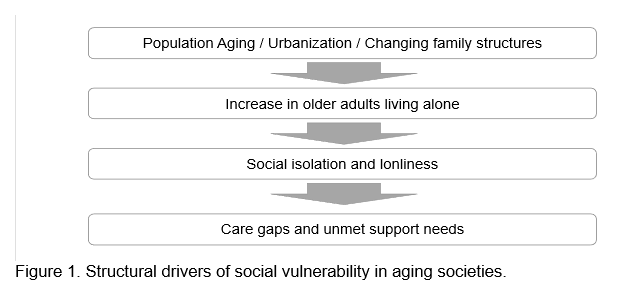
Of the older adults living alone in Japan, the proportion reporting that they talk with someone “every day” has gradually declined to less than 40%, whereas more than half report days when they do not speak with anyone (Cabinet Office, 2025). Importantly, social problems have shifted from material deprivation in rural communities to social disconnection and care vulnerability in both urban and depopulated rural regions (Asian Development Bank, 2023; World Health Organization, 2023). These structural changes, including population aging, large-scale urbanization, and shifts in family structure—are associated with the decline of multigenerational households and the increasing number of older adults living alone, which in turn contribute to higher risks of social isolation, loneliness, and gaps in care provision. This broader context provides the basis for exploring new roles of agriculture as a platform for social participation and community-based care (Figure 1).
The need for a new concept of care
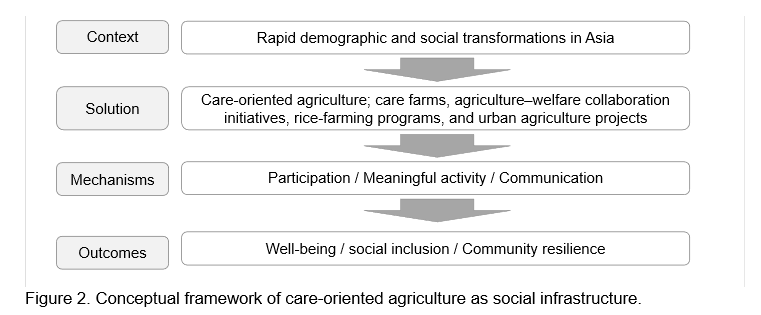
Under these conditions, conventional sectoral approaches that treat agriculture, welfare, and health policy as separate domains have become increasingly inadequate. What is required is the re-orientation of rural and social policies toward integrated frameworks that address social participation, meaningful activities, and community-based care (World Health Organization, 2017). Agriculture, traditionally conceptualized as an economic sector focused on food production, is now being re-interpreted as a potential site of care, inclusion, and social connection. In Japan, this policy and conceptual shift have become particularly visible through the development of “noufuku renkei” (agriculture–welfare collaboration). The Japanese government has promoted this concept through cross-ministerial initiatives such as the Noufuku Renkei Vision. In addition, the establishment of the Social Farming Academic Society of Japan (日本農福連携学会) has contributed to consolidating care-oriented agriculture as a distinct interdisciplinary field (Social Farming Academic Society of Japan, 2024) . These initiatives engage older adults, people with disabilities, and individuals with dementia in agricultural activities that emphasize participation, routine, embodied engagement, and social contribution, rather than productivity alone. These practices resonate with international discussions on social prescriptions, community-based integrated care, and age-friendly environments (World Health Organization, 2017, 2023). Within this context, care-oriented agriculture—including care farms, agriculture–welfare collaboration initiatives (“noufuku renkei”), rice-farming programs, and urban agriculture projects—can be understood as a policy response to the increasing risks of social isolation and care gaps among older adults. Through mechanisms such as meaningful daily activities, social participation, interpersonal interaction, and engagement with natural environments, these approaches may contribute to improved well-being, social inclusion, and community resilience (Figure 2).
Aim of this paper
It is important to examine how agricultural environments contribute to new forms of care and social participation in aging societies. This study examined the emerging role of agriculture as social infrastructure in aging societies by synthesizing evidence from care farming research in Japan and discussing its implications for policy and future research.
MATERIALS AND METHODS
This study combines a narrative review of international literature on care farming with an analysis of empirical studies conducted in Japan and policy developments related to agriculture–welfare collaboration. The evidence was synthesized from peer-reviewed articles, program evaluations, and policy documents.
RESULTS
The following sections summarize empirical and policy-related evidence on care-oriented agriculture in Japan.
Basic evidence from Japan
A new type of dementia care delivered in farm settings has emerged in the Netherlands (Schols & van der Schriek-van Meel, 2006). These programs are empowerment-oriented, strength-based, and community-based services designed to improve the quality of life of people with dementia (Hassink et al., 2010). As studies focusing on medical outcomes tend to use the term “care farm”, this term is adopted throughout the following section. In Japan, care farm-based approaches have been developed with reference to Dutch models while being adapted to Asian climatic, cultural, and social contexts. Medical evidence supporting care farms has begun to accumulate in the Japanese healthcare sector. The first empirical medical studies in Japan and, more broadly, in Asia focused on rice cultivation, the region's staple food.
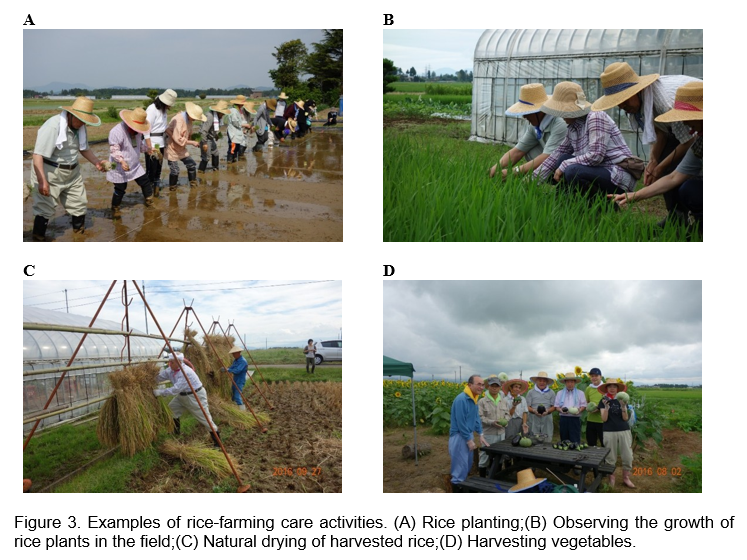
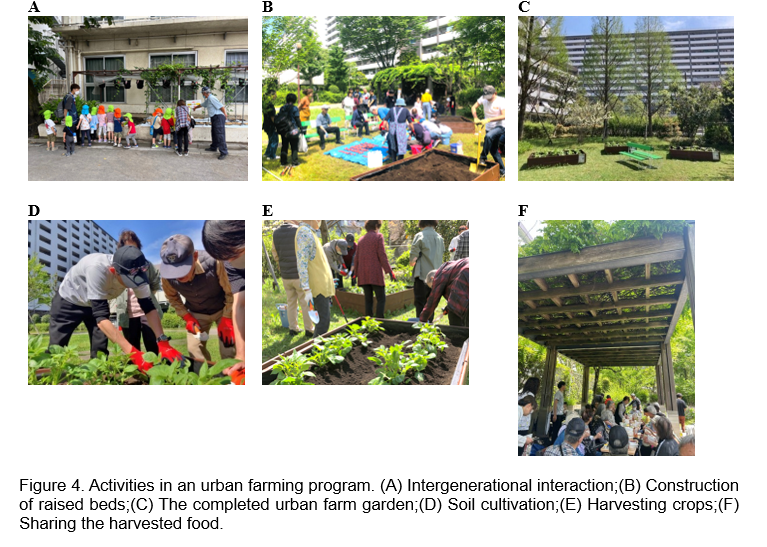
Ura et al. at the Tokyo Metropolitan Institute for Geriatrics and Gerontology developed a dementia care program based on rice farming in Niigata Prefecture, a major rice-producing area in Japan (Figure 3). This program was feasible in real-world settings and achieved an exceptionally high participation rate (Ura et al., 2018). Using pre–post comparisons, the program demonstrated improvements in quality of life (Ura et al., 2018), enhanced specific domains of cognitive function (Okamura et al., 2019), and applicability not only to people with dementia but also to older adults with psychiatric disorders (Yamazaki et al., 2019). Building on these findings, a comparative study was conducted between standard daycare services and care farms, demonstrating that care farms yield superior improvements in the quality of life (Ura et al., 2021). Following these rural studies, care farm models were developed in urban settings (Figure 4). In the densely populated areas of Tokyo, an urban care farm was established, and pre–post analyses confirmed improvements in participants’ quality of life and increased interpersonal interaction (Ura et al., 2022). Secondary analyses focusing on socially withdrawn younger individuals (hikikomori”) suggest that engagement in agricultural activities may play a promising role in their recovery processes (Yamazaki et al., 2021, 2023).
Policy evidence from Japan: Improvement in staff mental health
Japan is widely recognized as having the world’s most aged population, with the highest proportion of older adults among OECD countries (OECD, 2023; United Nations, 2022). Under its universal health insurance and long-term care insurance systems, access to healthcare and long-term care services is broadly ensured for all citizens when functional decline occurs (World Health Organization, 2017). From another perspective, international comparisons indicate that Japan has a relatively high number of hospital beds per capita and longer average lengths of hospital stay than many other countries, reflecting the structure and utilization patterns of its healthcare system (OECD, 2023). The mental health of care professionals who provide daily care to older adults with cognitive and physical decline in institutional settings is extremely poor (Ura et al., 2021). Therefore, preventing burnouts and abuse among care staff has become a critical challenge. In studies by Ura et al., the mental health of frontline hospital staff was assessed, and participation in care farm–related activities was found to be associated with reduced burnout symptoms (Ura et al., 2026). These findings suggest that care-oriented agriculture may function not only as a care intervention for service users, but also as an occupational health intervention for care professionals. Figure 5 shows strawberry fields in a psychiatric hospital.
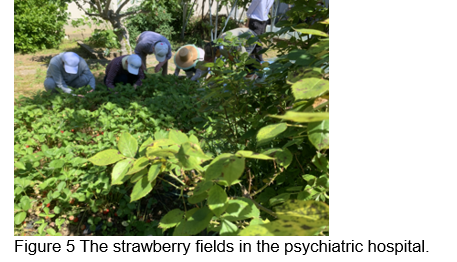
Policy evidence from Japan: Care farms as post-diagnostic support for dementia
A 2022 report by Alzheimer’s Disease International begins with the statement:
“We should not encourage people to receive a diagnosis if post-diagnostic support is not available.” (Gauthier et al., 2022)
Japan represents a rare case in which dementia can be diagnosed early and accurately nationwide using advanced imaging modalities such as magnetic resonance imaging and positron emission tomography under the universal health insurance system. Furthermore, once physical function declines, individuals receive comprehensive support from the long-term care insurance system. However, an early diagnosis creates a gap in support. For several years following a dementia diagnosis, many individuals remain physically well yet become socially isolated. People with dementia described this period as a “blank period” (Okamura et al., 2026). To address this gap, a project was implemented to connect individuals to care farms immediately after diagnosis and its feasibility was successfully demonstrated (Figure 6). These findings suggest that early linkage to care farms may reduce the healthcare costs associated with social isolation and loneliness, while also potentially lowering long-term care costs by promoting autonomy and sustained functioning.
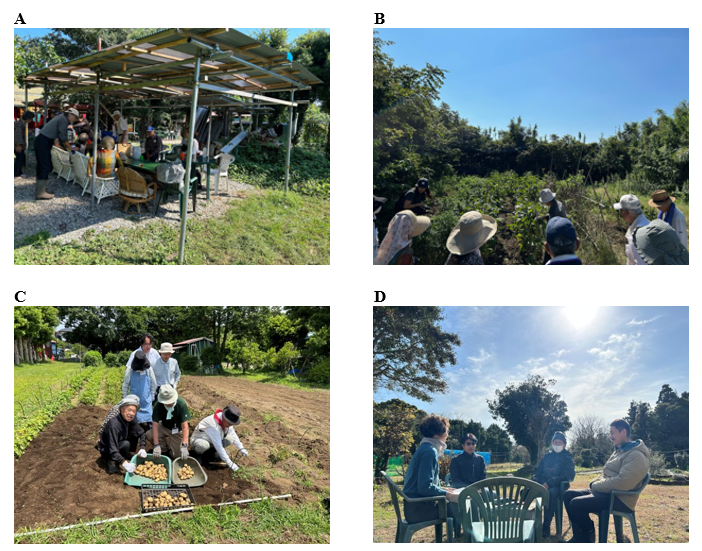
Figure 6. A care farm connected to post-diagnostic support for people with dementia. (A) Participants enjoying tea together;(B) The farm in summer;(C) Harvesting potatoes;(D) Staff members participating and enjoying the activities.
DISCUSSION
The findings of this study suggest that agriculture can serve as an important form of social infrastructure in aging societies.
Social and experiential mechanisms
Beyond clinical outcomes, several social and experiential mechanisms may explain why agricultural environments support wellbeing. Human societies have cultivated land for more than 10,000 years, and social institutions have historically developed in close relation to agriculture. In contrast, the industrial and information revolutions are relatively recent phenomena that have transformed the structure of everyday life. In conventional care environments, a rigid distinction between “care provider” and “care recipient” can emerge. These structures may contribute to burnout and abuse. However, in agricultural settings, participants often engage in shared productive activities. Cooperation is necessary, and hierarchical distinctions may be less pronounced.
Crops emerge from seeds and grow into mature plants, which is an everyday yet profoundly mysterious phenomenon that ultimately reflects the forces of nature rather than those of human control. Through such experiences, participants may feel part of a broader natural system. These observations should be interpreted as conceptual reflections rather than empirical findings. However, they may help explain the appeal of agricultural activities in the context of care.
Differences between Europe and Asia
Care-oriented agriculture developed in various agricultural and cultural contexts. In Europe, care farms are typically based on livestock or horticultural farming systems and are often organized as therapeutic environments that support rehabilitation and social participation. In contrast, many Asian agricultural systems, particularly rice farming, have historically involved collective labor and strong community participation. These characteristics may create favorable conditions for socially inclusive agricultural activities. Despite these differences in the agricultural structure and cultural context, both pathways can support similar outcomes, including improved well-being, social participation, and community resilience. The different historical pathways of care-oriented agriculture in Europe and Asia are summarized in Table 1.
Table 1 Two pathways of care-oriented agriculture: European care farm models and Asian community-based agricultural traditions
|
Classification
|
European model
|
Asian model
|
|
Form
|
Care farms
|
Rice-farming–based programs
|
|
Agricultural Activity
|
Livestock, Horticulture
|
Traditional community agriculture
|
|
Primary Focus
|
Therapeutic and rehabilitative
|
Community participation and social engagement
|
|
Shared outcomes
|
Well-being, social participation, community resilience
|
Policy implications
From a policy perspective, agriculture should be recognized not only as a sector of food production but also as a form of social infrastructure that contributes to public health, social inclusion, and community resilience. In rapidly aging societies, agriculture may no longer be understood solely as a system of food production but also as a foundation for social participation, care, and human connection.
Establishment of the academic society
In Japanese society, farmers have long supported nearby nursing homes and care facilities by providing agricultural activities to residents, often on a voluntary basis or for only modest compensation. Similarly, hospitals and long-term care staff frequently create gardening or farming opportunities for service users based on personal interests or goodwill. However, these activities have rarely been recognized as formal forms of care, and systematic data collection and outcome evaluations are generally limited. In contrast, the Netherlands has produced a substantial body of academically robust evidence on care farming. In Japan, although professional qualifications for horticultural therapists exist, they are not integrated into the medical or long-term care reimbursement systems. This gap in recognition represents a substantial loss, not only for global academia but also for Japanese society itself. Effective, culturally embedded practices for coping with demographic aging remain underutilized and undertheorized.
In response, the Social Farming Academic Society of Japan (日本農福連携学会) was established in December 2025 to connect practical field knowledge with academic research and facilitate systematic knowledge exchange.
Call for international collaboration
The challenges addressed in this review—population aging, social isolation, care workforce burnout, and the need for meaningful participation—are not unique to Japan but are shared across many societies worldwide. Care-oriented agriculture offers a culturally adaptable and potentially scalable response to these global issues. However, development requires international collaboration that bridges disciplines, sectors, and regions.
Future research directions
The emerging role of agriculture as a platform for social participation and community-based care in aging societies warrants further interdisciplinary research. Future studies should examine the long-term health, social, and economic impacts of care-oriented agriculture, including its potential to reduce healthcare expenditure associated with social isolation and functional decline.
Limitations
This study had several limitations. It was not a systematic review; rather, it synthesized selected literature and policy developments using a narrative approach, which may limit the comprehensiveness of the evidence. Much of the empirical evidence discussed here originates from studies conducted in Japan, and the extent to which these findings can be generalized to other cultural and institutional contexts is unclear. Many existing studies have involved relatively small sample sizes or single-site interventions, which may limit their generalizability. The mechanisms by which agricultural environments promote well-being and social participation require further interdisciplinary investigation. These limitations highlight the need for larger multisite studies and international comparative research.
CONCLUSION
In rapidly aging societies, agriculture may no longer be understood solely as a system of food production but also as a form of social infrastructure that supports participation, care, and community resilience. Therefore, recognizing agriculture as social infrastructure may open new pathways to address social isolation, workforce burnout, and sustainable care in aging societies.
ACKNOWLEDGEMENTS
The authors thank the healthcare professionals who participated in this study. We are also grateful to Professor Yukisato Yoshida and Visiting Professor Masahiro Toyoda for pioneering the universal farm movement in Japan. We would also like to thank farmers and community members.
This study was supported by the Health Labor Sciences Research Grant (24GB1003) and the Tokyo Metropolitan Government (Integrated Research Initiative for Living Well with Dementia). The funders had no role in the design of the study, analysis or interpretation of the literature, or writing of the manuscript.
CONFLICT OF INTEREST
The authors declare that they have no conflict of interest.
ETHICAL APPROVAL
Not applicable. This article presents a narrative review of the previously published studies and publicly available data.
DATA AVAILABILITY
No new data was generated or analyzed in this study.
REFERENCES
Asian Development Bank. (2023). Aging well in Asia. Asian Development Bank.
Cabinet Office, Government of Japan. (2025). Annual report on the aging society. Cabinet Office.
Gauthier, S., Webster, C., Servaes, S., Morais, J. A., & Rosa-Neto, P. (2022). World Alzheimer report 2022: Life after diagnosis – Navigating treatment, care, and support. Alzheimer’s Disease International. London, England.
Hassink, J., Elings, M., Zweekhorst, M., van den Nieuwenhuizen, N., & Smit, A. (2010). Care farms in the Netherlands: Attractive empowerment-oriented and strengths-based practices in the community. Health & Place, 16(3), 423–430. https://doi.org/10.1016/j.healthplace.2009.10.016
OECD. (2023). Health at a Glance 2023: OECD Indicators. OECD Publishing. https://doi.org/10.1787/7a7afb35-en
Okamura, T., Ura, C., Yamazaki, S., Eboshida, A., & Kawamuro, Y. (2019). Green care farm as a new tool for inclusion of older people with various challenges in the super-aged community. International Journal of Geriatric Psychiatry, 34, 777–778.
Okamura, T., Wakui, T., Iti, K., & Yabuki, T. (2026). Factors related to delayed diagnosis and care access in dementia: A preliminary descriptive study of the “blank period” in Japan. Psychogeriatrics, 26(1), e70134. https://doi.org/10.1111/psyg.70134
Schols, J. M., & van der Schriek-van Meel, C. (2006). Day care for demented elderly in a dairy farm setting: Positive first impressions. Journal of the American Medical Directors Association, 7(7), 456–459. https://doi.org/10.1016/j.jamda.2006.05.011
Social Farming Academic Society of Japan. (2024). Founding statement and activities. Social Farming Academic Society of Japan.
United Nations, Department of Economic and Social Affairs. (2019). World urbanization prospects: The 2018 revision. United Nations.
United Nations. (2022). World Population Ageing 2022 Highlights. United Nations.
Ura, C., Okamura, T., Takase, A., Shimmei, M., & Ogawa, Y. (2021). Mental well-being of staff in long-term care facilities at risk. Geriatrics & Gerontology International, 21(10), 966–967. https://doi.org/10.1111/ggi.14260
Ura, C., Okamura, T., Yamazaki, S., Eboshida, A., & Kawamuro, Y. (2018). Development of agriculture-based care for social inclusion of older adults with cognitive impairment: Feasibility of a rice-farming program. Japanese Journal of Geriatrics, 55, 106–116. (in Japanese)
Ura, C., Okamura, T., Yamazaki, S., Eboshida, A., & Kawamuro, Y. (2018). Rice-farming care for elderly people with cognitive impairment in Japan: A case series. International Journal of Geriatric Psychiatry, 33, 435–437.
Ura, C., Okamura, T., Yamazaki, S., Eboshida, A., & Kawamuro, Y. (2021). Rice farming care as a novel method of green care farm in East Asian context: An implementation research. BMC Geriatrics, 21, 237. https://doi.org/10.1186/s12877-021-02195-3
Ura, C., Okamura, T., Yamazaki, S., Eboshida, A., & Kawamuro, Y. (2022). Living for the city: Feasibility study of a dementia-friendly care farm in an urban area. International Journal of Geriatric Psychiatry, 37, e5794. https://doi.org/10.1002/gps.5794
Ura, C., Okamura, T., Yamazaki, S., Eboshida, A., & Kawamuro, Y. (2026). Does implementing care farms in psychiatric hospitals prevent staff burnout? A pragmatic mixed-method pilot study. BMC Research Notes. https://doi.org/10.1186/s13104-026-07729-2
World Bank. (2022). Poverty and shared prosperity 2022: Correcting course. World Bank.
World Health Organization. (2017). Integrated care for older people (ICOPE): Guidelines on community-level interventions to manage declines in intrinsic capacity. World Health Organization.
World Health Organization. (2023). Social isolation and loneliness among older adults: A global challenge. World Health Organization.
Yamazaki, S., Okamura, T., Ura, C., Eboshida, A., & Kawamuro, Y. (2021). In search of lost time: Long-term prognosis of hikikomori called the 8050 crisis. International Journal of Geriatric Psychiatry, 36, 1590–1591.
Yamazaki, S., Ura, C., Okamura, T., Eboshida, A., & Kawamuro, Y. (2019). Long-term effects of rice-farming care on cognitive function and mental health of elderly people with cognitive impairment: A follow-up study. Psychogeriatrics, 19, 513–515.
Yamazaki, S., Okamura, T., Ura, C., Eboshida, A., & Kawamuro, Y. (2023). Time regained: Awareness of ‘not young anymore’ is a trigger for the aging hikikomori person to return to society. Psychogeriatrics, 23, 730–731.

Agriculture as Social Infrastructure in Aging Societies
ABSTRACT
Rapid population aging, urbanization, and changes in family structure across Asia have reshaped social problems. Although earlier policies focused on alleviating material poverty, many Asian societies now face growing challenges related to social isolation, loneliness, and the care gap among older adults. In Japan, the decline in multigenerational households and the rise of single-person elderly households have substantially reduced everyday social interactions. Consequently, many older adults, particularly those experiencing cognitive or physical decline, have limited social support and an increased vulnerability. Under these conditions, conventional sectoral policies treating agriculture, welfare, and healthcare as separate domains are insufficient. Instead, integrated frameworks supporting social participation, meaningful activities, and community-based care are required. In this context, agriculture is increasingly reconsidered not only as a sector of food production but also as a potential platform for care, inclusion, and social connection. In Japan, this shift has been reflected in the development of “noufuku renkei” (agriculture–welfare collaboration), supported by government initiatives and the establishment of the Social Farming Academic Society of Japan. This study synthesizes international literature and empirical studies conducted in Japan to examine the emerging role of agriculture as a social infrastructure in aging societies. Accumulating empirical evidence supports care-oriented agriculture. Early studies in Japan developed dementia care programs based on rice farming in Niigata Prefecture and demonstrated high feasibility and participation rates. Improvements in the quality of life, specific cognitive functions, and applicability to older adults with psychiatric conditions have been demonstrated. Care farms can produce greater improvements in quality of life than conventional day-care services. Urban adaptations of this model in Tokyo have demonstrated benefits, including enhanced social interaction. Participation in agricultural activities has been associated with improved mental health among care staff and may serve as a form of post-diagnostic support for people with dementia, addressing the “blank period” that often follows diagnosis. Beyond the clinical outcomes, agricultural environments may promote well-being through shared productive activities, reduced hierarchical roles, and engagement in natural processes. Taken together, these findings suggest that agriculture can function as a form of social infrastructure that supports participation, care, and community resilience in aging societies.
Keywords: Social farming, Care farms, Population aging, Agriculture–welfare collaboration, Community-based care
INTRODUCTION
The unspoken challenge facing agriculture in Asia
Agriculture is one of the few social spaces in which productive activities, social participation, and intergenerational interactions can coexist. Across Asia, rapid population aging, accelerated urbanization, and sustained economic development occur simultaneously (Asian Development Bank, 2023; United Nations, 2019). Together, these structural transformations have reshaped nature and spatial distribution of social problems. Whereas earlier rural policies targeted absolute poverty, addressing deficits in food, clothing, and housing, such forms of deprivation have substantially declined in many Asian countries, as economic growth has reduced extreme poverty (World Bank, 2022). Instead, new challenges have emerged, particularly among older adults living in urban settings, many of whom experience cognitive decline, such as dementia, and physical decline, such as frailty. In this context, social isolation, loneliness, and gaps in care provision have become increasingly prevalent (World Health Organization, 2023).
Urbanization in Asia has proceeded on an unprecedented scale, driven by large-scale rural-to-urban migration and demographic concentration in metropolitan areas (United Nations, 2019). Simultaneously, family structures have changed markedly. In Japan, more than half of households with older adults consisted of three-generation families in 1980 (50.1%), but this proportion has decreased to 7.1%. By 2025, households consisting of two older adults accounted for 32.1%, whereas households with older adults living alone accounted for 31.8% (Cabinet Office, 2025). These trends, combined with rapid population aging, are producing a growing number of older adults who live alone, often with limited social ties and reduced access to informal care.
Of the older adults living alone in Japan, the proportion reporting that they talk with someone “every day” has gradually declined to less than 40%, whereas more than half report days when they do not speak with anyone (Cabinet Office, 2025). Importantly, social problems have shifted from material deprivation in rural communities to social disconnection and care vulnerability in both urban and depopulated rural regions (Asian Development Bank, 2023; World Health Organization, 2023). These structural changes, including population aging, large-scale urbanization, and shifts in family structure—are associated with the decline of multigenerational households and the increasing number of older adults living alone, which in turn contribute to higher risks of social isolation, loneliness, and gaps in care provision. This broader context provides the basis for exploring new roles of agriculture as a platform for social participation and community-based care (Figure 1).
The need for a new concept of care
Under these conditions, conventional sectoral approaches that treat agriculture, welfare, and health policy as separate domains have become increasingly inadequate. What is required is the re-orientation of rural and social policies toward integrated frameworks that address social participation, meaningful activities, and community-based care (World Health Organization, 2017). Agriculture, traditionally conceptualized as an economic sector focused on food production, is now being re-interpreted as a potential site of care, inclusion, and social connection. In Japan, this policy and conceptual shift have become particularly visible through the development of “noufuku renkei” (agriculture–welfare collaboration). The Japanese government has promoted this concept through cross-ministerial initiatives such as the Noufuku Renkei Vision. In addition, the establishment of the Social Farming Academic Society of Japan (日本農福連携学会) has contributed to consolidating care-oriented agriculture as a distinct interdisciplinary field (Social Farming Academic Society of Japan, 2024) . These initiatives engage older adults, people with disabilities, and individuals with dementia in agricultural activities that emphasize participation, routine, embodied engagement, and social contribution, rather than productivity alone. These practices resonate with international discussions on social prescriptions, community-based integrated care, and age-friendly environments (World Health Organization, 2017, 2023). Within this context, care-oriented agriculture—including care farms, agriculture–welfare collaboration initiatives (“noufuku renkei”), rice-farming programs, and urban agriculture projects—can be understood as a policy response to the increasing risks of social isolation and care gaps among older adults. Through mechanisms such as meaningful daily activities, social participation, interpersonal interaction, and engagement with natural environments, these approaches may contribute to improved well-being, social inclusion, and community resilience (Figure 2).
Aim of this paper
It is important to examine how agricultural environments contribute to new forms of care and social participation in aging societies. This study examined the emerging role of agriculture as social infrastructure in aging societies by synthesizing evidence from care farming research in Japan and discussing its implications for policy and future research.
MATERIALS AND METHODS
This study combines a narrative review of international literature on care farming with an analysis of empirical studies conducted in Japan and policy developments related to agriculture–welfare collaboration. The evidence was synthesized from peer-reviewed articles, program evaluations, and policy documents.
RESULTS
The following sections summarize empirical and policy-related evidence on care-oriented agriculture in Japan.
Basic evidence from Japan
A new type of dementia care delivered in farm settings has emerged in the Netherlands (Schols & van der Schriek-van Meel, 2006). These programs are empowerment-oriented, strength-based, and community-based services designed to improve the quality of life of people with dementia (Hassink et al., 2010). As studies focusing on medical outcomes tend to use the term “care farm”, this term is adopted throughout the following section. In Japan, care farm-based approaches have been developed with reference to Dutch models while being adapted to Asian climatic, cultural, and social contexts. Medical evidence supporting care farms has begun to accumulate in the Japanese healthcare sector. The first empirical medical studies in Japan and, more broadly, in Asia focused on rice cultivation, the region's staple food.
Ura et al. at the Tokyo Metropolitan Institute for Geriatrics and Gerontology developed a dementia care program based on rice farming in Niigata Prefecture, a major rice-producing area in Japan (Figure 3). This program was feasible in real-world settings and achieved an exceptionally high participation rate (Ura et al., 2018). Using pre–post comparisons, the program demonstrated improvements in quality of life (Ura et al., 2018), enhanced specific domains of cognitive function (Okamura et al., 2019), and applicability not only to people with dementia but also to older adults with psychiatric disorders (Yamazaki et al., 2019). Building on these findings, a comparative study was conducted between standard daycare services and care farms, demonstrating that care farms yield superior improvements in the quality of life (Ura et al., 2021). Following these rural studies, care farm models were developed in urban settings (Figure 4). In the densely populated areas of Tokyo, an urban care farm was established, and pre–post analyses confirmed improvements in participants’ quality of life and increased interpersonal interaction (Ura et al., 2022). Secondary analyses focusing on socially withdrawn younger individuals (hikikomori”) suggest that engagement in agricultural activities may play a promising role in their recovery processes (Yamazaki et al., 2021, 2023).
Policy evidence from Japan: Improvement in staff mental health
Japan is widely recognized as having the world’s most aged population, with the highest proportion of older adults among OECD countries (OECD, 2023; United Nations, 2022). Under its universal health insurance and long-term care insurance systems, access to healthcare and long-term care services is broadly ensured for all citizens when functional decline occurs (World Health Organization, 2017). From another perspective, international comparisons indicate that Japan has a relatively high number of hospital beds per capita and longer average lengths of hospital stay than many other countries, reflecting the structure and utilization patterns of its healthcare system (OECD, 2023). The mental health of care professionals who provide daily care to older adults with cognitive and physical decline in institutional settings is extremely poor (Ura et al., 2021). Therefore, preventing burnouts and abuse among care staff has become a critical challenge. In studies by Ura et al., the mental health of frontline hospital staff was assessed, and participation in care farm–related activities was found to be associated with reduced burnout symptoms (Ura et al., 2026). These findings suggest that care-oriented agriculture may function not only as a care intervention for service users, but also as an occupational health intervention for care professionals. Figure 5 shows strawberry fields in a psychiatric hospital.
Policy evidence from Japan: Care farms as post-diagnostic support for dementia
A 2022 report by Alzheimer’s Disease International begins with the statement:
“We should not encourage people to receive a diagnosis if post-diagnostic support is not available.” (Gauthier et al., 2022)
Japan represents a rare case in which dementia can be diagnosed early and accurately nationwide using advanced imaging modalities such as magnetic resonance imaging and positron emission tomography under the universal health insurance system. Furthermore, once physical function declines, individuals receive comprehensive support from the long-term care insurance system. However, an early diagnosis creates a gap in support. For several years following a dementia diagnosis, many individuals remain physically well yet become socially isolated. People with dementia described this period as a “blank period” (Okamura et al., 2026). To address this gap, a project was implemented to connect individuals to care farms immediately after diagnosis and its feasibility was successfully demonstrated (Figure 6). These findings suggest that early linkage to care farms may reduce the healthcare costs associated with social isolation and loneliness, while also potentially lowering long-term care costs by promoting autonomy and sustained functioning.
Figure 6. A care farm connected to post-diagnostic support for people with dementia. (A) Participants enjoying tea together;(B) The farm in summer;(C) Harvesting potatoes;(D) Staff members participating and enjoying the activities.
DISCUSSION
The findings of this study suggest that agriculture can serve as an important form of social infrastructure in aging societies.
Social and experiential mechanisms
Beyond clinical outcomes, several social and experiential mechanisms may explain why agricultural environments support wellbeing. Human societies have cultivated land for more than 10,000 years, and social institutions have historically developed in close relation to agriculture. In contrast, the industrial and information revolutions are relatively recent phenomena that have transformed the structure of everyday life. In conventional care environments, a rigid distinction between “care provider” and “care recipient” can emerge. These structures may contribute to burnout and abuse. However, in agricultural settings, participants often engage in shared productive activities. Cooperation is necessary, and hierarchical distinctions may be less pronounced.
Crops emerge from seeds and grow into mature plants, which is an everyday yet profoundly mysterious phenomenon that ultimately reflects the forces of nature rather than those of human control. Through such experiences, participants may feel part of a broader natural system. These observations should be interpreted as conceptual reflections rather than empirical findings. However, they may help explain the appeal of agricultural activities in the context of care.
Differences between Europe and Asia
Care-oriented agriculture developed in various agricultural and cultural contexts. In Europe, care farms are typically based on livestock or horticultural farming systems and are often organized as therapeutic environments that support rehabilitation and social participation. In contrast, many Asian agricultural systems, particularly rice farming, have historically involved collective labor and strong community participation. These characteristics may create favorable conditions for socially inclusive agricultural activities. Despite these differences in the agricultural structure and cultural context, both pathways can support similar outcomes, including improved well-being, social participation, and community resilience. The different historical pathways of care-oriented agriculture in Europe and Asia are summarized in Table 1.
Table 1 Two pathways of care-oriented agriculture: European care farm models and Asian community-based agricultural traditions
Classification
European model
Asian model
Form
Care farms
Rice-farming–based programs
Agricultural Activity
Livestock, Horticulture
Traditional community agriculture
Primary Focus
Therapeutic and rehabilitative
Community participation and social engagement
Shared outcomes
Well-being, social participation, community resilience
Policy implications
From a policy perspective, agriculture should be recognized not only as a sector of food production but also as a form of social infrastructure that contributes to public health, social inclusion, and community resilience. In rapidly aging societies, agriculture may no longer be understood solely as a system of food production but also as a foundation for social participation, care, and human connection.
Establishment of the academic society
In Japanese society, farmers have long supported nearby nursing homes and care facilities by providing agricultural activities to residents, often on a voluntary basis or for only modest compensation. Similarly, hospitals and long-term care staff frequently create gardening or farming opportunities for service users based on personal interests or goodwill. However, these activities have rarely been recognized as formal forms of care, and systematic data collection and outcome evaluations are generally limited. In contrast, the Netherlands has produced a substantial body of academically robust evidence on care farming. In Japan, although professional qualifications for horticultural therapists exist, they are not integrated into the medical or long-term care reimbursement systems. This gap in recognition represents a substantial loss, not only for global academia but also for Japanese society itself. Effective, culturally embedded practices for coping with demographic aging remain underutilized and undertheorized.
In response, the Social Farming Academic Society of Japan (日本農福連携学会) was established in December 2025 to connect practical field knowledge with academic research and facilitate systematic knowledge exchange.
Call for international collaboration
The challenges addressed in this review—population aging, social isolation, care workforce burnout, and the need for meaningful participation—are not unique to Japan but are shared across many societies worldwide. Care-oriented agriculture offers a culturally adaptable and potentially scalable response to these global issues. However, development requires international collaboration that bridges disciplines, sectors, and regions.
Future research directions
The emerging role of agriculture as a platform for social participation and community-based care in aging societies warrants further interdisciplinary research. Future studies should examine the long-term health, social, and economic impacts of care-oriented agriculture, including its potential to reduce healthcare expenditure associated with social isolation and functional decline.
Limitations
This study had several limitations. It was not a systematic review; rather, it synthesized selected literature and policy developments using a narrative approach, which may limit the comprehensiveness of the evidence. Much of the empirical evidence discussed here originates from studies conducted in Japan, and the extent to which these findings can be generalized to other cultural and institutional contexts is unclear. Many existing studies have involved relatively small sample sizes or single-site interventions, which may limit their generalizability. The mechanisms by which agricultural environments promote well-being and social participation require further interdisciplinary investigation. These limitations highlight the need for larger multisite studies and international comparative research.
CONCLUSION
In rapidly aging societies, agriculture may no longer be understood solely as a system of food production but also as a form of social infrastructure that supports participation, care, and community resilience. Therefore, recognizing agriculture as social infrastructure may open new pathways to address social isolation, workforce burnout, and sustainable care in aging societies.
ACKNOWLEDGEMENTS
The authors thank the healthcare professionals who participated in this study. We are also grateful to Professor Yukisato Yoshida and Visiting Professor Masahiro Toyoda for pioneering the universal farm movement in Japan. We would also like to thank farmers and community members.
This study was supported by the Health Labor Sciences Research Grant (24GB1003) and the Tokyo Metropolitan Government (Integrated Research Initiative for Living Well with Dementia). The funders had no role in the design of the study, analysis or interpretation of the literature, or writing of the manuscript.
CONFLICT OF INTEREST
The authors declare that they have no conflict of interest.
ETHICAL APPROVAL
Not applicable. This article presents a narrative review of the previously published studies and publicly available data.
DATA AVAILABILITY
No new data was generated or analyzed in this study.
REFERENCES
Asian Development Bank. (2023). Aging well in Asia. Asian Development Bank.
Cabinet Office, Government of Japan. (2025). Annual report on the aging society. Cabinet Office.
Gauthier, S., Webster, C., Servaes, S., Morais, J. A., & Rosa-Neto, P. (2022). World Alzheimer report 2022: Life after diagnosis – Navigating treatment, care, and support. Alzheimer’s Disease International. London, England.
Hassink, J., Elings, M., Zweekhorst, M., van den Nieuwenhuizen, N., & Smit, A. (2010). Care farms in the Netherlands: Attractive empowerment-oriented and strengths-based practices in the community. Health & Place, 16(3), 423–430. https://doi.org/10.1016/j.healthplace.2009.10.016
OECD. (2023). Health at a Glance 2023: OECD Indicators. OECD Publishing. https://doi.org/10.1787/7a7afb35-en
Okamura, T., Ura, C., Yamazaki, S., Eboshida, A., & Kawamuro, Y. (2019). Green care farm as a new tool for inclusion of older people with various challenges in the super-aged community. International Journal of Geriatric Psychiatry, 34, 777–778.
Okamura, T., Wakui, T., Iti, K., & Yabuki, T. (2026). Factors related to delayed diagnosis and care access in dementia: A preliminary descriptive study of the “blank period” in Japan. Psychogeriatrics, 26(1), e70134. https://doi.org/10.1111/psyg.70134
Schols, J. M., & van der Schriek-van Meel, C. (2006). Day care for demented elderly in a dairy farm setting: Positive first impressions. Journal of the American Medical Directors Association, 7(7), 456–459. https://doi.org/10.1016/j.jamda.2006.05.011
Social Farming Academic Society of Japan. (2024). Founding statement and activities. Social Farming Academic Society of Japan.
United Nations, Department of Economic and Social Affairs. (2019). World urbanization prospects: The 2018 revision. United Nations.
United Nations. (2022). World Population Ageing 2022 Highlights. United Nations.
Ura, C., Okamura, T., Takase, A., Shimmei, M., & Ogawa, Y. (2021). Mental well-being of staff in long-term care facilities at risk. Geriatrics & Gerontology International, 21(10), 966–967. https://doi.org/10.1111/ggi.14260
Ura, C., Okamura, T., Yamazaki, S., Eboshida, A., & Kawamuro, Y. (2018). Development of agriculture-based care for social inclusion of older adults with cognitive impairment: Feasibility of a rice-farming program. Japanese Journal of Geriatrics, 55, 106–116. (in Japanese)
Ura, C., Okamura, T., Yamazaki, S., Eboshida, A., & Kawamuro, Y. (2018). Rice-farming care for elderly people with cognitive impairment in Japan: A case series. International Journal of Geriatric Psychiatry, 33, 435–437.
Ura, C., Okamura, T., Yamazaki, S., Eboshida, A., & Kawamuro, Y. (2021). Rice farming care as a novel method of green care farm in East Asian context: An implementation research. BMC Geriatrics, 21, 237. https://doi.org/10.1186/s12877-021-02195-3
Ura, C., Okamura, T., Yamazaki, S., Eboshida, A., & Kawamuro, Y. (2022). Living for the city: Feasibility study of a dementia-friendly care farm in an urban area. International Journal of Geriatric Psychiatry, 37, e5794. https://doi.org/10.1002/gps.5794
Ura, C., Okamura, T., Yamazaki, S., Eboshida, A., & Kawamuro, Y. (2026). Does implementing care farms in psychiatric hospitals prevent staff burnout? A pragmatic mixed-method pilot study. BMC Research Notes. https://doi.org/10.1186/s13104-026-07729-2
World Bank. (2022). Poverty and shared prosperity 2022: Correcting course. World Bank.
World Health Organization. (2017). Integrated care for older people (ICOPE): Guidelines on community-level interventions to manage declines in intrinsic capacity. World Health Organization.
World Health Organization. (2023). Social isolation and loneliness among older adults: A global challenge. World Health Organization.
Yamazaki, S., Okamura, T., Ura, C., Eboshida, A., & Kawamuro, Y. (2021). In search of lost time: Long-term prognosis of hikikomori called the 8050 crisis. International Journal of Geriatric Psychiatry, 36, 1590–1591.
Yamazaki, S., Ura, C., Okamura, T., Eboshida, A., & Kawamuro, Y. (2019). Long-term effects of rice-farming care on cognitive function and mental health of elderly people with cognitive impairment: A follow-up study. Psychogeriatrics, 19, 513–515.
Yamazaki, S., Okamura, T., Ura, C., Eboshida, A., & Kawamuro, Y. (2023). Time regained: Awareness of ‘not young anymore’ is a trigger for the aging hikikomori person to return to society. Psychogeriatrics, 23, 730–731.