ABSTRACT
Korea’s dairy sector illustrates the difficulty of maintaining a high-cost production base as demand for fluid milk declines while imports increasingly supply the growing market for processed dairy products. This study examines Korea’s shift from production-cost-linked pricing to use-specific differential pricing and volume management, asking how the institutional mechanisms underlying this reform can inform dairy sector adjustment and early-warning mechanisms for Taiwan. Evidence from government and industry data, academic research, policy documents, and USDA reports show that Korea’s reform is not merely a two-price pricing system; rather, it links negotiated use-specific volumes and prices to market conditions, processing support, and stakeholder coordination. The 2024 freeze on raw-milk prices for drinking milk and the reduction in raw-milk prices for processing demonstrate greater consideration of market demand conditions. However, declining consumption, farm exits, rising imports, and quota disputes show that price differentiation alone cannot ensure market balance or stable farm incomes. Taiwan has contract procurement, price-review mechanisms, production and trade statistics, labeling requirements, and modernization programs, but these measures are not integrated into a rule-based system that links early-warning signals to predefined policy responses. The study therefore proposes a phased framework comprising three components: a multi-indicator dashboard; warning-triggered coordination mechanisms and incentives for verified increases in the use of domestically produced milk; and pilot programs for use-specific volumes or payments, implemented only with appropriate safeguards for farm income and processor performance. Korea’s experience highlights an important institutional lesson: differentiated pricing can function effectively only within a broader institutional framework governing information, coordination, response, and evaluation.
Keywords: dairy policy; raw milk pricing; supply management; early warning; Korea; Taiwan
INTRODUCTION
Dairy policy in many high-cost dairy-producing economies developed when expanding fluid-milk consumption absorbed domestic raw-milk production and border measures insulated domestic markets from external competition. Population aging, declining birth rates, changing dietary patterns, and growing demand for cheese and other processed dairy products now challenge that model. Imported milk powders, concentrates, and finished dairy products often cost less than products manufactured from domestically produced raw milk. The resulting imbalance is therefore not simply excess milk production, but a mismatch between domestic supply and the timing, end uses, and price structure of demand.
Korea provides a relevant case for examining this transition. Its domestic production base is contracting, as is demand for fluid milk, while USDA FAS forecasts Korean milk production of 1.93 million tons and cheese imports of 153,000 tons in 2026 (USDA FAS, 2025). Continued tariff reductions further increase exposure to import competition. Korea must therefore maintain a viable domestic production base while expanding the use of domestically produced milk beyond the traditional fluid-milk market.
In January 2023, Korea replaced its production-cost-linked pricing mechanism with a use-specific differential pricing system. Raw milk for drinking and processing uses is subject to different basic prices and negotiated volumes; production costs remain an important reference point, but market conditions also influence price adjustments (MAFRA, 2023). For 2025–2026, stakeholders agreed to allocate 1.941 million tons for drinking use and 109,000 tons for processing use, equivalent to 88.5% and 93.5% of their respective quota bases (MAFRA, 2026). The arrangement seeks to maintain producer returns for the core fluid-milk market while providing lower-cost raw milk for processed dairy products that compete more directly with imports.
Taiwan faces a related but institutionally distinct transition. Domestic milk production and processing remain heavily oriented toward fresh liquid milk and depend on farm–processor procurement relationships. Previous research has documented vertically linked production networks, processor concentration, price coordination, and the vulnerability associated with raw milk perishability (Chou, 2020; Wang et al., 2022). The MOA reports annual milk output of approximately 453,000 tons, with 85% processed into fresh milk and approximately 90% self-sufficiency in the fresh-milk market (MOA, 2026). The introduction of zero-tariff liquid milk imports from New Zealand in 2025, along with seasonal production patterns and a processing structure oriented toward liquid dairy products, has increased the need to detect supply–demand imbalances earlier. Yet existing warning indicators are not systematically linked to predefined policy responses.
This article examines how Korea’s reformed pricing and volume-management system translates demand information into supply-management decisions and identifies which institutional functions Taiwan could adapt without replicating Korea’s quota and dual-pricing structure. It identifies gaps in Taiwan’s existing policy framework and proposes graduated measures for monitoring, consultation, incentives, and pilot implementation. Early warning is conceptualized as a governance chain connecting indicators, thresholds, policy responses, and evaluation—not merely as a dashboard.
ANALYTICAL APPROACH AND DATA SOURCES
This study employs a structured, focused comparison informed by the policy-transfer literature (George & Bennett, 2005; Dolowitz & Marsh, 2000). The study applies a common set of analytical questions across market monitoring, diagnosis, pricing, quantity coordination, governance, intervention, and feedback. Korea serves as the source case and Taiwan as the potential recipient case; the objective is to draw policy-relevant institutional lessons, rather than to achieve statistical causal generalization.
For each economy, the analysis reconstructs the policy process across five interrelated functions: (1) monitoring changes in milk production, utilization, trade, stocks, prices, and productive capacity; (2) assessing whether these changes represent a temporary fluctuation or a structural imbalance; (3) coordinating decisions among government agencies, dairy farmers, processors, and other relevant stakeholders; (4) selecting and implementing appropriate policy instruments for pricing, volume management, processing, labeling, marketing, and investment; and (5) evaluating market responses and adjusting policy measures accordingly.
The comparison emphasizes functional equivalence. A Korean quota is not treated as equivalent to a Taiwanese processor–farm contract merely because both constrain deliveries. Instead, the analysis considers who sets and adjusts volumes, how these arrangements affect farm prices and risk allocation, and what supporting policy instruments are available when raw milk is redirected from drinking to processing uses.
Transferability is assessed by problem similarity, institutional compatibility, administrative and data capacity, and distributional consequences. Policy lessons are classified into three categories: broadly applicable, applicable with adaptation, or unsuitable for direct transfer. This approach recognizes that recipient institutions and local actors reshape policies as they are transferred across jurisdictions (Sandfort & Moulton, 2020).
The evidence base combines Korean ministry documents on pricing reform and subsequent agreements, supply-and-demand balance data from the Korea Dairy Committee, and official production-cost and farm-level statistics. Taiwanese academic studies provide evidence on seasonal effects, market organization, farm–processor relations, market concentration, and competition issues (Aswah et al., 2025; Chou, 2020; Wang et al., 2022), while government and trade sources provide current market quantities, programs, and regulatory information. USDA reports provide supplementary market balance data and contextual information. Industry and news sources are used only to document stakeholder positions and are not relied upon as the sole evidence for quantitative or institutional claims.
The latest fully comparable annual observations differ across statistical series, and some figures for 2025–2026 refer to forecasts, provisional observations, negotiated administrative quantities, or announced policy targets rather than final market outcomes. Tables therefore specify the status and reference period of each such figure. Monetary values are reported in their original currencies because exchange-rate conversion is unnecessary for this institutional comparison and could introduce distortions arising from exchange-rate fluctuations.
This study does not estimate the causal effects of Korea’s reform. The reform is relatively recent, several market trends preceded its implementation, and a credible counterfactual is unavailable. Moreover, differences in statistical definitions, market scale, processing capacity, contractual arrangements, and import exposure limit direct cross-country comparability. The conclusions therefore focus on institutional functions, observed policy decisions, implementation risks, and the conditional transferability of policy instruments. Any proposed indicators or warning thresholds for Taiwan should therefore be regarded as preliminary design recommendations requiring subsequent calibration and back-testing using monthly market data.
DEVELOPMENT AND STRUCTURAL CHALLENGES OF KOREA’S DAIRY INDUSTRY
Korea’s postwar dairy industry developed in response to urbanization, school milk programs, the expansion of refrigerated distribution, and a protected fluid-milk market. This structure improved milk quality and stabilized raw-milk procurement from farms, but it also created path dependence. Raw-milk prices and collection arrangements were structured around dairy products that could support the domestic farm-gate milk price. As consumption shifted toward processed dairy products, the domestic sector could not automatically adjust because imported ingredients and finished products were cheaper, easier to store, and easier to standardize (Jeon, 2022; Song, 2025).
Three structural trends now interact. First, the production base is contracting. USDA FAS attributes this downward trajectory to declining numbers of dairy farms and cows, as well as weakening demand associated with demographic change (USDA FAS, 2024, 2025), a pattern also identified in recent Korean dairy research (Song, 2025). Farm exits can temporarily relieve surplus pressure, but they may also reduce regional milk-collection density, increase logistics costs, and weaken the sector’s capacity for herd replacement and future production. A supply-management regime must therefore distinguish between orderly structural adjustment and irreversible erosion of the production base.
Second, consumption has shifted away from conventional unflavored fluid milk. Low fertility directly affects school milk programs and child-oriented dairy consumption, while consumers increasingly obtain dairy protein through cheese, yogurt, dairy beverages, bakery products, and food-service products. Growth in overall dairy demand therefore does not necessarily translate into increased demand for domestically produced raw milk (Jeon, 2022; Song, 2025). USDA FAS forecasts continued growth in cheese imports, illustrating how expanding demand for processed dairy products can coexist with contracting domestic milk production.
Third, import competition is becoming increasingly significant. Different imported products compete with domestic production through distinct channels: shelf-stable liquid milk competes in part of the retail fluid-milk market; milk powder, whey, and concentrates compete as processing ingredients; and cheese and butter compete as finished dairy products. Their effects therefore cannot be captured by a single indicator of liquid-milk imports. Tariff reductions under Korea’s trade agreements further increase competitive pressure on domestic producers and processors (Song, 2025). MAFRA explicitly linked the pricing reform to declining consumption of unflavored fluid milk, changing consumption patterns, and the scheduled elimination of tariffs on milk and cheese from major trading partners (MAFRA, 2023).
Cost and price levels further intensify this mismatch. Statistics Korea reported a 2025 milk production cost of about KRW 1,014 per liter, down 0.4% from 2024 due to lower feed costs (Statistics Korea, 2026). The basic raw-milk price for drinking use remained above KRW 1,000 per liter, while the price for processing use fell to KRW 882 per liter in 2024 (MAFRA, 2024). The lower processing-use price improves the cost competitiveness of domestically produced milk in processing markets, but it can also reduce the weighted-average return to dairy farms if processing-use volumes expand without offsetting measures. This creates a central distributional question raised by the reform: who bears the cost of the difference between maintaining a socially desired domestic production base and the market value of milk used in import-competing products?
Raw milk is highly perishable, whereas milk powder, butter, and cheese can be stored and therefore absorb supply–demand fluctuations more effectively. A dairy sector oriented primarily toward fresh products thus has limited capacity to absorb unexpected surpluses, while herd-size and investment decisions adjust more slowly than retail demand. Declining annual production can consequently coexist with seasonal surpluses, creating a need for both medium- to long-term structural assessments and frequent monitoring of milk collection, sales, and inventories.
Self-sufficiency also requires careful interpretation. A ratio calculated in raw-milk equivalents can decline even while domestically produced fresh milk retains a strong position in the retail market, because growing consumption of cheese or butter increases the denominator. Conversely, a stable aggregate self-sufficiency ratio may conceal import substitution within the fresh-milk segment. For supply-management purposes, product-level and milk-solids-based supply–demand balances are therefore more informative than a single national self-sufficiency indicator.
Table 1 summarizes the structural indicators relevant to policy analysis. It deliberately combines stock, flow, price, and trade indicators. No single indicator is sufficient: declining production may indicate successful market balancing or a deteriorating domestic production base; increased cheese demand may reflect a market opportunity or growing import dependence; and a stable raw-milk price may reflect negotiated discipline or delayed market adjustment.
Table 1. Selected indicators of Korea’s dairy-sector adjustment
|
Indicator
|
Latest observation
|
Policy interpretation
|
|
Milk production
|
1.93 million metric tons forecast for 2026
|
Continued contraction of domestic production base
|
|
Cheese imports
|
153,000 metric tons forecast for 2026
|
Processed-dairy demand increasingly met through imports
|
|
Milk production cost
|
Approx. KRW 1,014/L in 2025; -0.4% year on year
|
High domestic cost remains a constraint despite feed-cost relief
|
|
Use-specific volume, 2025–2026
|
Drinking: 1.941 million t; processing: 109,000 t
|
Negotiated reallocation toward processing, but drinking use remains dominant
|
|
Processing-use basic price, 2024
|
KRW 882/L after KRW 5 reduction
|
Competitiveness instrument with potential farm-income trade-off
|
Source: MAFRA (2024, 2026); Statistics Korea (2026); USDA FAS (2025). 2026 market quantities are forecasts or administrative agreements, as indicated.
KOREA’S RAW MILK PRICING AND SUPPLY MANAGEMENT SYSTEM
Korea’s system should be understood as a negotiated allocation and payment mechanism. Before 2023, raw-milk price adjustments were largely linked to changes in production costs. MAFRA explained that 90–110% of changes in production costs had previously been reflected in price negotiations, largely regardless of demand conditions. The reform retained production costs as a key reference point but introduced a range for market-based adjustments and differentiated raw milk by end use (MAFRA, 2023). This reform responded to earlier academic assessments that Korea’s prevailing pricing and quota arrangements were too supply-oriented to respond effectively to demand shocks and structural changes associated with market liberalization (Jeon, 2022).
Raw milk classified for drinking use includes milk used in unflavored fluid milk, fermented milk, and milk beverages, rather than being limited to unflavored fluid milk sold at retail. Raw milk classified for processing use is used in other dairy products, such as cheese, butter, milk powder, and ice cream. An individual farm's total payment depends on the quantities recognized in each category, the applicable basic prices, quality adjustments, and contractual or committee rules. Consequently, the headline basic prices do not necessarily correspond to the average price actually received by each farm.
The institutional process consists of four steps. First, representatives of producers and dairy companies negotiate national volumes for each end-use category within the Korea Dairy Committee framework. These quantities are adjusted periodically rather than based solely on the delivery volumes of individual farms. When the system was introduced, the reference quantities were 1.95 million tons for drinking use and 100,000 tons for processing use. For 2025–2026, the negotiated agreement reduced the drinking-use quantity to 1.941 million tons and increased the processing-use quantity to 109,000 tons (MAFRA, 2026).
Second, annual price negotiations account for both changes in production costs and market conditions. In 2024, producers and processor representatives agreed to freeze the drinking-use price despite previous increases in production costs and to reduce the processing-use price by KRW 5 (approximately USD 0.004), from KRW 887 (USD 0.651) to KRW 882 (USD 0.647) per liter. MAFRA described this as the first price freeze during a period of rising production costs under the revised system (MAFRA, 2024). The decision demonstrates that demand conditions can now play a more explicit role in the negotiated outcome; it does not, however, demonstrate that the system has achieved market-clearing prices.
Third, processors procure and classify raw milk according to operational rules, while quality adjustments and collection arrangements also influence farm payments. Because raw milk is perishable and collection systems are geographically embedded, a nominal national allocation still depends on processors’ willingness to procure and utilize the allocated volumes and adequate logistical capacity. If processors do not take up and utilize the agreed processing-use quantity, the announced allocation may remain an administrative target rather than becoming an effective market outlet for domestic raw milk.
Fourth, government support seeks to narrow the competitiveness gap between domestically produced raw milk and imported dairy inputs in processing markets. Programs supporting dairy-product development, production facilities, HACCP equipment, farmstead cheese facilities, testing, and working capital may be made conditional on using domestically produced raw milk. This condition is crucial because generic processing subsidies might otherwise expand processing capacity or output without increasing demand for domestic raw milk.
The system makes the composition of demand more explicit in allocation decisions, differentiates prices by economic use, and formalizes stakeholder negotiation. However, it also has several potential vulnerabilities: lower processing-use prices may shift income risks to farms, negotiated quantities may not ensure processor uptake, and a two-category structure may obscure differences among individual dairy products and markets. Bargaining asymmetries and downstream market power may further affect value distribution along the dairy supply chain (Jeon, 2022; Cavicchioli et al., 2022). Policy monitoring should therefore cover agreed and actually utilized volumes, weighted-average farm returns, processor uptake, and the fiscal costs of supporting the system.
Table 2 compares the two use categories and identifies the safeguards required for their implementation. It also illustrates why Taiwan should not adopt a use-specific price differential before establishing adequate information and accountability mechanisms. Without verified end-use classification, assessment of farm-income impacts, and clear performance requirements for processors, a lower processing-use price could simply shift market risk upstream to dairy farmers rather than facilitate structural adjustment.
Table 2. Functional comparison of Korea’s use-specific raw-milk categories
|
Dimension
|
Drinking-milk use
|
Processing use
|
Required safeguard
|
|
Main products
|
Unflavored milk, fermented milk, milk beverages
|
Cheese, butter, milk powder, ice cream and other products
|
Auditable product-use classification
|
|
Policy objective
|
Maintain stable domestic drinking-milk supply
|
Improve domestic input competitiveness against imports
|
Publish actual uptake, not only negotiated quantity
|
|
Price logic
|
Higher supported basic price; cost and market range
|
Lower price reflecting import-competing uses
|
Assess weighted farm revenue
|
|
2025–2026 agreed volume
|
1.941 million metric tons
|
109,000 metric tons
|
Transparent baseline and burden-sharing rules
|
Source: MAFRA (2023, 2024, 2026).
POLICY RESPONSES TO DAIRY SUPPLY–DEMAND IMBALANCES
Korea’s policy response extends beyond pricing. The first instrument is negotiated volume reduction or reallocation. The 2024 agreement reduced the allocated volume for drinking use while slightly expanding the volume allocated for processing use. This represents a more targeted response than an undifferentiated production cut because it recognizes both the shrinking fluid-milk segment and the potential for growth in processing uses. Yet reallocation is effective only if it generates additional demand for domestically produced raw milk in processing rather than merely reclassifying milk that would have been used for processing anyway.
The second instrument is support for processing competitiveness. Capital grants, loans, product development assistance, hygiene upgrades, and working-capital support can reduce cost disadvantages beyond the farm gate associated with using domestically produced milk. Conditioning eligibility on verified use of domestically produced raw milk improves policy targeting. Performance indicators should include incremental use of domestic raw milk, product sales, the commercial viability of supported products after assistance ends, and the share of assistance allocated to production that would have occurred even without support.
The third instrument is product differentiation. Korea promotes domestic-origin identification, higher-value product attributes, farmstead processing, and experience-based and regionally differentiated products. These strategies can improve margins for selected farms and strengthen consumer recognition, but they are complementary measures rather than system-wide supply–demand balancing tools. Premium market segments cannot absorb the full volume displaced by the structural decline in demand for conventional fluid milk.
The fourth instrument is information and coordination. Korea’s dairy statistics convert imports, exports, and milk-powder stocks into raw-milk equivalents, enabling a broader assessment of overall milk supply and availability than a simple production series (Korea Dairy Committee, 2026). Regular negotiation provides a mechanism for this information to influence volume allocations and prices. However, because the reform is relatively recent and stakeholder disputes continue, procedural legitimacy remains important. When volume reductions are contemplated, rules governing baseline calculations, burden sharing, appeals, and the assessment of income impacts must be transparent and understandable to both farms and processors.
Adjustment assistance for collection networks, modernization, heat mitigation, production efficiency, animal health, and farm succession can help preserve a viable, albeit smaller, domestic dairy industry. Uncoordinated farm closures may increase milk-collection costs for neighboring farms and accelerate regional contraction, creating a network effect that is not captured by national supply–demand balances.
Evaluation must distinguish gross increases in domestic milk use from genuinely additional use attributable to policy intervention. Credible evidence of additionality requires a clearly defined baseline, adjustments for underlying market growth, verified sales, and safeguards against the reclassification or displacement of existing volumes. Public expenditure per verified additional liter of domestic milk used and the persistence of additional demand after support ends are more informative performance indicators than the installed capacity of subsidized equipment.
These responses reveal a broader principle. A supply-management system should contain both short-term stabilizers and longer-term transition instruments. Stabilizers address temporary imbalances—such as seasonal surpluses, inventory accumulation, or import shocks—through promotion, processing, storage, or coordinated procurement. Transition instruments address persistent structural change, including farm exits, capacity modernization, new product development, and revised contract volumes. Relying on temporary subsidies to address a structural decline merely postpones necessary adjustment, whereas imposing abrupt quota reductions in response to a temporary seasonal surplus may unnecessarily erode productive capacity.
TAIWAN’S CURRENT DAIRY PRODUCTION AND MARKETING EARLY-WARNING MECHANISM
Taiwan does not operate a Korean-style national raw-milk quota system. Instead, dairy farms and processors procure and allocate most raw milk through vertically linked relationships. Academic analysis of Taiwan’s fresh-milk market describes a concentrated processing structure and the institutional role of raw-milk procurement and price coordination in connecting upstream farms with downstream processors (Wang et al., 2022). Historical and interview-based research likewise shows that the stability of Taiwan’s fresh-milk market depends on the organization of its production network, as well as on raw milk’s perishability and stringent quality requirements (Chou, 2020). Contracted or planned volumes, seasonal payment arrangements, quality requirements, and processor collection decisions therefore perform many of the functions associated with supply allocation. This decentralized structure can respond to firm-specific demand, but it also limits public visibility of prospective procurement changes and potential market-wide imbalances.
Taiwan has substantial data available for market monitoring, but it is dispersed across government and industry systems. MOA statistics report the number of dairy farms, dairy cow inventories, cows in milk, and milk production. Customs data provide information on import volumes, values, unit values, countries of origin, and product categories. The Fresh Milk Seal administration provides a basis for verifying eligible domestically produced fresh milk, while processor reporting associated with policy programs can provide additional information. The 2024–2027 dairy modernization program supports upgrades to farms and processing facilities, product diversification, domestic-milk use, market-channel development, and labeling (MOA, 2024, 2026). Academic analysis also demonstrates why information on market structure matters: Taiwan’s fresh-milk supply chain is vertically interdependent, and processing is concentrated among a small number of firms. Aggregate production data alone therefore cannot reveal how procurement decisions or downstream market power shape the distribution of adjustment pressures (Wang et al., 2022).
Available evidence does not indicate an integrated government mechanism linking monitoring indicators to predefined policy responses. Public monitoring emphasizes production and trade, while end-use allocation, processor intake, inventories, and forward procurement plans remain incompletely reported or confidential. Indicators lack transparent warning thresholds, and crossing those thresholds does not automatically trigger time-bound consultation or graduated policy action. The primary deficiency is therefore a lack of integration rather than an absence of data or policy support.
Seasonality further complicates interpretation. A Taiwan-based study found significant seasonal effects on daily milk yield and several milk-composition traits in Holstein cows, supporting locally calibrated seasonal baselines (Aswah et al., 2025). Broader meta-analytic evidence also shows that increases in the temperature–humidity index are associated with lower dry-matter intake and energy-corrected milk production (Chen et al., 2024). Demand and collection plans may also vary across marketing channels. A year-on-year decline in national milk production may therefore coexist with a short-term seasonal surplus in a particular collection area, while an increase in imports may substitute for other imported dairy products rather than for domestically produced fresh milk. An effective monitoring system therefore requires moving averages, seasonally adjusted or locally calibrated baselines, product-level trade data, and regional market intelligence rather than warnings based on single-month observations.
Taiwan’s labeling reform strengthens the differentiation of domestically produced milk in the market. From July 1, 2026, only qualifying domestic cow or goat milk bearing the Fresh Milk Seal, CAS, or traceability certification may be labeled “fresh milk”; imported liquid milk may not use that designation (MOA, 2026). This reform can improve consumer information and create a measurable channel for policy intervention and evaluation. Yet labeling protects product identity and origin, not domestic procurement volume. Its effects should therefore be evaluated using indicators such as certified volumes, retail coverage, price premiums, and repeat purchases.
Taiwan could connect existing data sources without creating a large new agency. A designated monitoring function—located within government or an independent technical body—could standardize definitions, receive confidential processor data, publish monthly aggregate indicators, and convene stakeholder consultations when thresholds are crossed. Here, the term “observatory” refers to this monitoring and coordination function rather than necessarily to a separate organization. Such a function would require an appropriate legal mandate, confidentiality safeguards, auditing procedures, clear data definitions, and quarterly structural reviews alongside monthly market monitoring.
Institutional roles should also be clearly separated: technical staff would compile and analyze the evidence, a stakeholder panel would interpret the findings, and the competent authority would authorize public expenditures or binding measures. An independent annual review should assess false alarms and missed signals, reporting lags, data revisions, distributional effects, and public expenditure per verified additional liter of domestically produced milk used.
LESSONS FOR TAIWAN
The proposed early-warning framework is a Taiwan-specific design derived from the institutional functions identified in Korea’s reform and the policy gaps observed in Taiwan, rather than a feature of the Korean system itself. Taiwan should first establish disciplined procedures for information disclosure and policy response and only then consider use-specific payments. Under the four transfer criteria, dashboards and rule-linked consultation appear broadly applicable; confidential reporting, incentives, and negotiation timetables require adaptation; and a nationwide quota system and a lower price for processing-use milk are unsuitable for direct transfer. Only limited-scale pilot programs with farm-income and processor-performance safeguards should be considered thereafter.
- Establish a multi-indicator dashboard. Consistent with research on dairy supply-chain risks (Azizsafaei et al., 2022), five domains should be monitored: supply (milk production, cow numbers, yield, farm exits, processor intake, contracts, and heat stress); demand (sales, foodservice, certified volumes, and orders); balance (inventories, deferred intake, diversion to processing, and the supply–intake gap); imports, disaggregated by product, value, origin, and tariff treatment; and prices and margins. A retail-minus-raw-milk price spread should be treated only as a monitoring proxy for non-farm costs and margins, not as a measure of processor profit (USDA ERS, 2025).
- Use composite triggers. Warning signals should require corroboration across multiple indicators—for example, a persistent seasonal supply–intake gap combined with rising inventories or declining sales. Import alerts should combine sustained growth in import volumes with a widening landed-price differential for substitutable products. Calibrate initial thresholds using historical distributions, and review them after two years of operation.
- Link warnings to predefined actions. Green status should require routine monitoring and publication. Yellow status should trigger data validation, a brief market assessment, voluntary promotional measures, and consultation with processors and dairy-farm organizations. Orange status should trigger time-limited processing incentives, accelerated procurement through eligible public-sector or foodservice channels, and regional production planning. Red status should require a stabilization plan authorized by the competent ministry, with explicit duration, budget, eligibility criteria, farm-income safeguards, and exit conditions. Every intervention should specify who is responsible, the required timeframe for action, and the indicators that will determine whether the measure continues, escalates, or terminates.
- Reward additional domestic milk use. Taiwan could adapt Korea’s conditional support for processing without adopting its lower processing-use price. Grants, concessional loans, cold-chain upgrades, product-development assistance, and marketing funds should require a verified baseline and demonstrable increases in the use of domestically produced raw milk. Payments could be linked to additional liters of domestic raw milk used in eligible products, with safeguards against displacement across processors and double counting. This “incentives before differential pricing” approach could create additional processing outlets while protecting farm income during the institutional learning period.
- Establish confidential reporting and verification mechanisms. Processor intake, inventories, procurement commitments, and end uses of raw milk are commercially sensitive. Authorities should require standardized submissions, publish only aggregated data and subsequent revisions, and allow third-party audits where appropriate. Strong confidentiality safeguards can facilitate reporting while reducing competition-law and commercially sensitive information risks.
- Assess imports according to substitutability. Classify liquid milk, milk powders, whey, cheese, and butter by whether they compete directly with domestically produced fresh milk, substitute for domestic processing ingredients, or serve market segments Taiwan cannot readily supply. Raw-milk-equivalent measures should be supplemented with data on milk fat, skim-milk solids, and actual product uses (USDA ERS, 2026).
- Pilot use-specific arrangements with safeguards. If monitoring and incentive measures prove insufficient, Taiwan could pilot use-specific volumes or payment arrangements by processor group, region, or product category. The rules should specify the baseline farm-gate milk price, end-use classification, processor uptake requirements, supplementary payments, and adjustment assistance. Before any nationwide implementation, evaluation should assess incremental domestic-milk use, weighted-average farm revenue, public expenditure, product sales, and import displacement.
- Preserve farm-income and structural objectives. An early-warning signal should not automatically trigger production cuts. Temporary supply shortages caused by heat stress may justify cooling support, inventory releases, or adjustments to import timing (Chen et al., 2024), whereas persistent surpluses may require retirement assistance, entry management, productivity-enhancing investment, and processing development. Report distributional effects by farm size, region, and degree of financial vulnerability.
- Calibrate through a non-binding trial. For at least one full annual cycle, authorities should calculate the proposed indicators and provisional warning levels, record the policy responses that would have been triggered, and compare those hypothetical responses with actual market outcomes without activating binding measures. This trial should identify reporting delays, redundant indicators, missed or excessive warnings, and poorly calibrated thresholds. The results should guide transparent revisions to indicator definitions, reporting frequency, weighting, trigger thresholds, and review procedures.
- Embed fiscal, legal, and competition safeguards. Measures activated at the orange or red level should specify the relevant legal authority, duration, budget, eligibility requirements, verification procedures, mechanisms for recovering improper payments, and exit criteria. Extensions should require evidence that the imbalance persists and that continued intervention remains proportionate. Incentive measures should also comply with applicable trade commitments and be based on objective and transparent eligibility criteria.
Taiwan’s competition authority should review the design of information sharing under the early-warning system because the fresh-milk supply chain is concentrated and vertically interdependent (Wang et al., 2022). Firms should not exchange company-specific information on prices, procurement plans, customers, suppliers, or market allocation. Public authorities may collect confidential firm-level data but should disclose only aggregated information. Stakeholder consultations may address aggregate market balances, forecasts, and sector-wide risks, but should not coordinate firm-specific prices, procurement volumes, suppliers, customers, or geographic markets.
Figure 1 summarizes the proposed governance cycle: the observatory validates the data; predefined rules set warning levels; an industry panel interprets the evidence; the competent authority selects tiered policy measures; and subsequent evaluation determines whether those measures should continue, escalate, be modified, or be terminated. Korea’s transferable lesson is that information becomes policy-relevant only when institutional arrangements ensure that it is systematically considered and linked to action.
Table 3. Korea–Taiwan comparison and transfer conditions
|
Function
|
Korea
|
Taiwan today
|
Transfer assessment
|
|
Allocation
|
National use-specific quantities negotiated through sector institutions
|
Processor–farm contracts allocate most raw milk
|
Applicable after adaptation: aggregate contract/intake outlook with confidentiality safeguards
|
|
Pricing
|
Differentiated basic prices by use
|
Price review and bilateral/seasonal contract terms
|
Not suitable for direct transfer; monitor realized price first and pilot only with safeguards
|
|
Market data
|
Supply, use, imports, exports and stocks; some raw-milk-equivalent measures
|
Production, trade and labeling data; limited use/inventory visibility
|
Broadly applicable: monthly multi-indicator dashboard plus confidential submissions
|
|
Processing support
|
Facilities, product development and operating funds linked to domestic milk
|
Modernization, diversification, labeling and domestic-use incentives
|
Applicable after adaptation: pay only for verified incremental domestic-milk use
|
|
Response governance
|
Formal stakeholder negotiation of prices and volumes
|
Consultation exists but thresholds/actions are not rule-linked
|
Applicable after adaptation: warning timetable, responsible authority, and exit criteria
|
Source: Author’s synthesis from MAFRA (2023, 2024, 2026), MOA (2024, 2026), Wang et al. (2022), and USDA FAS (2025).
Table 4. Proposed warning levels for Taiwan’s dairy market
|
Level
|
Illustrative evidence rule
|
Required response
|
|
Green — Normal
|
Indicators remain within seasonal bands; intake commitments cover expected supply
|
Publish dashboard; maintain routine surveillance
|
|
Yellow — Watch
|
Two corroborating indicators deteriorate for two reporting periods
|
Validate data; issue market notes; convene technical consultation; voluntary promotion
|
|
Orange — Alert
|
Persistent supply–intake gap plus inventory, sales, or substitutable-import pressure
|
Time-limited processing incentive; procurement/channel measures; regional production plan
|
|
Red — Severe imbalance
|
Large and persistent gap threatening orderly collection or domestic supply base
|
Ministerially approved stabilization plan with budget, income safeguard, duration and exit rule
|
Source: Author’s proposal. Thresholds are illustrative and require calibration using Taiwanese monthly data.
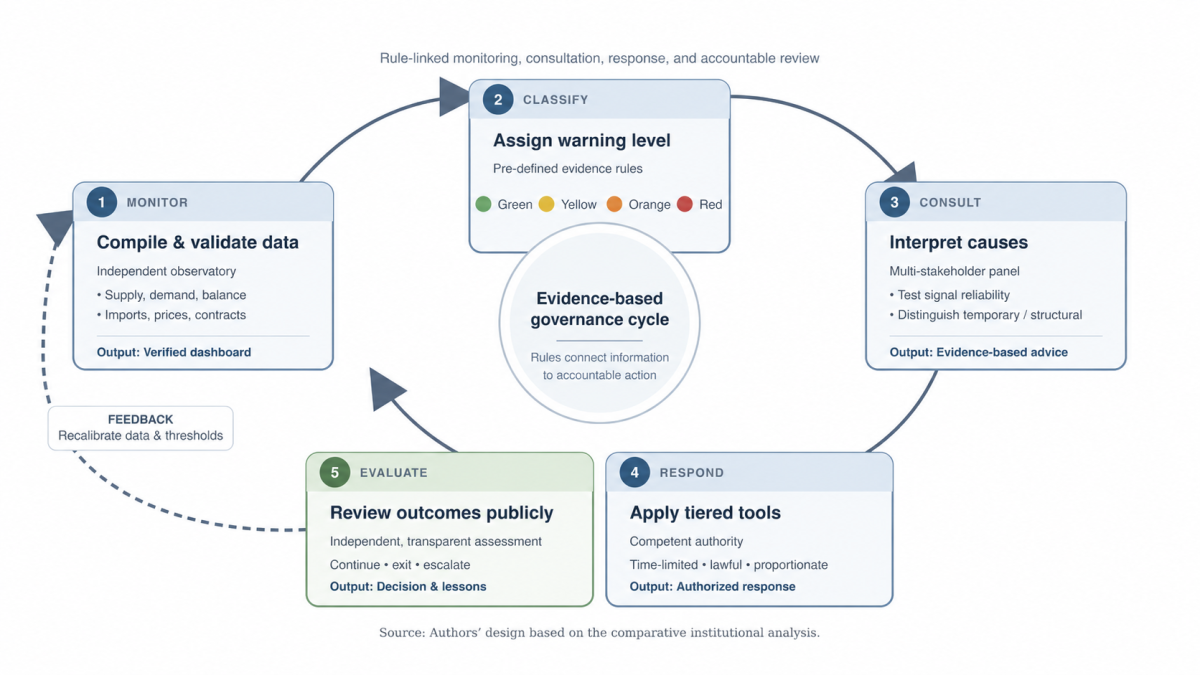
Figure 1. Proposed dairy early-warning governance cycle
Source: Author’s design based on the comparative institutional analysis. Feedback from evaluation returns to monitoring and threshold calibration.
CONCLUSION
Korea’s reform shifts raw-milk pricing away from automatic cost pass-through toward a negotiated system that considers market conditions. Its significance lies in linking differentiated prices and use-specific volumes with processor participation, processing support, and market information. The 2024 price freeze and reduction in the processing-use price demonstrate a departure from adjustments based primarily on production costs, while declining demand, rising imports, farm exits, and quota disputes indicate that the reform has not fully resolved the sector’s structural imbalances.
Taiwan should establish the institutional preconditions for adjustment rather than replicate Korea’s dual-pricing system. Its concentrated procurement structure, relatively small market, seasonal production patterns, and processing structure oriented toward liquid dairy products create a different set of risks (Aswah et al., 2025; Wang et al., 2022). The principal institutional gap is the absence of an integrated, rule-based mechanism linking monitoring indicators and warning thresholds to time-bound consultation, proportionate policy responses, and subsequent evaluation. Taiwan should consider piloting use-specific arrangements only after establishing reliable end-use data, processor accountability, competition safeguards, and farm-income protections.
The proposed sequence—monitor, incentivize verified additional use of domestic milk, and then pilot use-specific arrangements—transforms early warning from passive monitoring into a rule-linked governance mechanism. Monitoring is broadly transferable; confidential reporting, incentives, and consultation mechanisms require institutional adaptation, whereas a nationwide Korean-style quota system and mandatory dual-pricing arrangement are currently unsuitable for direct transfer. Success should be assessed by fewer avoidable surpluses and shortages, sustained use of domestically produced milk, a viable domestic production base, and transparent allocation of adjustment costs. Future research should back-test the proposed warning thresholds using monthly market data and interview supply-chain participants to assess institutional feasibility and distributional effects.
REFERENCES
Azizsafaei, M., Hosseinian-Far, A., Khandan, R., Sarwar, D., & Daneshkhah, A. (2022). Assessing risks in dairy supply chain systems: A system dynamics approach. Systems, 10(4), 114. https://doi.org/10.3390/systems10040114
Aswah, R., Chang, H.-L., Liang, C.-L., Wu, M.-C., Thiasari, N., Hsia, L.-C., & Lee, J.-W. (2025). Effects of season and parity on milk production and milk composition of Holstein cows. BIO Web of Conferences, 191, 00009. https://doi.org/10.1051/bioconf/202519100009
Cavicchioli, D., Cacchiarelli, L., Sorrentino, A., & Pretolani, R. (2022). Should we cry over the spilt milk? Market power and structural change along dairy supply chains in EU countries. Sustainability, 14(8), 4756. https://doi.org/10.3390/su14084756
Chen, L., Thorup, V. M., Kudahl, A. B., & Østergaard, S. (2024). Effects of heat stress on feed intake, milk yield, milk composition, and feed efficiency in dairy cows: A meta-analysis. Journal of Dairy Science, 107(5), 3207–3218. https://doi.org/10.3168/jds.2023-24059
Chou, K.-L. (2020). The creation of fresh milk in post-war Taiwan: The governance of fresh milk and food safety disputes [Master’s thesis, National Taiwan University] [In Chinese]. https://doi.org/10.6342/NTU202003871
Dolowitz, D. P., & Marsh, D. (2000). Learning from abroad: The role of policy transfer in contemporary policy-making. Governance, 13(1), 5–24. https://doi.org/10.1111/0952-1895.00121
George, A. L., & Bennett, A. (2005). Case studies and theory development in the social sciences. MIT Press.
Jeon, S.-G. (2022). Understanding and approaching the problem of the Korean dairy farming. Korean Journal of Agricultural Management and Policy, 49(1), 134–155. https://doi.org/10.30805/KJAMP.2022.49.1.134
Korea Dairy Committee. (2026). Raw milk and dairy product supply–demand statistics [Data set]. https://www.dairy.or.kr/kor/sub05/menu_01_4_1.php
Ministry of Agriculture, Food and Rural Affairs. (2023). Raw milk prices will reflect not only production costs but also market conditions from this year [Press release, in Korean]. https://www.mafra.go.kr/bbs/home/792/569613/download.do
Ministry of Agriculture, Food and Rural Affairs. (2024, July 30). Raw milk prices frozen and drinking-milk purchase volume reduced for the first time in response to declining consumption [Press release, in Korean]. https://mafra.go.kr/bbs/home/792/579516/download.do
Ministry of Agriculture, Food and Rural Affairs. (2026). Use-specific raw-milk quantities determined through stakeholder agreement [Policy clarification, in Korean]. https://www.mafra.go.kr/bbs/home/793/578104/artclView.do
Ministry of Agriculture, Taiwan. (2024, December 24). Strengthening the dairy production and marketing structure to meet emerging challenges [Press release, in Chinese]. https://www.moa.gov.tw/theme_data.php?id=9640&sub_theme=agri&theme=news
Ministry of Agriculture, Taiwan. (2026, February 14). Strengthening industrial upgrading and label administration to secure the competitiveness of domestic fresh milk [Press release, in Chinese]. https://www.moa.gov.tw/theme_data.php?id=10066&sub_theme=agri&theme=news
Sandfort, J. R., & Moulton, S. (2020). Replication or innovation? Structuration in policy implementation. Perspectives on Public Management and Governance, 3(2), 141–154. https://doi.org/10.1093/ppmgov/gvz029
Song, K.-Y. (2025). Challenges and strategies for the Korean dairy and dairy products sector in the era of zero tariffs in 2026: An integrated review of industry, policy, and education. Journal of Dairy Science and Biotechnology, 43(4), 199–213. https://doi.org/10.22424/jdsb.2025.43.4.199
Statistics Korea. (2026, May 15). Results of the 2025 livestock production cost survey [Press release, in Korean]. https://mods.go.kr/board.es?act=view&bid=227&list_no=445127&mid=a1030108...
U.S. Department of Agriculture, Economic Research Service. (2025). Price spreads from farm to consumer: Documentation. https://www.ers.usda.gov/data-products/price-spreads-from-farm-to-consum...
U.S. Department of Agriculture, Economic Research Service. (2026). Conversion factors for dairy industry supply and allocation of milk fat and skim solids [Data file]. https://www.ers.usda.gov/media/29300/supply-allocation-conversion.csv
U.S. Department of Agriculture, Foreign Agricultural Service. (2024). Dairy and products annual: Korea—Republic of (Report No. KS2024-0025). https://apps.fas.usda.gov/newgainapi/api/Report/DownloadReportByFileName...
U.S. Department of Agriculture, Foreign Agricultural Service. (2025). Dairy and products annual: Korea—Republic of (Report No. KS2025-0041). https://apps.fas.usda.gov/newgainapi/api/Report/DownloadReportByFileName...
Wang, C.-Y., Lin, C.-L., & Lin, C.-Y. (2022). Competition issues and competition-law regulation in Taiwan’s dairy industry: A study centered on the fresh-milk market [In Chinese]. In Proceedings of the 29th Conference on Competition Policy and Fair Trade Law (pp. 51–92). Taiwan Fair Trade Commission. https://www.ftc.gov.tw/upload/seminar/29-2.pdf


From Korea’s Use-Specific Raw-Milk Pricing Reform to a Dairy Production-and-Marketing Early-Warning System for Taiwan
ABSTRACT
Korea’s dairy sector illustrates the difficulty of maintaining a high-cost production base as demand for fluid milk declines while imports increasingly supply the growing market for processed dairy products. This study examines Korea’s shift from production-cost-linked pricing to use-specific differential pricing and volume management, asking how the institutional mechanisms underlying this reform can inform dairy sector adjustment and early-warning mechanisms for Taiwan. Evidence from government and industry data, academic research, policy documents, and USDA reports show that Korea’s reform is not merely a two-price pricing system; rather, it links negotiated use-specific volumes and prices to market conditions, processing support, and stakeholder coordination. The 2024 freeze on raw-milk prices for drinking milk and the reduction in raw-milk prices for processing demonstrate greater consideration of market demand conditions. However, declining consumption, farm exits, rising imports, and quota disputes show that price differentiation alone cannot ensure market balance or stable farm incomes. Taiwan has contract procurement, price-review mechanisms, production and trade statistics, labeling requirements, and modernization programs, but these measures are not integrated into a rule-based system that links early-warning signals to predefined policy responses. The study therefore proposes a phased framework comprising three components: a multi-indicator dashboard; warning-triggered coordination mechanisms and incentives for verified increases in the use of domestically produced milk; and pilot programs for use-specific volumes or payments, implemented only with appropriate safeguards for farm income and processor performance. Korea’s experience highlights an important institutional lesson: differentiated pricing can function effectively only within a broader institutional framework governing information, coordination, response, and evaluation.
Keywords: dairy policy; raw milk pricing; supply management; early warning; Korea; Taiwan
INTRODUCTION
Dairy policy in many high-cost dairy-producing economies developed when expanding fluid-milk consumption absorbed domestic raw-milk production and border measures insulated domestic markets from external competition. Population aging, declining birth rates, changing dietary patterns, and growing demand for cheese and other processed dairy products now challenge that model. Imported milk powders, concentrates, and finished dairy products often cost less than products manufactured from domestically produced raw milk. The resulting imbalance is therefore not simply excess milk production, but a mismatch between domestic supply and the timing, end uses, and price structure of demand.
Korea provides a relevant case for examining this transition. Its domestic production base is contracting, as is demand for fluid milk, while USDA FAS forecasts Korean milk production of 1.93 million tons and cheese imports of 153,000 tons in 2026 (USDA FAS, 2025). Continued tariff reductions further increase exposure to import competition. Korea must therefore maintain a viable domestic production base while expanding the use of domestically produced milk beyond the traditional fluid-milk market.
In January 2023, Korea replaced its production-cost-linked pricing mechanism with a use-specific differential pricing system. Raw milk for drinking and processing uses is subject to different basic prices and negotiated volumes; production costs remain an important reference point, but market conditions also influence price adjustments (MAFRA, 2023). For 2025–2026, stakeholders agreed to allocate 1.941 million tons for drinking use and 109,000 tons for processing use, equivalent to 88.5% and 93.5% of their respective quota bases (MAFRA, 2026). The arrangement seeks to maintain producer returns for the core fluid-milk market while providing lower-cost raw milk for processed dairy products that compete more directly with imports.
Taiwan faces a related but institutionally distinct transition. Domestic milk production and processing remain heavily oriented toward fresh liquid milk and depend on farm–processor procurement relationships. Previous research has documented vertically linked production networks, processor concentration, price coordination, and the vulnerability associated with raw milk perishability (Chou, 2020; Wang et al., 2022). The MOA reports annual milk output of approximately 453,000 tons, with 85% processed into fresh milk and approximately 90% self-sufficiency in the fresh-milk market (MOA, 2026). The introduction of zero-tariff liquid milk imports from New Zealand in 2025, along with seasonal production patterns and a processing structure oriented toward liquid dairy products, has increased the need to detect supply–demand imbalances earlier. Yet existing warning indicators are not systematically linked to predefined policy responses.
This article examines how Korea’s reformed pricing and volume-management system translates demand information into supply-management decisions and identifies which institutional functions Taiwan could adapt without replicating Korea’s quota and dual-pricing structure. It identifies gaps in Taiwan’s existing policy framework and proposes graduated measures for monitoring, consultation, incentives, and pilot implementation. Early warning is conceptualized as a governance chain connecting indicators, thresholds, policy responses, and evaluation—not merely as a dashboard.
ANALYTICAL APPROACH AND DATA SOURCES
This study employs a structured, focused comparison informed by the policy-transfer literature (George & Bennett, 2005; Dolowitz & Marsh, 2000). The study applies a common set of analytical questions across market monitoring, diagnosis, pricing, quantity coordination, governance, intervention, and feedback. Korea serves as the source case and Taiwan as the potential recipient case; the objective is to draw policy-relevant institutional lessons, rather than to achieve statistical causal generalization.
For each economy, the analysis reconstructs the policy process across five interrelated functions: (1) monitoring changes in milk production, utilization, trade, stocks, prices, and productive capacity; (2) assessing whether these changes represent a temporary fluctuation or a structural imbalance; (3) coordinating decisions among government agencies, dairy farmers, processors, and other relevant stakeholders; (4) selecting and implementing appropriate policy instruments for pricing, volume management, processing, labeling, marketing, and investment; and (5) evaluating market responses and adjusting policy measures accordingly.
The comparison emphasizes functional equivalence. A Korean quota is not treated as equivalent to a Taiwanese processor–farm contract merely because both constrain deliveries. Instead, the analysis considers who sets and adjusts volumes, how these arrangements affect farm prices and risk allocation, and what supporting policy instruments are available when raw milk is redirected from drinking to processing uses.
Transferability is assessed by problem similarity, institutional compatibility, administrative and data capacity, and distributional consequences. Policy lessons are classified into three categories: broadly applicable, applicable with adaptation, or unsuitable for direct transfer. This approach recognizes that recipient institutions and local actors reshape policies as they are transferred across jurisdictions (Sandfort & Moulton, 2020).
The evidence base combines Korean ministry documents on pricing reform and subsequent agreements, supply-and-demand balance data from the Korea Dairy Committee, and official production-cost and farm-level statistics. Taiwanese academic studies provide evidence on seasonal effects, market organization, farm–processor relations, market concentration, and competition issues (Aswah et al., 2025; Chou, 2020; Wang et al., 2022), while government and trade sources provide current market quantities, programs, and regulatory information. USDA reports provide supplementary market balance data and contextual information. Industry and news sources are used only to document stakeholder positions and are not relied upon as the sole evidence for quantitative or institutional claims.
The latest fully comparable annual observations differ across statistical series, and some figures for 2025–2026 refer to forecasts, provisional observations, negotiated administrative quantities, or announced policy targets rather than final market outcomes. Tables therefore specify the status and reference period of each such figure. Monetary values are reported in their original currencies because exchange-rate conversion is unnecessary for this institutional comparison and could introduce distortions arising from exchange-rate fluctuations.
This study does not estimate the causal effects of Korea’s reform. The reform is relatively recent, several market trends preceded its implementation, and a credible counterfactual is unavailable. Moreover, differences in statistical definitions, market scale, processing capacity, contractual arrangements, and import exposure limit direct cross-country comparability. The conclusions therefore focus on institutional functions, observed policy decisions, implementation risks, and the conditional transferability of policy instruments. Any proposed indicators or warning thresholds for Taiwan should therefore be regarded as preliminary design recommendations requiring subsequent calibration and back-testing using monthly market data.
DEVELOPMENT AND STRUCTURAL CHALLENGES OF KOREA’S DAIRY INDUSTRY
Korea’s postwar dairy industry developed in response to urbanization, school milk programs, the expansion of refrigerated distribution, and a protected fluid-milk market. This structure improved milk quality and stabilized raw-milk procurement from farms, but it also created path dependence. Raw-milk prices and collection arrangements were structured around dairy products that could support the domestic farm-gate milk price. As consumption shifted toward processed dairy products, the domestic sector could not automatically adjust because imported ingredients and finished products were cheaper, easier to store, and easier to standardize (Jeon, 2022; Song, 2025).
Three structural trends now interact. First, the production base is contracting. USDA FAS attributes this downward trajectory to declining numbers of dairy farms and cows, as well as weakening demand associated with demographic change (USDA FAS, 2024, 2025), a pattern also identified in recent Korean dairy research (Song, 2025). Farm exits can temporarily relieve surplus pressure, but they may also reduce regional milk-collection density, increase logistics costs, and weaken the sector’s capacity for herd replacement and future production. A supply-management regime must therefore distinguish between orderly structural adjustment and irreversible erosion of the production base.
Second, consumption has shifted away from conventional unflavored fluid milk. Low fertility directly affects school milk programs and child-oriented dairy consumption, while consumers increasingly obtain dairy protein through cheese, yogurt, dairy beverages, bakery products, and food-service products. Growth in overall dairy demand therefore does not necessarily translate into increased demand for domestically produced raw milk (Jeon, 2022; Song, 2025). USDA FAS forecasts continued growth in cheese imports, illustrating how expanding demand for processed dairy products can coexist with contracting domestic milk production.
Third, import competition is becoming increasingly significant. Different imported products compete with domestic production through distinct channels: shelf-stable liquid milk competes in part of the retail fluid-milk market; milk powder, whey, and concentrates compete as processing ingredients; and cheese and butter compete as finished dairy products. Their effects therefore cannot be captured by a single indicator of liquid-milk imports. Tariff reductions under Korea’s trade agreements further increase competitive pressure on domestic producers and processors (Song, 2025). MAFRA explicitly linked the pricing reform to declining consumption of unflavored fluid milk, changing consumption patterns, and the scheduled elimination of tariffs on milk and cheese from major trading partners (MAFRA, 2023).
Cost and price levels further intensify this mismatch. Statistics Korea reported a 2025 milk production cost of about KRW 1,014 per liter, down 0.4% from 2024 due to lower feed costs (Statistics Korea, 2026). The basic raw-milk price for drinking use remained above KRW 1,000 per liter, while the price for processing use fell to KRW 882 per liter in 2024 (MAFRA, 2024). The lower processing-use price improves the cost competitiveness of domestically produced milk in processing markets, but it can also reduce the weighted-average return to dairy farms if processing-use volumes expand without offsetting measures. This creates a central distributional question raised by the reform: who bears the cost of the difference between maintaining a socially desired domestic production base and the market value of milk used in import-competing products?
Raw milk is highly perishable, whereas milk powder, butter, and cheese can be stored and therefore absorb supply–demand fluctuations more effectively. A dairy sector oriented primarily toward fresh products thus has limited capacity to absorb unexpected surpluses, while herd-size and investment decisions adjust more slowly than retail demand. Declining annual production can consequently coexist with seasonal surpluses, creating a need for both medium- to long-term structural assessments and frequent monitoring of milk collection, sales, and inventories.
Self-sufficiency also requires careful interpretation. A ratio calculated in raw-milk equivalents can decline even while domestically produced fresh milk retains a strong position in the retail market, because growing consumption of cheese or butter increases the denominator. Conversely, a stable aggregate self-sufficiency ratio may conceal import substitution within the fresh-milk segment. For supply-management purposes, product-level and milk-solids-based supply–demand balances are therefore more informative than a single national self-sufficiency indicator.
Table 1 summarizes the structural indicators relevant to policy analysis. It deliberately combines stock, flow, price, and trade indicators. No single indicator is sufficient: declining production may indicate successful market balancing or a deteriorating domestic production base; increased cheese demand may reflect a market opportunity or growing import dependence; and a stable raw-milk price may reflect negotiated discipline or delayed market adjustment.
Table 1. Selected indicators of Korea’s dairy-sector adjustment
Indicator
Latest observation
Policy interpretation
Milk production
1.93 million metric tons forecast for 2026
Continued contraction of domestic production base
Cheese imports
153,000 metric tons forecast for 2026
Processed-dairy demand increasingly met through imports
Milk production cost
Approx. KRW 1,014/L in 2025; -0.4% year on year
High domestic cost remains a constraint despite feed-cost relief
Use-specific volume, 2025–2026
Drinking: 1.941 million t; processing: 109,000 t
Negotiated reallocation toward processing, but drinking use remains dominant
Processing-use basic price, 2024
KRW 882/L after KRW 5 reduction
Competitiveness instrument with potential farm-income trade-off
Source: MAFRA (2024, 2026); Statistics Korea (2026); USDA FAS (2025). 2026 market quantities are forecasts or administrative agreements, as indicated.
KOREA’S RAW MILK PRICING AND SUPPLY MANAGEMENT SYSTEM
Korea’s system should be understood as a negotiated allocation and payment mechanism. Before 2023, raw-milk price adjustments were largely linked to changes in production costs. MAFRA explained that 90–110% of changes in production costs had previously been reflected in price negotiations, largely regardless of demand conditions. The reform retained production costs as a key reference point but introduced a range for market-based adjustments and differentiated raw milk by end use (MAFRA, 2023). This reform responded to earlier academic assessments that Korea’s prevailing pricing and quota arrangements were too supply-oriented to respond effectively to demand shocks and structural changes associated with market liberalization (Jeon, 2022).
Raw milk classified for drinking use includes milk used in unflavored fluid milk, fermented milk, and milk beverages, rather than being limited to unflavored fluid milk sold at retail. Raw milk classified for processing use is used in other dairy products, such as cheese, butter, milk powder, and ice cream. An individual farm's total payment depends on the quantities recognized in each category, the applicable basic prices, quality adjustments, and contractual or committee rules. Consequently, the headline basic prices do not necessarily correspond to the average price actually received by each farm.
The institutional process consists of four steps. First, representatives of producers and dairy companies negotiate national volumes for each end-use category within the Korea Dairy Committee framework. These quantities are adjusted periodically rather than based solely on the delivery volumes of individual farms. When the system was introduced, the reference quantities were 1.95 million tons for drinking use and 100,000 tons for processing use. For 2025–2026, the negotiated agreement reduced the drinking-use quantity to 1.941 million tons and increased the processing-use quantity to 109,000 tons (MAFRA, 2026).
Second, annual price negotiations account for both changes in production costs and market conditions. In 2024, producers and processor representatives agreed to freeze the drinking-use price despite previous increases in production costs and to reduce the processing-use price by KRW 5 (approximately USD 0.004), from KRW 887 (USD 0.651) to KRW 882 (USD 0.647) per liter. MAFRA described this as the first price freeze during a period of rising production costs under the revised system (MAFRA, 2024). The decision demonstrates that demand conditions can now play a more explicit role in the negotiated outcome; it does not, however, demonstrate that the system has achieved market-clearing prices.
Third, processors procure and classify raw milk according to operational rules, while quality adjustments and collection arrangements also influence farm payments. Because raw milk is perishable and collection systems are geographically embedded, a nominal national allocation still depends on processors’ willingness to procure and utilize the allocated volumes and adequate logistical capacity. If processors do not take up and utilize the agreed processing-use quantity, the announced allocation may remain an administrative target rather than becoming an effective market outlet for domestic raw milk.
Fourth, government support seeks to narrow the competitiveness gap between domestically produced raw milk and imported dairy inputs in processing markets. Programs supporting dairy-product development, production facilities, HACCP equipment, farmstead cheese facilities, testing, and working capital may be made conditional on using domestically produced raw milk. This condition is crucial because generic processing subsidies might otherwise expand processing capacity or output without increasing demand for domestic raw milk.
The system makes the composition of demand more explicit in allocation decisions, differentiates prices by economic use, and formalizes stakeholder negotiation. However, it also has several potential vulnerabilities: lower processing-use prices may shift income risks to farms, negotiated quantities may not ensure processor uptake, and a two-category structure may obscure differences among individual dairy products and markets. Bargaining asymmetries and downstream market power may further affect value distribution along the dairy supply chain (Jeon, 2022; Cavicchioli et al., 2022). Policy monitoring should therefore cover agreed and actually utilized volumes, weighted-average farm returns, processor uptake, and the fiscal costs of supporting the system.
Table 2 compares the two use categories and identifies the safeguards required for their implementation. It also illustrates why Taiwan should not adopt a use-specific price differential before establishing adequate information and accountability mechanisms. Without verified end-use classification, assessment of farm-income impacts, and clear performance requirements for processors, a lower processing-use price could simply shift market risk upstream to dairy farmers rather than facilitate structural adjustment.
Table 2. Functional comparison of Korea’s use-specific raw-milk categories
Dimension
Drinking-milk use
Processing use
Required safeguard
Main products
Unflavored milk, fermented milk, milk beverages
Cheese, butter, milk powder, ice cream and other products
Auditable product-use classification
Policy objective
Maintain stable domestic drinking-milk supply
Improve domestic input competitiveness against imports
Publish actual uptake, not only negotiated quantity
Price logic
Higher supported basic price; cost and market range
Lower price reflecting import-competing uses
Assess weighted farm revenue
2025–2026 agreed volume
1.941 million metric tons
109,000 metric tons
Transparent baseline and burden-sharing rules
Source: MAFRA (2023, 2024, 2026).
POLICY RESPONSES TO DAIRY SUPPLY–DEMAND IMBALANCES
Korea’s policy response extends beyond pricing. The first instrument is negotiated volume reduction or reallocation. The 2024 agreement reduced the allocated volume for drinking use while slightly expanding the volume allocated for processing use. This represents a more targeted response than an undifferentiated production cut because it recognizes both the shrinking fluid-milk segment and the potential for growth in processing uses. Yet reallocation is effective only if it generates additional demand for domestically produced raw milk in processing rather than merely reclassifying milk that would have been used for processing anyway.
The second instrument is support for processing competitiveness. Capital grants, loans, product development assistance, hygiene upgrades, and working-capital support can reduce cost disadvantages beyond the farm gate associated with using domestically produced milk. Conditioning eligibility on verified use of domestically produced raw milk improves policy targeting. Performance indicators should include incremental use of domestic raw milk, product sales, the commercial viability of supported products after assistance ends, and the share of assistance allocated to production that would have occurred even without support.
The third instrument is product differentiation. Korea promotes domestic-origin identification, higher-value product attributes, farmstead processing, and experience-based and regionally differentiated products. These strategies can improve margins for selected farms and strengthen consumer recognition, but they are complementary measures rather than system-wide supply–demand balancing tools. Premium market segments cannot absorb the full volume displaced by the structural decline in demand for conventional fluid milk.
The fourth instrument is information and coordination. Korea’s dairy statistics convert imports, exports, and milk-powder stocks into raw-milk equivalents, enabling a broader assessment of overall milk supply and availability than a simple production series (Korea Dairy Committee, 2026). Regular negotiation provides a mechanism for this information to influence volume allocations and prices. However, because the reform is relatively recent and stakeholder disputes continue, procedural legitimacy remains important. When volume reductions are contemplated, rules governing baseline calculations, burden sharing, appeals, and the assessment of income impacts must be transparent and understandable to both farms and processors.
Adjustment assistance for collection networks, modernization, heat mitigation, production efficiency, animal health, and farm succession can help preserve a viable, albeit smaller, domestic dairy industry. Uncoordinated farm closures may increase milk-collection costs for neighboring farms and accelerate regional contraction, creating a network effect that is not captured by national supply–demand balances.
Evaluation must distinguish gross increases in domestic milk use from genuinely additional use attributable to policy intervention. Credible evidence of additionality requires a clearly defined baseline, adjustments for underlying market growth, verified sales, and safeguards against the reclassification or displacement of existing volumes. Public expenditure per verified additional liter of domestic milk used and the persistence of additional demand after support ends are more informative performance indicators than the installed capacity of subsidized equipment.
These responses reveal a broader principle. A supply-management system should contain both short-term stabilizers and longer-term transition instruments. Stabilizers address temporary imbalances—such as seasonal surpluses, inventory accumulation, or import shocks—through promotion, processing, storage, or coordinated procurement. Transition instruments address persistent structural change, including farm exits, capacity modernization, new product development, and revised contract volumes. Relying on temporary subsidies to address a structural decline merely postpones necessary adjustment, whereas imposing abrupt quota reductions in response to a temporary seasonal surplus may unnecessarily erode productive capacity.
TAIWAN’S CURRENT DAIRY PRODUCTION AND MARKETING EARLY-WARNING MECHANISM
Taiwan does not operate a Korean-style national raw-milk quota system. Instead, dairy farms and processors procure and allocate most raw milk through vertically linked relationships. Academic analysis of Taiwan’s fresh-milk market describes a concentrated processing structure and the institutional role of raw-milk procurement and price coordination in connecting upstream farms with downstream processors (Wang et al., 2022). Historical and interview-based research likewise shows that the stability of Taiwan’s fresh-milk market depends on the organization of its production network, as well as on raw milk’s perishability and stringent quality requirements (Chou, 2020). Contracted or planned volumes, seasonal payment arrangements, quality requirements, and processor collection decisions therefore perform many of the functions associated with supply allocation. This decentralized structure can respond to firm-specific demand, but it also limits public visibility of prospective procurement changes and potential market-wide imbalances.
Taiwan has substantial data available for market monitoring, but it is dispersed across government and industry systems. MOA statistics report the number of dairy farms, dairy cow inventories, cows in milk, and milk production. Customs data provide information on import volumes, values, unit values, countries of origin, and product categories. The Fresh Milk Seal administration provides a basis for verifying eligible domestically produced fresh milk, while processor reporting associated with policy programs can provide additional information. The 2024–2027 dairy modernization program supports upgrades to farms and processing facilities, product diversification, domestic-milk use, market-channel development, and labeling (MOA, 2024, 2026). Academic analysis also demonstrates why information on market structure matters: Taiwan’s fresh-milk supply chain is vertically interdependent, and processing is concentrated among a small number of firms. Aggregate production data alone therefore cannot reveal how procurement decisions or downstream market power shape the distribution of adjustment pressures (Wang et al., 2022).
Available evidence does not indicate an integrated government mechanism linking monitoring indicators to predefined policy responses. Public monitoring emphasizes production and trade, while end-use allocation, processor intake, inventories, and forward procurement plans remain incompletely reported or confidential. Indicators lack transparent warning thresholds, and crossing those thresholds does not automatically trigger time-bound consultation or graduated policy action. The primary deficiency is therefore a lack of integration rather than an absence of data or policy support.
Seasonality further complicates interpretation. A Taiwan-based study found significant seasonal effects on daily milk yield and several milk-composition traits in Holstein cows, supporting locally calibrated seasonal baselines (Aswah et al., 2025). Broader meta-analytic evidence also shows that increases in the temperature–humidity index are associated with lower dry-matter intake and energy-corrected milk production (Chen et al., 2024). Demand and collection plans may also vary across marketing channels. A year-on-year decline in national milk production may therefore coexist with a short-term seasonal surplus in a particular collection area, while an increase in imports may substitute for other imported dairy products rather than for domestically produced fresh milk. An effective monitoring system therefore requires moving averages, seasonally adjusted or locally calibrated baselines, product-level trade data, and regional market intelligence rather than warnings based on single-month observations.
Taiwan’s labeling reform strengthens the differentiation of domestically produced milk in the market. From July 1, 2026, only qualifying domestic cow or goat milk bearing the Fresh Milk Seal, CAS, or traceability certification may be labeled “fresh milk”; imported liquid milk may not use that designation (MOA, 2026). This reform can improve consumer information and create a measurable channel for policy intervention and evaluation. Yet labeling protects product identity and origin, not domestic procurement volume. Its effects should therefore be evaluated using indicators such as certified volumes, retail coverage, price premiums, and repeat purchases.
Taiwan could connect existing data sources without creating a large new agency. A designated monitoring function—located within government or an independent technical body—could standardize definitions, receive confidential processor data, publish monthly aggregate indicators, and convene stakeholder consultations when thresholds are crossed. Here, the term “observatory” refers to this monitoring and coordination function rather than necessarily to a separate organization. Such a function would require an appropriate legal mandate, confidentiality safeguards, auditing procedures, clear data definitions, and quarterly structural reviews alongside monthly market monitoring.
Institutional roles should also be clearly separated: technical staff would compile and analyze the evidence, a stakeholder panel would interpret the findings, and the competent authority would authorize public expenditures or binding measures. An independent annual review should assess false alarms and missed signals, reporting lags, data revisions, distributional effects, and public expenditure per verified additional liter of domestically produced milk used.
LESSONS FOR TAIWAN
The proposed early-warning framework is a Taiwan-specific design derived from the institutional functions identified in Korea’s reform and the policy gaps observed in Taiwan, rather than a feature of the Korean system itself. Taiwan should first establish disciplined procedures for information disclosure and policy response and only then consider use-specific payments. Under the four transfer criteria, dashboards and rule-linked consultation appear broadly applicable; confidential reporting, incentives, and negotiation timetables require adaptation; and a nationwide quota system and a lower price for processing-use milk are unsuitable for direct transfer. Only limited-scale pilot programs with farm-income and processor-performance safeguards should be considered thereafter.
Taiwan’s competition authority should review the design of information sharing under the early-warning system because the fresh-milk supply chain is concentrated and vertically interdependent (Wang et al., 2022). Firms should not exchange company-specific information on prices, procurement plans, customers, suppliers, or market allocation. Public authorities may collect confidential firm-level data but should disclose only aggregated information. Stakeholder consultations may address aggregate market balances, forecasts, and sector-wide risks, but should not coordinate firm-specific prices, procurement volumes, suppliers, customers, or geographic markets.
Figure 1 summarizes the proposed governance cycle: the observatory validates the data; predefined rules set warning levels; an industry panel interprets the evidence; the competent authority selects tiered policy measures; and subsequent evaluation determines whether those measures should continue, escalate, be modified, or be terminated. Korea’s transferable lesson is that information becomes policy-relevant only when institutional arrangements ensure that it is systematically considered and linked to action.
Table 3. Korea–Taiwan comparison and transfer conditions
Function
Korea
Taiwan today
Transfer assessment
Allocation
National use-specific quantities negotiated through sector institutions
Processor–farm contracts allocate most raw milk
Applicable after adaptation: aggregate contract/intake outlook with confidentiality safeguards
Pricing
Differentiated basic prices by use
Price review and bilateral/seasonal contract terms
Not suitable for direct transfer; monitor realized price first and pilot only with safeguards
Market data
Supply, use, imports, exports and stocks; some raw-milk-equivalent measures
Production, trade and labeling data; limited use/inventory visibility
Broadly applicable: monthly multi-indicator dashboard plus confidential submissions
Processing support
Facilities, product development and operating funds linked to domestic milk
Modernization, diversification, labeling and domestic-use incentives
Applicable after adaptation: pay only for verified incremental domestic-milk use
Response governance
Formal stakeholder negotiation of prices and volumes
Consultation exists but thresholds/actions are not rule-linked
Applicable after adaptation: warning timetable, responsible authority, and exit criteria
Source: Author’s synthesis from MAFRA (2023, 2024, 2026), MOA (2024, 2026), Wang et al. (2022), and USDA FAS (2025).
Table 4. Proposed warning levels for Taiwan’s dairy market
Level
Illustrative evidence rule
Required response
Green — Normal
Indicators remain within seasonal bands; intake commitments cover expected supply
Publish dashboard; maintain routine surveillance
Yellow — Watch
Two corroborating indicators deteriorate for two reporting periods
Validate data; issue market notes; convene technical consultation; voluntary promotion
Orange — Alert
Persistent supply–intake gap plus inventory, sales, or substitutable-import pressure
Time-limited processing incentive; procurement/channel measures; regional production plan
Red — Severe imbalance
Large and persistent gap threatening orderly collection or domestic supply base
Ministerially approved stabilization plan with budget, income safeguard, duration and exit rule
Source: Author’s proposal. Thresholds are illustrative and require calibration using Taiwanese monthly data.
Figure 1. Proposed dairy early-warning governance cycle
Source: Author’s design based on the comparative institutional analysis. Feedback from evaluation returns to monitoring and threshold calibration.
CONCLUSION
Korea’s reform shifts raw-milk pricing away from automatic cost pass-through toward a negotiated system that considers market conditions. Its significance lies in linking differentiated prices and use-specific volumes with processor participation, processing support, and market information. The 2024 price freeze and reduction in the processing-use price demonstrate a departure from adjustments based primarily on production costs, while declining demand, rising imports, farm exits, and quota disputes indicate that the reform has not fully resolved the sector’s structural imbalances.
Taiwan should establish the institutional preconditions for adjustment rather than replicate Korea’s dual-pricing system. Its concentrated procurement structure, relatively small market, seasonal production patterns, and processing structure oriented toward liquid dairy products create a different set of risks (Aswah et al., 2025; Wang et al., 2022). The principal institutional gap is the absence of an integrated, rule-based mechanism linking monitoring indicators and warning thresholds to time-bound consultation, proportionate policy responses, and subsequent evaluation. Taiwan should consider piloting use-specific arrangements only after establishing reliable end-use data, processor accountability, competition safeguards, and farm-income protections.
The proposed sequence—monitor, incentivize verified additional use of domestic milk, and then pilot use-specific arrangements—transforms early warning from passive monitoring into a rule-linked governance mechanism. Monitoring is broadly transferable; confidential reporting, incentives, and consultation mechanisms require institutional adaptation, whereas a nationwide Korean-style quota system and mandatory dual-pricing arrangement are currently unsuitable for direct transfer. Success should be assessed by fewer avoidable surpluses and shortages, sustained use of domestically produced milk, a viable domestic production base, and transparent allocation of adjustment costs. Future research should back-test the proposed warning thresholds using monthly market data and interview supply-chain participants to assess institutional feasibility and distributional effects.
REFERENCES
Azizsafaei, M., Hosseinian-Far, A., Khandan, R., Sarwar, D., & Daneshkhah, A. (2022). Assessing risks in dairy supply chain systems: A system dynamics approach. Systems, 10(4), 114. https://doi.org/10.3390/systems10040114
Aswah, R., Chang, H.-L., Liang, C.-L., Wu, M.-C., Thiasari, N., Hsia, L.-C., & Lee, J.-W. (2025). Effects of season and parity on milk production and milk composition of Holstein cows. BIO Web of Conferences, 191, 00009. https://doi.org/10.1051/bioconf/202519100009
Cavicchioli, D., Cacchiarelli, L., Sorrentino, A., & Pretolani, R. (2022). Should we cry over the spilt milk? Market power and structural change along dairy supply chains in EU countries. Sustainability, 14(8), 4756. https://doi.org/10.3390/su14084756
Chen, L., Thorup, V. M., Kudahl, A. B., & Østergaard, S. (2024). Effects of heat stress on feed intake, milk yield, milk composition, and feed efficiency in dairy cows: A meta-analysis. Journal of Dairy Science, 107(5), 3207–3218. https://doi.org/10.3168/jds.2023-24059
Chou, K.-L. (2020). The creation of fresh milk in post-war Taiwan: The governance of fresh milk and food safety disputes [Master’s thesis, National Taiwan University] [In Chinese]. https://doi.org/10.6342/NTU202003871
Dolowitz, D. P., & Marsh, D. (2000). Learning from abroad: The role of policy transfer in contemporary policy-making. Governance, 13(1), 5–24. https://doi.org/10.1111/0952-1895.00121
George, A. L., & Bennett, A. (2005). Case studies and theory development in the social sciences. MIT Press.
Jeon, S.-G. (2022). Understanding and approaching the problem of the Korean dairy farming. Korean Journal of Agricultural Management and Policy, 49(1), 134–155. https://doi.org/10.30805/KJAMP.2022.49.1.134
Korea Dairy Committee. (2026). Raw milk and dairy product supply–demand statistics [Data set]. https://www.dairy.or.kr/kor/sub05/menu_01_4_1.php
Ministry of Agriculture, Food and Rural Affairs. (2023). Raw milk prices will reflect not only production costs but also market conditions from this year [Press release, in Korean]. https://www.mafra.go.kr/bbs/home/792/569613/download.do
Ministry of Agriculture, Food and Rural Affairs. (2024, July 30). Raw milk prices frozen and drinking-milk purchase volume reduced for the first time in response to declining consumption [Press release, in Korean]. https://mafra.go.kr/bbs/home/792/579516/download.do
Ministry of Agriculture, Food and Rural Affairs. (2026). Use-specific raw-milk quantities determined through stakeholder agreement [Policy clarification, in Korean]. https://www.mafra.go.kr/bbs/home/793/578104/artclView.do
Ministry of Agriculture, Taiwan. (2024, December 24). Strengthening the dairy production and marketing structure to meet emerging challenges [Press release, in Chinese]. https://www.moa.gov.tw/theme_data.php?id=9640&sub_theme=agri&theme=news
Ministry of Agriculture, Taiwan. (2026, February 14). Strengthening industrial upgrading and label administration to secure the competitiveness of domestic fresh milk [Press release, in Chinese]. https://www.moa.gov.tw/theme_data.php?id=10066&sub_theme=agri&theme=news
Sandfort, J. R., & Moulton, S. (2020). Replication or innovation? Structuration in policy implementation. Perspectives on Public Management and Governance, 3(2), 141–154. https://doi.org/10.1093/ppmgov/gvz029
Song, K.-Y. (2025). Challenges and strategies for the Korean dairy and dairy products sector in the era of zero tariffs in 2026: An integrated review of industry, policy, and education. Journal of Dairy Science and Biotechnology, 43(4), 199–213. https://doi.org/10.22424/jdsb.2025.43.4.199
Statistics Korea. (2026, May 15). Results of the 2025 livestock production cost survey [Press release, in Korean]. https://mods.go.kr/board.es?act=view&bid=227&list_no=445127&mid=a1030108...
U.S. Department of Agriculture, Economic Research Service. (2025). Price spreads from farm to consumer: Documentation. https://www.ers.usda.gov/data-products/price-spreads-from-farm-to-consum...
U.S. Department of Agriculture, Economic Research Service. (2026). Conversion factors for dairy industry supply and allocation of milk fat and skim solids [Data file]. https://www.ers.usda.gov/media/29300/supply-allocation-conversion.csv
U.S. Department of Agriculture, Foreign Agricultural Service. (2024). Dairy and products annual: Korea—Republic of (Report No. KS2024-0025). https://apps.fas.usda.gov/newgainapi/api/Report/DownloadReportByFileName...
U.S. Department of Agriculture, Foreign Agricultural Service. (2025). Dairy and products annual: Korea—Republic of (Report No. KS2025-0041). https://apps.fas.usda.gov/newgainapi/api/Report/DownloadReportByFileName...
Wang, C.-Y., Lin, C.-L., & Lin, C.-Y. (2022). Competition issues and competition-law regulation in Taiwan’s dairy industry: A study centered on the fresh-milk market [In Chinese]. In Proceedings of the 29th Conference on Competition Policy and Fair Trade Law (pp. 51–92). Taiwan Fair Trade Commission. https://www.ftc.gov.tw/upload/seminar/29-2.pdf