ABSTRACT
This article summarizes and interprets the main findings of the 2025 national perception survey on agriculture and rural areas conducted by the Korea Rural Economic Institute. The survey covered 1,369 farmers and 1,500 urban residents in October 2025 and examined how the two groups evaluate the importance of agriculture, the public functions of agriculture and rural areas, willingness to support rural policy, intention to move to rural areas, farmers’ occupational and living satisfaction, and major agricultural policy issues. The results show a striking combination of strong value recognition and weak everyday engagement among urban residents. A record-high share of urban residents, 85.1%, said agriculture would be important to the national economy in the future, and 76.8% recognized the public value of agriculture and rural areas. However, urban residents’ interest in agricultural policy and perceived personal relevance fell to the lowest levels since the survey began. Farmers’ occupational satisfaction improved in 2025, but dissatisfaction with farm income remained high, and labor shortages, rising production costs, and climate change were identified as the main threats to farm management. Drawing on Korean media coverage of the survey, rural labor shortages, climate-related food-price pressures, and urban-rural communication, this article argues that Korean agricultural policy should convert abstract recognition into concrete participation, address farmers’ economic and labor burdens, and build a more credible communication bridge between producers, consumers, and taxpayers.
Keywords: Public perception, agriculture and rural areas, farmers, urban residents, public functions, rural policy, Korea
INTRODUCTION
Agriculture and rural areas occupy a distinctive place in Korean society. They are not only production spaces for food and raw materials, but also providers of public functions such as food security, environmental conservation, landscape management, balanced territorial development, traditional culture, leisure, and rural community life. Public understanding of these roles matters because agricultural policy increasingly depends on broad social support, budget allocation, and shared recognition of agriculture’s value beyond farm income alone.
At the same time, the relationship between agriculture and the public has become more complicated. Urban residents may recognize the importance of food supply and rural landscapes but feel little direct connection to agricultural policy. Farmers may feel that their work is socially important but remain dissatisfied with income, labor burden, and farm-management risk. Farmers and urban consumers may also interpret climate change, natural disasters, food-price increases, farm labor shortages, and agricultural trade negotiations differently.
The 2025 national perception survey on agriculture and rural areas provides an important window into these differences. It asks farmers and urban residents how they view the importance of agriculture, the value of public functions, rural welfare spending, return-to-rural intentions, farmers’ job and living satisfaction, policy performance, agricultural issues, disaster insurance, food prices, and trade priorities. Because the survey has been conducted repeatedly over time, it also allows recent 2025 responses to be interpreted against past patterns.
This article presents the 2025 KREI survey results in a policy-oriented format. It focuses on four broad messages. First, agriculture’s importance and public value are recognized at very high levels. Second, that recognition does not automatically translate into high policy interest or willingness to bear additional costs. Third, farmers’ satisfaction is improving in some areas, but income, labor, and management risks remain serious. Fourth, farmers and urban residents increasingly share concern about climate and disaster risks, yet still differ in their diagnosis of food prices and trade policy priorities.
The interpretation offered here is that perception data should be treated as policy infrastructure. Agricultural ministries often use production, price, income, and trade data to make policy decisions, but public attitudes determine whether society accepts the costs and trade-offs of agricultural policy. In an advanced urbanized economy, support for agriculture cannot rest only on nostalgia or emergency food-security rhetoric. It needs a durable narrative that links farm viability, rural living conditions, climate resilience, consumer prices, and taxpayers’ willingness to finance public functions.
SURVEY OVERVIEW
KREI conducted the 2025 survey during October 2025. The total sample consisted of 2,869 respondents: 1,369 farmers and 1,500 urban residents. KREI administered the farmer survey to its local correspondent network, which has been used in prior surveys and is suitable for tracking perceptions among field-based agricultural respondents. The urban-resident survey targeted adults aged 19 or older living in urban areas across Korea, including Jeju, and used quota sampling by region, gender, and age.
The survey questionnaire included fixed questions designed to track changes in public attitudes over time and non-fixed questions reflecting current policy issues. For farmers, the survey was implemented by mail using a structured questionnaire. For urban residents, the 2025 survey used an online panel survey through a professional research company. The reported sampling error for the urban-resident survey was plus or minus 2.5 percentage points at the 95% confidence level, while the farmer survey used a fixed sample rather than a conventional random sample.
Table 1. Survey overview
|
Item
|
Farmers
|
Urban residents
|
|
Survey target
|
KREI local correspondents engaged in farming
|
Adults aged 19 or older living in urban areas
|
|
Survey area
|
Nationwide, including Jeju
|
Nationwide, including Jeju
|
|
Sample size
|
1,369 respondents
|
1,500 respondents
|
|
Survey method
|
Mail survey
|
Online survey using a structured questionnaire
|
|
Sampling
|
Fixed sample
|
Quota sampling by region, gender, and age
|
Keep this survey design in mind when interpreting the results. The farmer sample is valuable because it allows continuity with past KREI surveys and provides field-sensitive responses from people engaged in agriculture. The urban sample provides a broad picture of perceptions among the non-farm public. However, the two groups are surveyed through different methods and should be compared with attention to their different sample structures and relationships to agriculture.
PUBLIC DEBATE CONTEXT
Korean media coverage of the 2025 survey emphasized a paradox that is central to understanding current agricultural policy: urban residents increasingly agree that agriculture is important, yet agricultural and rural issues are still often perceived as someone else’s problem. Nongmin News summarized this tension by noting that sympathy with agriculture’s necessity has grown while the sense of personal connection to rural issues remains weak (Nongmin News, 2026). This is not a minor communication problem. It indicates that agriculture has social legitimacy but weak everyday political attachment among many urban citizens.
The survey results also need to be read against wider public debates on labor shortage and food-price instability. News coverage of rural labor shortages has repeatedly described farms’ dependence on seasonal labor, foreign workers, mechanization services, and local government labor-matching programs (Financial News, 2025; Yonhap News Agency, 2025). These reports help explain why farmers selected labor shortage as the largest management threat in 2025. Labor shortage is no longer a temporary farm-level inconvenience; it is becoming a structural constraint on production capacity, succession, and rural vitality.
Food-price reporting provides another context. Korean news reports have increasingly linked abnormal weather, production-cost increases, and distribution issues to price volatility in fresh agricultural products (Food Today, 2025; Korea Economic Daily, 2025). This matters because the survey shows different diagnoses between farmers and urban residents. Farmers emphasize abnormal weather, labor costs, and input costs, while urban residents place more weight on distribution-stage inefficiency and intermediary margins. A policy article on public perceptions should therefore interpret price opinions not simply as consumer dissatisfaction but as a communication gap between production-side risk and consumer-side market experience.
Taken together, the media context confirms that the survey is not just a set of attitude indicators. It reflects a broader transition in Korea’s agricultural policy environment: agriculture is socially valued, but the channels that connect that value to tax support, rural welfare, farm labor policy, climate adaptation, food-price stabilization, and trade policy are still fragile. The policy task is to turn high-level recognition into more durable consent for specific agricultural and rural programs.
URBAN RESIDENTS’ PERCEPTIONS OF AGRICULTURE AND RURAL AREAS
The first major finding is that recognition of agriculture’s importance reached its highest level since the survey began. In 2025, 79.2% of farmers and 85.1% of urban residents said that agriculture would be important to the national economy in the future. The share of those who answered that agriculture had been important so far and would continue to be important was 61.0% among farmers and 65.2% among urban residents. Compared with 2023, this response increased by 1.4 percentage points for farmers and by 6.1 percentage points for urban residents, indicating a particularly strong recovery in urban recognition of agriculture’s importance.
The second major finding is that urban residents’ recognition of value is moving in the opposite direction from their everyday engagement with agricultural policy. In 2025, only 26.2% of urban residents said they usually had much interest in agricultural policy or agricultural and rural issues, the lowest level since the survey began. The share saying that such issues had much relevance to themselves was even lower, at 21.3%, also the lowest recorded level. Meanwhile, the share answering neutral or ordinary increased to record highs, suggesting that agriculture is widely recognized as important but is not felt as personally close in daily life.
This widening gap is one of the survey's most important messages. Urban residents are not rejecting agriculture. On the contrary, they recognize its importance strongly. But they appear to see agriculture as a public or national issue rather than one directly connected to their own lives, choices, or policy responsibilities. This creates a challenge for agricultural communication: social support cannot rely only on abstract agreement that agriculture is important.
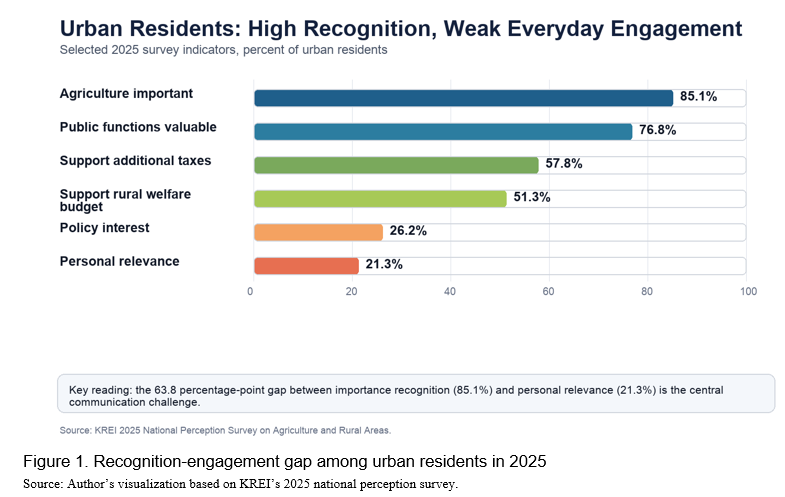
Urban residents also assigned very high value to the public functions of agriculture and rural areas. The share saying that these public functions have great value was 76.8% in 2025, the highest level since the survey began and 2.1 percentage points higher than in 2024. Only 3.6% said these functions have little value, while 19.6% chose a neutral response. The public-value recognition rate therefore greatly exceeded both policy interest and perceived relevance.
Table 2. Selected indicators for urban residents’ perceptions
|
Indicator
|
2025 result
|
Main message
|
|
Agriculture will be important to the national economy
|
85.1%
|
Highest level in the survey history.
|
|
Agriculture has been and will continue to be important
|
65.2%
|
Up 6.1 percentage points from 2023.
|
|
Much interest in agricultural policy or rural issues
|
26.2%
|
Lowest level since the survey began.
|
|
Much personal relevance of agricultural policy or rural issues
|
21.3%
|
Lowest level since the survey began.
|
|
High value of public functions of agriculture and rural areas
|
76.8%
|
Highest level since the survey began.
|
|
Support for additional taxes for public functions
|
57.8%
|
Still a majority, but down 4.5 percentage points from 2024.
|
|
Support for increasing rural welfare budget
|
51.3%
|
Down 3.2 percentage points from 2024.
|
|
Intention to return to farming or move to rural areas
|
51.3%
|
Still above half, but down 6.0 percentage points from 2024.
|
When asked to evaluate specific functions on a 10-point scale, urban residents rated stable food supply highest at 7.71 points. This was followed by contributions to environmental and ecosystem conservation (7.12 points), balanced territorial development (6.89 points), inheritance of traditional culture and leisure (6.84 points), and job creation (6.38 points). The results show that food security remains the core public function in the public mind, while environmental conservation and territorial balance are also strongly recognized.
However, willingness to bear additional costs weakened. In 2025, 57.8% of urban residents agreed with bearing additional taxes to maintain and conserve the public functions of agriculture and rural areas, down 4.5 percentage points from the previous year. The share strongly supporting additional taxes was 9.6%, down 4.6 percentage points. Opposition rose to 23.9%, and the share answering that they did not know rose to 18.3%. This means that the gap between value recognition and willingness to pay widened to 19.0 percentage points.
Support for increasing rural welfare budgets also declined slightly. In 2025, 51.3% of urban residents supported expanding the rural welfare budget, down 3.2 percentage points from 2024. Neutral responses rose to 36.3%, and opposition rose to 12.5%. The pattern again suggests that broad sympathy for agriculture and rural areas does not automatically translate into stronger fiscal support.
Urban residents’ intention to move to rural areas after retirement or when conditions allow also fell. In 2025, 51.3% said they had some or strong intention to return to farming or move to a rural area, down 6.0 percentage points from the previous year. The share with no intention rose to 45.7%. Among those with intention, the leading motives were living healthily in nature (51.1%) and pursuing a freer lifestyle not tied to time (22.2%). Farming itself was a much weaker motive: 5.5% said they wanted to live in a rural area and farm, and 8.2% wanted to produce agricultural products for safe self-consumption.
FARMERS’ OCCUPATIONAL AND RURAL LIVING SATISFACTION
The survey shows some improvement in farmers’ job satisfaction, but income-related dissatisfaction remains substantial. In 2025, 31.3% of farmers said they were satisfied with their occupation overall, up 7.7 percentage points from the previous year. Satisfaction with the content of farm work was higher, at 35.8%, up 5.3 percentage points. Dissatisfaction with overall occupation and farm-work content declined slightly to 19.3% and 17.2%, respectively.
Farm income satisfaction remained the weakest area. Only 12.9% of farmers said they were satisfied with agricultural income, up 2.7 percentage points from 2024. The dissatisfied share fell from 45.9% to 39.2%, but remained high. In other words, farmers’ perception of the occupation and work itself improved more clearly than their perception of income. This suggests that policy should distinguish between satisfaction with farming as a way of life and satisfaction with the economic returns from farming.
Among farmers dissatisfied with the occupation, the most frequently cited reason was low compensation relative to effort, at 52.6%. This has remained the largest factor since 2015. Physical difficulty was second at 20.4%, followed by insufficient government interest and support compared with other sectors at 10.9%, insecurity about the future due to agricultural import liberalization at 9.5%, and negative public perceptions of agriculture at 2.0%. Compared with 2024, low compensation and physical burden increased by 6.4 and 5.4 percentage points, respectively, while concern over insufficient government support fell by 7.9 percentage points.
The subgroup pattern is also meaningful. Low compensation relative to effort was relatively high among farmers under age 60, those with less than 20 years of farming experience, and those with annual average income of at least USD 13.3 thousand. Physical burden was relatively high among farmers aged 60 or older, those with at least 20 years of farming experience, and those with annual average income below USD 13.3 thousand. This suggests that younger or more commercially active farmers may feel the reward problem more sharply, while older and lower-income farmers may feel the physical burden more heavily.
Farmers identified labor shortage as the largest threat to farm management in 2025. Labor shortage accounted for 20.2% of responses and entered the 20% range for the first time. Production-cost increases followed at 18.5%, and climate change-induced abnormal weather and changes in cultivation conditions followed at 17.2%. Other threats included additional market opening under FTAs and other liberalization at 7.3%, absence of successors at 7.3%, natural disasters such as typhoons and heavy rain at 5.8%, irrational distribution structure and supply-demand instability at 5.7%, and difficulty securing markets at 4.7%.
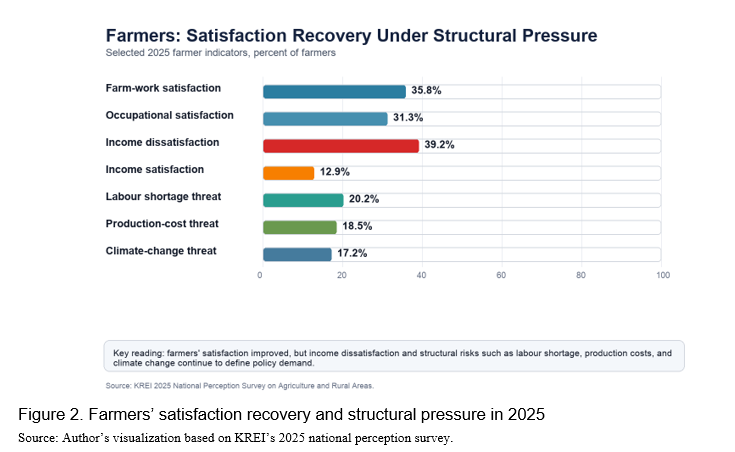
Table 3. Selected indicators for farmers’ satisfaction and management risks
|
Indicator
|
2025 result
|
Main message
|
|
Overall occupational satisfaction
|
31.3%
|
Up 7.7 percentage points from 2024.
|
|
Satisfaction with farm-work content
|
35.8%
|
Highest among job-related satisfaction items.
|
|
Satisfaction with agricultural income
|
12.9%
|
Improved, but still very low.
|
|
Dissatisfaction with agricultural income
|
39.2%
|
Down from 2024, but still high.
|
|
Main reason for occupational dissatisfaction
|
Low compensation relative to effort: 52.6%
|
The largest factor since 2015.
|
|
Largest farm-management threat
|
Labor shortage: 20.2%
|
First time entering the 20% range.
|
|
Other major threats
|
Production costs: 18.5%; climate change: 17.2%
|
Structural pressures dominate.
|
|
Overall rural life satisfaction
|
29.3%
|
Rising for the last three years.
|
|
Satisfaction with income sources and jobs
|
10.8%
|
The weakest rural living area.
|
This ranking shows that the main farm-management risks are increasingly structural rather than temporary. Labor shortages, cost increases, and climate change are not one-time shocks that a single annual measure can solve. They are persistent conditions that shape farm continuity, investment, and farmers’ sense of security. The growing importance of successor absence also links the labor issue to agriculture's long-term demographic base.
Farmers’ satisfaction with rural life has improved over the last three years. Overall satisfaction with rural life reached 29.3% in 2025. Satisfaction improved in most areas, including waste and environmental management, public transportation, health and medical services, education, culture and leisure, and relationships with neighbors. Satisfaction with waste and environmental management rose to 27.6%, public transportation to 20.2%, health and medical services to 22.6%, education to 16.4%, culture and leisure to 19.2%, and relationships with neighbors to 39.0%. Housing-environment satisfaction remained relatively high at 34.8%, although it declined by 2.0 percentage points from the previous year.
The weakest rural living area was income sources and jobs, at 10.8%. This reinforces the broader pattern of the survey. Rural living conditions and farmers’ occupational identity are improving in some respects, but economic opportunity remains limited. Improvements in infrastructure and community conditions are important, but they do not automatically solve income and employment constraints in rural areas.
PERCEPTIONS OF MAJOR AGRICULTURAL AND RURAL ISSUES IN 2025
Policy satisfaction remained low among both farmers and urban residents. For the current government’s agricultural and rural policies, 12.4% of farmers and 16.6% of urban residents said they were satisfied. When asked to evaluate overall policy performance, 13.0% of farmers and 15.3% of urban residents said the government had done well. These positive rates were limited to the low-to-mid teens.
The two groups differed in the composition of their responses. Farmers’ dissatisfaction was much higher: 40.4% of farmers were dissatisfied with current policies and 31.0% said policy performance was poor. Among urban residents, dissatisfaction was 15.0% and negative policy evaluation was 14.9%. Urban residents were much more likely to choose neutral responses: 68.4% chose neutral on policy satisfaction and 69.8% on policy evaluation. This difference likely reflects farmers’ direct experience of policy effects and urban residents’ lower policy attention and weaker personal connection to agricultural policy.
Climate change and natural disasters emerged as the leading food and agricultural issues in 2025. Among farmers, the top issue was climate change at 26.5%, followed by natural disasters such as typhoons and floods at 15.2%, farmer or rural basic income at 11.0%, agricultural price stabilization at 10.1%, and the public-interest direct payment system at 6.7%. Among urban residents, natural disasters were the top issue at 20.7%, followed by climate change at 18.4%, agricultural price stabilization at 18.1%, food security at 10.4%, and agricultural product prices at 8.3%.
The sharp rise in urban residents’ concern about natural disasters is notable. Their interest in natural disasters rose by 10.4 percentage points from 2024, while their interest in climate change rose by 4.0 percentage points. This suggests that weather and disaster risks are no longer perceived only as sectoral agricultural risks; they are becoming broader social concerns connected to food prices, safety, and national resilience.
Crop and livestock disaster insurance is widely used, but farmers reported strong demand for improvement. In 2025, 54.5% of farmers said they were enrolled in crop or livestock disaster insurance. Enrollment was higher among farmers under age 60, those with at least 20 years of farming experience, and those with an annual average income of at least USD 13.3 thousand. Among insured farmers, the leading improvement request was to expand the government subsidy rate (24.1%). Other requests included improving the compensation-calculation standard (17.7%), expanding the coverage scope for items and disaster types (15.8%), increasing coverage levels (13.4%), and simplifying damage investigation and compensation procedures (13.2%).
Table 4. Selected perceptions of major agricultural issues
|
Issue
|
Farmers
|
Urban residents
|
|
Satisfaction with current agricultural and rural policies
|
12.4%
|
16.6%
|
|
Positive evaluation of overall policy performance
|
13.0%
|
15.3%
|
|
Top food/agricultural issue
|
Climate change: 26.5%
|
Natural disasters: 20.7%
|
|
Second major issue
|
Natural disasters: 15.2%
|
Climate change: 18.4%
|
|
Disaster insurance enrollment
|
54.5% of farmers
|
Not applicable
|
|
Top reason for food-price increases
|
Reduced output due to abnormal weather: 50.5%
|
Production costs: 45.3%; abnormal weather: 45.0%
|
|
Interest in agricultural trade issues
|
66.3%
|
40.8%
|
|
Top trade-policy priority
|
Farmer income and rural economy protection: 53.2%
|
National interest and food security: 40.4%
|
Farmers and urban residents shared some views on food-price increases but emphasized different causes. Farmers most often selected reduced output due to abnormal weather (50.5%), followed by rising labor costs (49.2%), rising production costs such as fertilizer, feed, and fuel (48.8%), expanded margins for intermediate distributors (30.2%), and inefficiency in distribution stages (30.2%). Urban residents placed production-cost increases at 45.3% and reduced output due to abnormal weather at 45.0% almost equally, but they emphasized distribution-stage inefficiency at 43.5% and large intermediate distributor margins at 42.3% much more than farmers did.
The difference in food-price diagnosis matters for policy communication. Farmers tend to emphasize production conditions, weather, labor, and input costs because these directly shape their farm operations. Urban residents are more likely to see the price problem through the consumer market and distribution chain. If policy focuses on only one side, it may fail to address the other group's perceived causes. Food-price policy therefore needs to communicate both production-side costs and climate pressures, as well as consumer-side distribution concerns.
Agricultural trade issues also revealed a clear perception gap. Interest in agricultural trade issues, such as US tariff negotiations and possible CPTPP accession, was 66.3% among farmers but only 40.8% among urban residents. The share saying they were very interested was 25.0% among farmers, compared with only 6.2% among urban residents. Farmers are directly exposed to market-opening risks, while many urban residents experience trade policy more indirectly through prices, national interest, and food security.
The two groups also selected different priorities for future agricultural trade negotiations. Farmers overwhelmingly prioritized stabilizing farmers’ income and protecting regional rural economies (53.2%). Urban residents, by contrast, selected securing national interest and food security as the top priority (40.4%). Urban responses were more widely distributed across values, including stabilizing farmer income and rural economies at 18.3%, balancing export expansion and market opening at 18.3%, strengthening agricultural international competitiveness at 15.3%, and improving communication with the agricultural sector and the public at 7.7%.
POLICY IMPLICATIONS
The first implication is that policy should convert broad value recognition into concrete public engagement. Urban residents strongly recognize the importance and public value of agriculture, but interest, perceived relevance, willingness to pay, and support for rural welfare spending are weaker. Agricultural policy communication should therefore explain how food security, environmental conservation, rural welfare, and everyday urban life are connected.
The practical policy lesson is to move from value promotion to relevance design. Public campaigns that repeat that agriculture is important may have diminishing returns because the survey already shows high recognition of its importance. The harder task is to show how specific policy instruments affect urban households: stable fresh-food supply, flood and drought resilience, school meals, local food systems, rural tourism, ecosystem services, and national emergency preparedness. This requires communication by policy instrument, not only by sector.
The second implication is that public support cannot be assumed from abstract agreement alone. The gap between recognizing public functions and accepting additional tax burdens shows that voters may support agriculture in principle while hesitating over costs. Policy design should make the use of public funds visible, explain outcomes clearly, and show why rural investment benefits society beyond the farm sector.
For direct payments, rural welfare, and climate-adaptation investment, accountability should be part of the communication strategy. If additional taxes or budget increases are requested, citizens need to see what they are buying: landscape management, reduced disaster risk, stable domestic production capacity, improved rural medical access, lower food-system vulnerability, or preservation of cultural and ecological assets. In this sense, perception policy and fiscal policy are connected.
The third implication is that return-to-rural policy should distinguish between rural living preference and farming intention. Many urban residents interested in rural migration are motivated by nature, health, and freer lifestyles rather than by farming. Rural policy should therefore support diverse rural lifestyles while also creating pathways for those who may later participate in agriculture, local food systems, community businesses, or part-time farming.
The fourth implication is that farmers’ satisfaction should be interpreted across multiple dimensions. Occupational and farm-work satisfaction improved, and rural living satisfaction rose in many areas. However, income satisfaction remains weak, and low reward relative to effort remains the dominant reason for occupational dissatisfaction. Policy should therefore combine quality-of-life investment with farm-income stabilization and cost-burden reduction.
The fifth implication is that labor shortage has become a central management risk. Because labor shortage, cost pressure, climate risk, and successor absence are mutually connected, policy responses should combine mechanization, foreign and domestic labor support, smart farming, work-safety measures, farm succession, and management services. Treating labor as a seasonal matching problem alone will not be enough.
In particular, labor policy should be integrated with farm-size structure and crop characteristics. Labor-saving machinery is useful where tasks can be standardized, but many fruits, vegetables, and livestock operations still require skilled and seasonal work. Foreign seasonal workers, local labor banks, agricultural service organizations, and mechanization contractors should therefore be designed as complementary instruments. Public perception matters here because urban citizens may support labor solutions more readily when they understand that labor shortage is linked to food prices and domestic supply capacity.
The sixth implication is that climate adaptation should be treated as a shared public agenda. Farmers and urban residents both identified climate change and natural disasters as top issues. Disaster insurance, production-risk management, food-price stabilization, irrigation and drainage infrastructure, and climate-resilient farming systems should therefore be communicated as food-security and public-stability policies, not only as farm support.
The seventh implication is that food-price and trade policies need differentiated communication. Farmers and urban residents diagnose price increases differently, and they prioritize trade negotiations differently. Policy communication should acknowledge these differences explicitly. For farmers, the core message should address income, cost, and rural-economy protection. For urban residents, it should explain food security, distribution transparency, stable consumer prices, and national-interest considerations.
CONCLUSION
The 2025 survey shows that agriculture and rural areas continue to hold strong social value in Korea. Both farmers and urban residents increasingly recognize the importance of agriculture, and urban residents give high value to agriculture’s public functions. At the same time, the survey reveals a clear distance between value recognition and personal engagement. Urban residents’ interest in agricultural policy and perceived relevance are at historic lows, and willingness to pay additional taxes or support rural welfare budget expansion has weakened.
For farmers, the survey shows cautious improvement in occupational and rural living satisfaction, but economic and labor burdens remain central. Income satisfaction remains low; low compensation relative to effort is the main source of dissatisfaction, and labor shortages, production costs, and climate change are the main threats to farm management. Rural living infrastructure is improving in several areas, but income sources and jobs remain weak.
The survey also shows that climate change and natural disasters are becoming shared agricultural and social issues. Yet farmers and urban residents still differ in how they interpret food-price increases and trade policy. Korea’s agricultural policy therefore needs a dual approach: policies that address farmers’ real management burdens and policies that make agriculture’s public value understandable, relevant, and credible to urban citizens. Building that bridge will be central to sustaining public support for agriculture and rural areas.
REFERENCE
Dailian. 2026. "Recognition of agriculture’s importance reaches a record high, while interest in agricultural policy falls to a record low." January 2026.
Financial News. 2025. "Local governments expand labour supply programmes to ease rural labour shortages during the farming season." May 2025.
Food Today. 2025. "Agricultural and livestock product prices rise amid abnormal weather and Chuseok supply concerns." September 2025.
Kim, S., and Park, H. 2026. 2025 National Perception Survey on Agriculture and Rural Areas. KREI Agricultural Policy Focus No. 233. Korea Rural Economic Institute.
Korea Economic Daily. 2025. "Abnormal climate and the growing pressure of climate-related food inflation." October 2025.
Korea Rural Economic Institute. Various years. National Perception Survey on Agriculture and Rural Areas.
Korea Rural Economic Institute. 2026. 2025 National Perception Survey on Agriculture and Rural Areas. KREI Repository. https://repository.krei.re.kr/handle/2018.oak/32533
Nongmin News. 2026. "Public sympathy with agriculture’s necessity has grown, but rural issues still feel like someone else’s problem." January 19, 2026. https://www.nongmin.com/article/20260119500610
Yonhap News Agency. 2025. "Rural labour shortages deepen during the farming season, and seasonal workers provide partial relief." May 2025.

Public Perceptions of Agriculture and Rural Areas in Korea in 2025: Key Findings and Policy Implications
ABSTRACT
This article summarizes and interprets the main findings of the 2025 national perception survey on agriculture and rural areas conducted by the Korea Rural Economic Institute. The survey covered 1,369 farmers and 1,500 urban residents in October 2025 and examined how the two groups evaluate the importance of agriculture, the public functions of agriculture and rural areas, willingness to support rural policy, intention to move to rural areas, farmers’ occupational and living satisfaction, and major agricultural policy issues. The results show a striking combination of strong value recognition and weak everyday engagement among urban residents. A record-high share of urban residents, 85.1%, said agriculture would be important to the national economy in the future, and 76.8% recognized the public value of agriculture and rural areas. However, urban residents’ interest in agricultural policy and perceived personal relevance fell to the lowest levels since the survey began. Farmers’ occupational satisfaction improved in 2025, but dissatisfaction with farm income remained high, and labor shortages, rising production costs, and climate change were identified as the main threats to farm management. Drawing on Korean media coverage of the survey, rural labor shortages, climate-related food-price pressures, and urban-rural communication, this article argues that Korean agricultural policy should convert abstract recognition into concrete participation, address farmers’ economic and labor burdens, and build a more credible communication bridge between producers, consumers, and taxpayers.
Keywords: Public perception, agriculture and rural areas, farmers, urban residents, public functions, rural policy, Korea
INTRODUCTION
Agriculture and rural areas occupy a distinctive place in Korean society. They are not only production spaces for food and raw materials, but also providers of public functions such as food security, environmental conservation, landscape management, balanced territorial development, traditional culture, leisure, and rural community life. Public understanding of these roles matters because agricultural policy increasingly depends on broad social support, budget allocation, and shared recognition of agriculture’s value beyond farm income alone.
At the same time, the relationship between agriculture and the public has become more complicated. Urban residents may recognize the importance of food supply and rural landscapes but feel little direct connection to agricultural policy. Farmers may feel that their work is socially important but remain dissatisfied with income, labor burden, and farm-management risk. Farmers and urban consumers may also interpret climate change, natural disasters, food-price increases, farm labor shortages, and agricultural trade negotiations differently.
The 2025 national perception survey on agriculture and rural areas provides an important window into these differences. It asks farmers and urban residents how they view the importance of agriculture, the value of public functions, rural welfare spending, return-to-rural intentions, farmers’ job and living satisfaction, policy performance, agricultural issues, disaster insurance, food prices, and trade priorities. Because the survey has been conducted repeatedly over time, it also allows recent 2025 responses to be interpreted against past patterns.
This article presents the 2025 KREI survey results in a policy-oriented format. It focuses on four broad messages. First, agriculture’s importance and public value are recognized at very high levels. Second, that recognition does not automatically translate into high policy interest or willingness to bear additional costs. Third, farmers’ satisfaction is improving in some areas, but income, labor, and management risks remain serious. Fourth, farmers and urban residents increasingly share concern about climate and disaster risks, yet still differ in their diagnosis of food prices and trade policy priorities.
The interpretation offered here is that perception data should be treated as policy infrastructure. Agricultural ministries often use production, price, income, and trade data to make policy decisions, but public attitudes determine whether society accepts the costs and trade-offs of agricultural policy. In an advanced urbanized economy, support for agriculture cannot rest only on nostalgia or emergency food-security rhetoric. It needs a durable narrative that links farm viability, rural living conditions, climate resilience, consumer prices, and taxpayers’ willingness to finance public functions.
SURVEY OVERVIEW
KREI conducted the 2025 survey during October 2025. The total sample consisted of 2,869 respondents: 1,369 farmers and 1,500 urban residents. KREI administered the farmer survey to its local correspondent network, which has been used in prior surveys and is suitable for tracking perceptions among field-based agricultural respondents. The urban-resident survey targeted adults aged 19 or older living in urban areas across Korea, including Jeju, and used quota sampling by region, gender, and age.
The survey questionnaire included fixed questions designed to track changes in public attitudes over time and non-fixed questions reflecting current policy issues. For farmers, the survey was implemented by mail using a structured questionnaire. For urban residents, the 2025 survey used an online panel survey through a professional research company. The reported sampling error for the urban-resident survey was plus or minus 2.5 percentage points at the 95% confidence level, while the farmer survey used a fixed sample rather than a conventional random sample.
Table 1. Survey overview
Item
Farmers
Urban residents
Survey target
KREI local correspondents engaged in farming
Adults aged 19 or older living in urban areas
Survey area
Nationwide, including Jeju
Nationwide, including Jeju
Sample size
1,369 respondents
1,500 respondents
Survey method
Mail survey
Online survey using a structured questionnaire
Sampling
Fixed sample
Quota sampling by region, gender, and age
Keep this survey design in mind when interpreting the results. The farmer sample is valuable because it allows continuity with past KREI surveys and provides field-sensitive responses from people engaged in agriculture. The urban sample provides a broad picture of perceptions among the non-farm public. However, the two groups are surveyed through different methods and should be compared with attention to their different sample structures and relationships to agriculture.
PUBLIC DEBATE CONTEXT
Korean media coverage of the 2025 survey emphasized a paradox that is central to understanding current agricultural policy: urban residents increasingly agree that agriculture is important, yet agricultural and rural issues are still often perceived as someone else’s problem. Nongmin News summarized this tension by noting that sympathy with agriculture’s necessity has grown while the sense of personal connection to rural issues remains weak (Nongmin News, 2026). This is not a minor communication problem. It indicates that agriculture has social legitimacy but weak everyday political attachment among many urban citizens.
The survey results also need to be read against wider public debates on labor shortage and food-price instability. News coverage of rural labor shortages has repeatedly described farms’ dependence on seasonal labor, foreign workers, mechanization services, and local government labor-matching programs (Financial News, 2025; Yonhap News Agency, 2025). These reports help explain why farmers selected labor shortage as the largest management threat in 2025. Labor shortage is no longer a temporary farm-level inconvenience; it is becoming a structural constraint on production capacity, succession, and rural vitality.
Food-price reporting provides another context. Korean news reports have increasingly linked abnormal weather, production-cost increases, and distribution issues to price volatility in fresh agricultural products (Food Today, 2025; Korea Economic Daily, 2025). This matters because the survey shows different diagnoses between farmers and urban residents. Farmers emphasize abnormal weather, labor costs, and input costs, while urban residents place more weight on distribution-stage inefficiency and intermediary margins. A policy article on public perceptions should therefore interpret price opinions not simply as consumer dissatisfaction but as a communication gap between production-side risk and consumer-side market experience.
Taken together, the media context confirms that the survey is not just a set of attitude indicators. It reflects a broader transition in Korea’s agricultural policy environment: agriculture is socially valued, but the channels that connect that value to tax support, rural welfare, farm labor policy, climate adaptation, food-price stabilization, and trade policy are still fragile. The policy task is to turn high-level recognition into more durable consent for specific agricultural and rural programs.
URBAN RESIDENTS’ PERCEPTIONS OF AGRICULTURE AND RURAL AREAS
The first major finding is that recognition of agriculture’s importance reached its highest level since the survey began. In 2025, 79.2% of farmers and 85.1% of urban residents said that agriculture would be important to the national economy in the future. The share of those who answered that agriculture had been important so far and would continue to be important was 61.0% among farmers and 65.2% among urban residents. Compared with 2023, this response increased by 1.4 percentage points for farmers and by 6.1 percentage points for urban residents, indicating a particularly strong recovery in urban recognition of agriculture’s importance.
The second major finding is that urban residents’ recognition of value is moving in the opposite direction from their everyday engagement with agricultural policy. In 2025, only 26.2% of urban residents said they usually had much interest in agricultural policy or agricultural and rural issues, the lowest level since the survey began. The share saying that such issues had much relevance to themselves was even lower, at 21.3%, also the lowest recorded level. Meanwhile, the share answering neutral or ordinary increased to record highs, suggesting that agriculture is widely recognized as important but is not felt as personally close in daily life.
This widening gap is one of the survey's most important messages. Urban residents are not rejecting agriculture. On the contrary, they recognize its importance strongly. But they appear to see agriculture as a public or national issue rather than one directly connected to their own lives, choices, or policy responsibilities. This creates a challenge for agricultural communication: social support cannot rely only on abstract agreement that agriculture is important.
Urban residents also assigned very high value to the public functions of agriculture and rural areas. The share saying that these public functions have great value was 76.8% in 2025, the highest level since the survey began and 2.1 percentage points higher than in 2024. Only 3.6% said these functions have little value, while 19.6% chose a neutral response. The public-value recognition rate therefore greatly exceeded both policy interest and perceived relevance.
Table 2. Selected indicators for urban residents’ perceptions
Indicator
2025 result
Main message
Agriculture will be important to the national economy
85.1%
Highest level in the survey history.
Agriculture has been and will continue to be important
65.2%
Up 6.1 percentage points from 2023.
Much interest in agricultural policy or rural issues
26.2%
Lowest level since the survey began.
Much personal relevance of agricultural policy or rural issues
21.3%
Lowest level since the survey began.
High value of public functions of agriculture and rural areas
76.8%
Highest level since the survey began.
Support for additional taxes for public functions
57.8%
Still a majority, but down 4.5 percentage points from 2024.
Support for increasing rural welfare budget
51.3%
Down 3.2 percentage points from 2024.
Intention to return to farming or move to rural areas
51.3%
Still above half, but down 6.0 percentage points from 2024.
When asked to evaluate specific functions on a 10-point scale, urban residents rated stable food supply highest at 7.71 points. This was followed by contributions to environmental and ecosystem conservation (7.12 points), balanced territorial development (6.89 points), inheritance of traditional culture and leisure (6.84 points), and job creation (6.38 points). The results show that food security remains the core public function in the public mind, while environmental conservation and territorial balance are also strongly recognized.
However, willingness to bear additional costs weakened. In 2025, 57.8% of urban residents agreed with bearing additional taxes to maintain and conserve the public functions of agriculture and rural areas, down 4.5 percentage points from the previous year. The share strongly supporting additional taxes was 9.6%, down 4.6 percentage points. Opposition rose to 23.9%, and the share answering that they did not know rose to 18.3%. This means that the gap between value recognition and willingness to pay widened to 19.0 percentage points.
Support for increasing rural welfare budgets also declined slightly. In 2025, 51.3% of urban residents supported expanding the rural welfare budget, down 3.2 percentage points from 2024. Neutral responses rose to 36.3%, and opposition rose to 12.5%. The pattern again suggests that broad sympathy for agriculture and rural areas does not automatically translate into stronger fiscal support.
Urban residents’ intention to move to rural areas after retirement or when conditions allow also fell. In 2025, 51.3% said they had some or strong intention to return to farming or move to a rural area, down 6.0 percentage points from the previous year. The share with no intention rose to 45.7%. Among those with intention, the leading motives were living healthily in nature (51.1%) and pursuing a freer lifestyle not tied to time (22.2%). Farming itself was a much weaker motive: 5.5% said they wanted to live in a rural area and farm, and 8.2% wanted to produce agricultural products for safe self-consumption.
FARMERS’ OCCUPATIONAL AND RURAL LIVING SATISFACTION
The survey shows some improvement in farmers’ job satisfaction, but income-related dissatisfaction remains substantial. In 2025, 31.3% of farmers said they were satisfied with their occupation overall, up 7.7 percentage points from the previous year. Satisfaction with the content of farm work was higher, at 35.8%, up 5.3 percentage points. Dissatisfaction with overall occupation and farm-work content declined slightly to 19.3% and 17.2%, respectively.
Farm income satisfaction remained the weakest area. Only 12.9% of farmers said they were satisfied with agricultural income, up 2.7 percentage points from 2024. The dissatisfied share fell from 45.9% to 39.2%, but remained high. In other words, farmers’ perception of the occupation and work itself improved more clearly than their perception of income. This suggests that policy should distinguish between satisfaction with farming as a way of life and satisfaction with the economic returns from farming.
Among farmers dissatisfied with the occupation, the most frequently cited reason was low compensation relative to effort, at 52.6%. This has remained the largest factor since 2015. Physical difficulty was second at 20.4%, followed by insufficient government interest and support compared with other sectors at 10.9%, insecurity about the future due to agricultural import liberalization at 9.5%, and negative public perceptions of agriculture at 2.0%. Compared with 2024, low compensation and physical burden increased by 6.4 and 5.4 percentage points, respectively, while concern over insufficient government support fell by 7.9 percentage points.
The subgroup pattern is also meaningful. Low compensation relative to effort was relatively high among farmers under age 60, those with less than 20 years of farming experience, and those with annual average income of at least USD 13.3 thousand. Physical burden was relatively high among farmers aged 60 or older, those with at least 20 years of farming experience, and those with annual average income below USD 13.3 thousand. This suggests that younger or more commercially active farmers may feel the reward problem more sharply, while older and lower-income farmers may feel the physical burden more heavily.
Farmers identified labor shortage as the largest threat to farm management in 2025. Labor shortage accounted for 20.2% of responses and entered the 20% range for the first time. Production-cost increases followed at 18.5%, and climate change-induced abnormal weather and changes in cultivation conditions followed at 17.2%. Other threats included additional market opening under FTAs and other liberalization at 7.3%, absence of successors at 7.3%, natural disasters such as typhoons and heavy rain at 5.8%, irrational distribution structure and supply-demand instability at 5.7%, and difficulty securing markets at 4.7%.
Table 3. Selected indicators for farmers’ satisfaction and management risks
Indicator
2025 result
Main message
Overall occupational satisfaction
31.3%
Up 7.7 percentage points from 2024.
Satisfaction with farm-work content
35.8%
Highest among job-related satisfaction items.
Satisfaction with agricultural income
12.9%
Improved, but still very low.
Dissatisfaction with agricultural income
39.2%
Down from 2024, but still high.
Main reason for occupational dissatisfaction
Low compensation relative to effort: 52.6%
The largest factor since 2015.
Largest farm-management threat
Labor shortage: 20.2%
First time entering the 20% range.
Other major threats
Production costs: 18.5%; climate change: 17.2%
Structural pressures dominate.
Overall rural life satisfaction
29.3%
Rising for the last three years.
Satisfaction with income sources and jobs
10.8%
The weakest rural living area.
This ranking shows that the main farm-management risks are increasingly structural rather than temporary. Labor shortages, cost increases, and climate change are not one-time shocks that a single annual measure can solve. They are persistent conditions that shape farm continuity, investment, and farmers’ sense of security. The growing importance of successor absence also links the labor issue to agriculture's long-term demographic base.
Farmers’ satisfaction with rural life has improved over the last three years. Overall satisfaction with rural life reached 29.3% in 2025. Satisfaction improved in most areas, including waste and environmental management, public transportation, health and medical services, education, culture and leisure, and relationships with neighbors. Satisfaction with waste and environmental management rose to 27.6%, public transportation to 20.2%, health and medical services to 22.6%, education to 16.4%, culture and leisure to 19.2%, and relationships with neighbors to 39.0%. Housing-environment satisfaction remained relatively high at 34.8%, although it declined by 2.0 percentage points from the previous year.
The weakest rural living area was income sources and jobs, at 10.8%. This reinforces the broader pattern of the survey. Rural living conditions and farmers’ occupational identity are improving in some respects, but economic opportunity remains limited. Improvements in infrastructure and community conditions are important, but they do not automatically solve income and employment constraints in rural areas.
PERCEPTIONS OF MAJOR AGRICULTURAL AND RURAL ISSUES IN 2025
Policy satisfaction remained low among both farmers and urban residents. For the current government’s agricultural and rural policies, 12.4% of farmers and 16.6% of urban residents said they were satisfied. When asked to evaluate overall policy performance, 13.0% of farmers and 15.3% of urban residents said the government had done well. These positive rates were limited to the low-to-mid teens.
The two groups differed in the composition of their responses. Farmers’ dissatisfaction was much higher: 40.4% of farmers were dissatisfied with current policies and 31.0% said policy performance was poor. Among urban residents, dissatisfaction was 15.0% and negative policy evaluation was 14.9%. Urban residents were much more likely to choose neutral responses: 68.4% chose neutral on policy satisfaction and 69.8% on policy evaluation. This difference likely reflects farmers’ direct experience of policy effects and urban residents’ lower policy attention and weaker personal connection to agricultural policy.
Climate change and natural disasters emerged as the leading food and agricultural issues in 2025. Among farmers, the top issue was climate change at 26.5%, followed by natural disasters such as typhoons and floods at 15.2%, farmer or rural basic income at 11.0%, agricultural price stabilization at 10.1%, and the public-interest direct payment system at 6.7%. Among urban residents, natural disasters were the top issue at 20.7%, followed by climate change at 18.4%, agricultural price stabilization at 18.1%, food security at 10.4%, and agricultural product prices at 8.3%.
The sharp rise in urban residents’ concern about natural disasters is notable. Their interest in natural disasters rose by 10.4 percentage points from 2024, while their interest in climate change rose by 4.0 percentage points. This suggests that weather and disaster risks are no longer perceived only as sectoral agricultural risks; they are becoming broader social concerns connected to food prices, safety, and national resilience.
Crop and livestock disaster insurance is widely used, but farmers reported strong demand for improvement. In 2025, 54.5% of farmers said they were enrolled in crop or livestock disaster insurance. Enrollment was higher among farmers under age 60, those with at least 20 years of farming experience, and those with an annual average income of at least USD 13.3 thousand. Among insured farmers, the leading improvement request was to expand the government subsidy rate (24.1%). Other requests included improving the compensation-calculation standard (17.7%), expanding the coverage scope for items and disaster types (15.8%), increasing coverage levels (13.4%), and simplifying damage investigation and compensation procedures (13.2%).
Table 4. Selected perceptions of major agricultural issues
Issue
Farmers
Urban residents
Satisfaction with current agricultural and rural policies
12.4%
16.6%
Positive evaluation of overall policy performance
13.0%
15.3%
Top food/agricultural issue
Climate change: 26.5%
Natural disasters: 20.7%
Second major issue
Natural disasters: 15.2%
Climate change: 18.4%
Disaster insurance enrollment
54.5% of farmers
Not applicable
Top reason for food-price increases
Reduced output due to abnormal weather: 50.5%
Production costs: 45.3%; abnormal weather: 45.0%
Interest in agricultural trade issues
66.3%
40.8%
Top trade-policy priority
Farmer income and rural economy protection: 53.2%
National interest and food security: 40.4%
Farmers and urban residents shared some views on food-price increases but emphasized different causes. Farmers most often selected reduced output due to abnormal weather (50.5%), followed by rising labor costs (49.2%), rising production costs such as fertilizer, feed, and fuel (48.8%), expanded margins for intermediate distributors (30.2%), and inefficiency in distribution stages (30.2%). Urban residents placed production-cost increases at 45.3% and reduced output due to abnormal weather at 45.0% almost equally, but they emphasized distribution-stage inefficiency at 43.5% and large intermediate distributor margins at 42.3% much more than farmers did.
The difference in food-price diagnosis matters for policy communication. Farmers tend to emphasize production conditions, weather, labor, and input costs because these directly shape their farm operations. Urban residents are more likely to see the price problem through the consumer market and distribution chain. If policy focuses on only one side, it may fail to address the other group's perceived causes. Food-price policy therefore needs to communicate both production-side costs and climate pressures, as well as consumer-side distribution concerns.
Agricultural trade issues also revealed a clear perception gap. Interest in agricultural trade issues, such as US tariff negotiations and possible CPTPP accession, was 66.3% among farmers but only 40.8% among urban residents. The share saying they were very interested was 25.0% among farmers, compared with only 6.2% among urban residents. Farmers are directly exposed to market-opening risks, while many urban residents experience trade policy more indirectly through prices, national interest, and food security.
The two groups also selected different priorities for future agricultural trade negotiations. Farmers overwhelmingly prioritized stabilizing farmers’ income and protecting regional rural economies (53.2%). Urban residents, by contrast, selected securing national interest and food security as the top priority (40.4%). Urban responses were more widely distributed across values, including stabilizing farmer income and rural economies at 18.3%, balancing export expansion and market opening at 18.3%, strengthening agricultural international competitiveness at 15.3%, and improving communication with the agricultural sector and the public at 7.7%.
POLICY IMPLICATIONS
The first implication is that policy should convert broad value recognition into concrete public engagement. Urban residents strongly recognize the importance and public value of agriculture, but interest, perceived relevance, willingness to pay, and support for rural welfare spending are weaker. Agricultural policy communication should therefore explain how food security, environmental conservation, rural welfare, and everyday urban life are connected.
The practical policy lesson is to move from value promotion to relevance design. Public campaigns that repeat that agriculture is important may have diminishing returns because the survey already shows high recognition of its importance. The harder task is to show how specific policy instruments affect urban households: stable fresh-food supply, flood and drought resilience, school meals, local food systems, rural tourism, ecosystem services, and national emergency preparedness. This requires communication by policy instrument, not only by sector.
The second implication is that public support cannot be assumed from abstract agreement alone. The gap between recognizing public functions and accepting additional tax burdens shows that voters may support agriculture in principle while hesitating over costs. Policy design should make the use of public funds visible, explain outcomes clearly, and show why rural investment benefits society beyond the farm sector.
For direct payments, rural welfare, and climate-adaptation investment, accountability should be part of the communication strategy. If additional taxes or budget increases are requested, citizens need to see what they are buying: landscape management, reduced disaster risk, stable domestic production capacity, improved rural medical access, lower food-system vulnerability, or preservation of cultural and ecological assets. In this sense, perception policy and fiscal policy are connected.
The third implication is that return-to-rural policy should distinguish between rural living preference and farming intention. Many urban residents interested in rural migration are motivated by nature, health, and freer lifestyles rather than by farming. Rural policy should therefore support diverse rural lifestyles while also creating pathways for those who may later participate in agriculture, local food systems, community businesses, or part-time farming.
The fourth implication is that farmers’ satisfaction should be interpreted across multiple dimensions. Occupational and farm-work satisfaction improved, and rural living satisfaction rose in many areas. However, income satisfaction remains weak, and low reward relative to effort remains the dominant reason for occupational dissatisfaction. Policy should therefore combine quality-of-life investment with farm-income stabilization and cost-burden reduction.
The fifth implication is that labor shortage has become a central management risk. Because labor shortage, cost pressure, climate risk, and successor absence are mutually connected, policy responses should combine mechanization, foreign and domestic labor support, smart farming, work-safety measures, farm succession, and management services. Treating labor as a seasonal matching problem alone will not be enough.
In particular, labor policy should be integrated with farm-size structure and crop characteristics. Labor-saving machinery is useful where tasks can be standardized, but many fruits, vegetables, and livestock operations still require skilled and seasonal work. Foreign seasonal workers, local labor banks, agricultural service organizations, and mechanization contractors should therefore be designed as complementary instruments. Public perception matters here because urban citizens may support labor solutions more readily when they understand that labor shortage is linked to food prices and domestic supply capacity.
The sixth implication is that climate adaptation should be treated as a shared public agenda. Farmers and urban residents both identified climate change and natural disasters as top issues. Disaster insurance, production-risk management, food-price stabilization, irrigation and drainage infrastructure, and climate-resilient farming systems should therefore be communicated as food-security and public-stability policies, not only as farm support.
The seventh implication is that food-price and trade policies need differentiated communication. Farmers and urban residents diagnose price increases differently, and they prioritize trade negotiations differently. Policy communication should acknowledge these differences explicitly. For farmers, the core message should address income, cost, and rural-economy protection. For urban residents, it should explain food security, distribution transparency, stable consumer prices, and national-interest considerations.
CONCLUSION
The 2025 survey shows that agriculture and rural areas continue to hold strong social value in Korea. Both farmers and urban residents increasingly recognize the importance of agriculture, and urban residents give high value to agriculture’s public functions. At the same time, the survey reveals a clear distance between value recognition and personal engagement. Urban residents’ interest in agricultural policy and perceived relevance are at historic lows, and willingness to pay additional taxes or support rural welfare budget expansion has weakened.
For farmers, the survey shows cautious improvement in occupational and rural living satisfaction, but economic and labor burdens remain central. Income satisfaction remains low; low compensation relative to effort is the main source of dissatisfaction, and labor shortages, production costs, and climate change are the main threats to farm management. Rural living infrastructure is improving in several areas, but income sources and jobs remain weak.
The survey also shows that climate change and natural disasters are becoming shared agricultural and social issues. Yet farmers and urban residents still differ in how they interpret food-price increases and trade policy. Korea’s agricultural policy therefore needs a dual approach: policies that address farmers’ real management burdens and policies that make agriculture’s public value understandable, relevant, and credible to urban citizens. Building that bridge will be central to sustaining public support for agriculture and rural areas.
REFERENCE
Dailian. 2026. "Recognition of agriculture’s importance reaches a record high, while interest in agricultural policy falls to a record low." January 2026.
Financial News. 2025. "Local governments expand labour supply programmes to ease rural labour shortages during the farming season." May 2025.
Food Today. 2025. "Agricultural and livestock product prices rise amid abnormal weather and Chuseok supply concerns." September 2025.
Kim, S., and Park, H. 2026. 2025 National Perception Survey on Agriculture and Rural Areas. KREI Agricultural Policy Focus No. 233. Korea Rural Economic Institute.
Korea Economic Daily. 2025. "Abnormal climate and the growing pressure of climate-related food inflation." October 2025.
Korea Rural Economic Institute. Various years. National Perception Survey on Agriculture and Rural Areas.
Korea Rural Economic Institute. 2026. 2025 National Perception Survey on Agriculture and Rural Areas. KREI Repository. https://repository.krei.re.kr/handle/2018.oak/32533
Nongmin News. 2026. "Public sympathy with agriculture’s necessity has grown, but rural issues still feel like someone else’s problem." January 19, 2026. https://www.nongmin.com/article/20260119500610
Yonhap News Agency. 2025. "Rural labour shortages deepen during the farming season, and seasonal workers provide partial relief." May 2025.