ABSTRACT
The Ministry of Agriculture, Food and Rural Affairs (MAFRA) announced the Comprehensive Safety Management Plan for Agriculture and Forestry as a five-year policy package for 2026-2030. This article introduces the plan as a Korean policy case and interprets it considering recent Korean media reports on old power tillers, regional machinery accidents, heat illness in fields and greenhouses, foreign seasonal workers, women farmers' occupational health, and agricultural safety insurance. By 2030, the government aims to reduce both the fatality and injury rates by one quarter compared with 2024. The plan is organized around five strategies: improving machinery safety, upgrading facility safety management, strengthening tailored support for vulnerable groups, spreading a preventive safety culture and expanding research and development, and reinforcing the institutional foundation for safety management. The article argues that the Korean case is useful for Asian countries because it frames agricultural safety as a national prevention system connected to rural aging, labor shortages, climate risk, machinery renewal, migrant labor governance, gender-sensitive health services, insurance reform, and evidence-based policy evaluation.
Keywords: Agricultural safety, forestry safety, farm machinery, occupational health, Korea, rural aging, safety management
INTRODUCTION
Agriculture and forestry remain essential to food security, rural livelihoods, and environmental management, but they are also among the most hazardous fields of work. Unlike many urban industries, agricultural and forestry work is performed across dispersed and changing sites: fields, orchards, greenhouses, livestock sheds, reservoirs, drainage channels, distribution facilities, mountain forests, and local roads. Workers operate machinery, handle animals and manure, climb roofs and slopes, work in extreme heat and cold, and often continue working into older age. These characteristics make safety management difficult because risks are not concentrated in one factory or one employer-controlled workplace.
In June 2026, MAFRA announced the Comprehensive Safety Management Plan for Agriculture and Forestry for 2026-2030. The plan is important because it treats safety not as a narrow insurance or compensation issue, but as a matter of public responsibility, prevention, worksite design, technology, education, data, and institutional coordination. Its stated vision is Korea where national responsibility guarantees safe workplaces and healthy farmers can participate in a prosperous rural economy.
This article reads the plan as a policy case for Asia. It therefore draws not only on the official MAFRA announcement but also on Korean news reports that show how agricultural safety problems appear in local communities: old power tillers overturning on rural roads, older farmers working alone during heat waves, women farmers facing work-related health risks, foreign seasonal workers entering farms with limited safety information, and agricultural insurance systems struggling to function as prevention tools. This broader evidence base matters because a safety plan becomes credible only when its measures connect to the real situations reported from the field.
The background is clear. According to MAFRA's announcement, the 2024 accident rate under the Farmers' Safety Insurance system was about 5%, compared with 0.67% under the general industrial accident insurance system. The fatality rate was 2.99 per 10,000 farmers, compared with 0.98 per 10,000 for all industries. In other words, the agricultural accident rate was about 7.5 times the general industrial accident rate, and the fatality rate was about 3.1 times higher. Farm machinery accounted for 174 of 297 farmer deaths in 2024, or 59% , while falls accounted for 55 deaths, or about 20%.
The plan therefore sets a concrete target: by 2030, Korea aims to reduce the fatality and injury rates by 25 percent compared with 2024. In numeric terms, the fatality rate is to fall from 2.99 to 2.20 per 10,000, while the injury rate is to fall from 5.13% to 3.85%. The number of deaths is expected to decline from 297 to 220, and the number of injuries dropped from 50,852 to 38,152. This article summarizes the plan's five strategies and draws policy implications for countries seeking to reduce agricultural and forestry safety risks.
PLAN ARCHITECTURE AND POLICY SHIFT
The Comprehensive Safety Management Plan marks a shift from fragmented safety projects to a sector-wide preventive framework. In the past, different agencies implemented safety measures, including MAFRA, the Rural Development Administration, and the Korea Forest Service. Although those measures were useful, agency-by-agency implementation had limits in reducing overall accident rates at the worksite level. Machinery standards, farm education, livestock facility improvements, forest safety, agricultural insurance, and occupational health services were not always connected in a single policy cycle.
The new plan tries to connect these separate pieces. It covers agriculture and forestry together, places the reduction of deaths and injuries at the center, and combines regulation, equipment, incentives, education, monitoring, research and development, insurance reform, and data management. This integrated approach matters because agricultural safety accidents often have multiple causes: old machinery, an older operator, weak training, limited protective devices, poor road visibility, lack of emergency reporting, seasonal pressure, and insufficient local guidance can all interact.
The plan's overall architecture can be summarized as a prevention-oriented package that links one vision, one measurable target, five strategies, and 18 major implementation tasks. Figure 1 presents this architecture schematically. It highlights the plan's emphasis on field-level machinery safety, facility safety, vulnerable groups, safety culture and R&D, and the institutional foundation for long-term safety management.
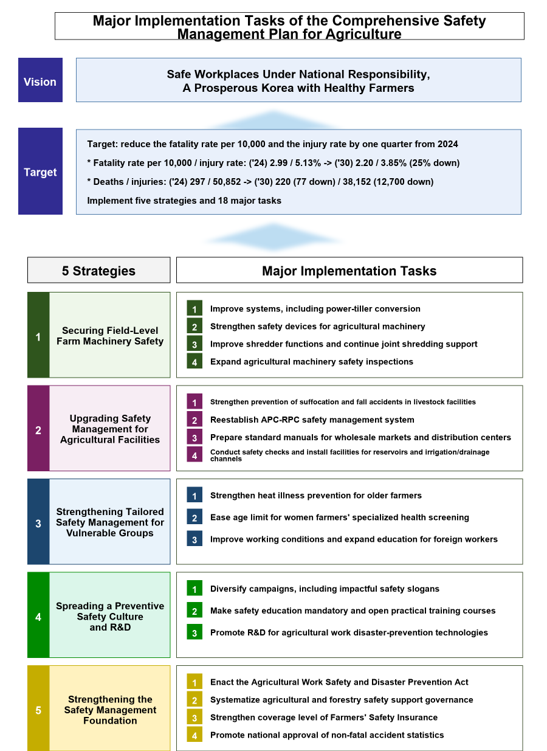
Figure 1. Major implementation tasks of Korea's Comprehensive Safety Management Plan for Agriculture
Source: MAFRA press-release attachment.
Policy design also recognizes that prevention must be visible in the field. A plan that only strengthens laws or collects statistics cannot change behavior unless farmers, machinery dealers, livestock operators, local governments, cooperatives, and foreign workers experience practical improvements. For this reason, the measures include mandatory safety devices, shared purchases of safety equipment, on-site consulting, mobile safety checks, practical machinery training, safety checklists for foreign workers, and incentives or penalties linked to facility inspections.
Another important feature is target-based management. The plan does not simply list projects; it ties them to reducing fatal and non-fatal accidents by 2030. This matters because safety policy can easily become a set of disconnected activities, each reported as completed without showing whether risk has declined. By specifying the expected decline in fatality rates, injury rates, deaths, and injuries, the plan creates a basis for monitoring implementation across agencies and for asking whether individual tasks are large enough to affect national outcomes.
MEDIA CONTEXT AND FIELD-LEVEL POLICY DEMAND
Recent Korean media coverage helps explain why the 2026-2030 plan should be viewed as more than an administrative package. MAFRA's official data show that agriculture's accident rate is far higher than that of general industry and that farm machinery remains the largest source of fatal accidents. Local and agricultural media reports have treated machinery accidents, heat illness, foreign worker safety, women farmers' health screening, and farmers' safety insurance as separate issues. The value of the new plan is that it tries to connect these scattered issues into one prevention system.
The machinery problem is especially visible in local reporting. Nongmin News reported that 5,602 agricultural machinery accidents during 2020-2024 caused 343 deaths and 3,657 injuries, with power tillers accounting for the largest share of accidents and many power tillers being more than 21 years old (Nongmin News, 2026a). Kyungbuk Maeil reported that Gyeongbuk Province recorded 606 agricultural machinery accidents in 2025, including 30 deaths, and that power tillers accounted for 61.2 percent of the accidents (Kyungbuk Maeil, 2026). These reports support a policy interpretation that machinery safety is not only a matter of individual caution. It is also a fleet-management problem involving old machines, road conditions, visibility devices, rollover protection, rental-center guidance, and emergency detection.
Heat illness reporting shows a second policy demand: agricultural safety policy must also be climate adaptation policy. Heat-illness reports have noted that outdoor workers, including farmers and fishers, are heavily exposed, and local governments are beginning to use field-facing prevention agents and direct farm visits during hot periods (KBS World, 2023; Asiae, 2026b). A prevention plan that focuses only on machinery will miss this changing risk environment. In Asian countries where summers are becoming hotter and rural populations are aging, heat alerts, field visits, rest facilities, medical outreach, and seasonal work scheduling need to be treated as core safety instruments.
Foreign worker safety is another reason to connect agricultural safety with labor governance. Korean media reports on seasonal workers have pointed to the expansion of insurance requirements and the need for practical safety education and local management systems (Seoul Shinmun, 2026; Asiae, 2026). This matters because foreign workers may enter unfamiliar farms, operate unfamiliar machinery, and face communication barriers in emergency situations. The plan's safety checklists and multilingual materials are therefore not peripheral welfare measures; they are part of risk management in a labor-scarce rural economy.
Media reports on women farmers and insurance also widen the policy frame. Coverage of specialized health screening for women farmers has shown growing recognition that agricultural safety includes musculoskeletal disorders, pesticide exposure, cardiovascular risk, and worksite dignity, not only acute injuries (Yonhap News Agency, 2026; News1, 2026a). Earlier reporting and policy research on Farmers' Safety Insurance and agricultural disaster blind spots raised concerns that compensation mechanisms have not been sufficient to prevent accidents or to cover the full diversity of farm work arrangements (Nongmin News, 2025b; KIHASA, 2018). Taken together, these sources support the plan's emphasis on prevention, health services, insurance reform, and nationally approved statistics.
STRATEGY 1: FARM MACHINERY AND FORESTRY EQUIPMENT SAFETY
The first strategy is to secure machinery safety in ways that farmers can feel in their daily work. This is the most urgent pillar because more than half of farmer deaths in 2024 were related to agricultural machinery. The plan focuses on rollover and overturn accidents, entanglement and cutting injuries, nighttime traffic crashes, unsafe modifications, and accidents in forest logging. The approach goes beyond user education. It also changes safety standards, expands post-market checks, and improves emergency response.
Media evidence suggests this strategy should be interpreted as a shift from accident response to machine-life-cycle management. The repeated appearance of old power tillers in accident reports means policy must address not only how farmers use machines, but also which machines remain in use, how they are modified, where they travel, whether warning and protection devices are installed, and how quickly emergency services can locate an injured operator. This is why the plan's measures on structural conversion, scrappage, reflector standards, post-market inspection, and 119-linked detection devices belong together rather than as separate projects.
For rollover and overturn accidents, the government plans to expand the scope of machinery that must have protective structures. The mandatory installation requirement will move from four types of machines, such as tractors and ride-on mowers, to six types by adding forklifts and excavators. For ride-on machinery already subject to mandatory seat-belt installation, a warning device will also be required so that the operator receives a warning sound for 90 seconds when the seat belt is not fastened. These requirements are simple, but they matter because a rollover becomes fatal when the operator is unprotected or thrown from the machine.
Traffic visibility is another important issue. Many farm vehicles move slowly on rural roads, sometimes at night or near elderly pedestrians. The plan strengthens reflector standards by aligning them more closely with vehicle safety standards and expands checks on unsafe or illegal modifications. Post-market inspections will expand from 299 models to 350 models, and sanctions will be strengthened when machines fail to meet safety standards.
The plan also addresses machinery with particularly high accident rates. For old power tillers owned by older farmers, Korea will consider scrappage support and allow structural conversion from walking-type handles to steering-wheel-type operation. For agricultural shredders, automatic stopping functions when the body approaches the machine and reverse-rotation functions will be required. Joint shredding by trained specialists will also be strengthened, which can reduce accidents among inexperienced users who operate powerful machines alone.
Forestry safety is included because logging in deep forests creates severe risks from slopes, trees falling, heavy equipment, and isolation from emergency services. MAFRA plans to cooperate with the Ministry of Employment and Labor to support the purchase of safety machinery and equipment, such as hydraulic logging machines and helmets. It also plans to tighten restrictions so only qualified or trained workers can perform certain high-risk logging tasks, and to strengthen deployment standards for site supervisors so one supervisor is not responsible for too many worksites.
Emergency response is also part of machinery safety. The plan refers to accident-detection terminals that can automatically transmit agricultural machinery accident information to the 119 emergency system. A pilot operation links 1,297 devices with fire headquarters in Jeonnam, Gangwon, and Gyeongbuk. This measure is important because many machinery accidents occur when farmers work alone in fields or on rural roads. If an injured operator cannot call for help, the time between accident and rescue can determine survival and recovery.
STRATEGY 2: SAFETY MANAGEMENT FOR AGRICULTURAL FACILITIES
The second strategy upgrades safety management in agricultural facilities. Although machinery accidents are highly visible, livestock sheds, manure treatment facilities, agricultural distribution centers, reservoirs, and drainage channels also produce serious accidents. These worksites often involve confined spaces, toxic gases, slippery surfaces, roofs, ladders, unguarded water channels, and heavy transport equipment.
Livestock facilities are a major focus because suffocation and fall accidents are frequent in pig farms and cattle sheds. The plan supports ventilation fans, ducts, air-supplied masks, pulleys for pump replacement, roof-light covers, safety hooks, guardrails, warning signs, and other equipment. It also seeks to make safety measures mandatory for beneficiaries of livestock facility modernization projects. This is a useful design principle: public support for facility modernization should not only raise productivity but also correct dangerous work environments.
The plan also strengthens safety inspections in livestock facilities. High-risk areas such as slurry pits, manure treatment facilities, sumps, and cleaning points need regular and mandatory checks. Without such checks, safety equipment can exist on paper while workers continue to enter dangerous spaces without ventilation or protective gear. Linking sectoral facility inspections to safety compliance can help make safety a normal part of livestock management, not a voluntary add-on.
Distribution and infrastructure facilities are also covered. Agricultural processing centers and rice processing complexes will face stronger local government oversight, and inspection results may influence incentives or penalties such as access to renovation funds. Reservoirs, irrigation channels, drainage channels, and connected farm roads will receive more fences, guardrails, warning signs, and nighttime lighting. Small reservoirs below 50,000 cubic meters, which may previously have been outside detailed inspection systems, will be included in emergency facility checks during flood and leakage-risk periods.
These facility measures show that safety management should be embedded in ordinary investment decisions. A livestock modernization loan, an APC renovation project, an RPC evaluation, or a reservoir maintenance budget can either ignore safety or make safety an explicit condition. The Korean plan takes the second path. This is a useful lesson because safety improvements are often cheaper and more acceptable when they are built into scheduled facility upgrades rather than introduced only after a serious accident.
STRATEGY 3: TAILORED SAFETY SUPPORT FOR VULNERABLE GROUPS
The third strategy recognizes that safety risks differ by age, gender, work status, language, and health condition. Older farmers, women farmers, and foreign workers face different combinations of risk. A uniform safety lecture is therefore not enough. Policy must adapt to the people who work in the field and the tasks they perform.
For older farmers, heat illness and chronic disease are major concerns. The plan introduces closer field-based management during hot periods by linking older farmers with leading farmers and local prevention personnel. It also expands the rural medical bus program from 264 locations and 75,000 participants in 2025 to 353 locations and 84,000 participants in 2026. To improve participation in safety education, older farmers may receive farm-helper support during training. This is important because safety programs often fail when farmers cannot leave the field during busy seasons.
Media coverage of heat illness in agricultural settings supports this emphasis. Reports on heat illness and local safety-guard programs show that older farmers can be exposed during periods of high temperature and high humidity, especially when they work alone in fields or greenhouses. The policy lesson is that heat risk cannot be managed through general public warnings alone. Rural safety systems need a field-facing mechanism: identifying older farmers who work alone, sending localized alerts, arranging rest and shade, linking medical outreach with local leaders, and changing work routines during high-risk hours.
For women farmers, the plan connects safety with occupational health and worksite dignity. Many women perform repetitive tasks in fixed postures, including squatting, bending, lifting, sorting, and harvesting. These tasks increase musculoskeletal, cardiovascular, and urinary risks. The plan therefore expands eligibility for specialized health screening from ages 51-70 to ages 51-80 and supports the installation of shared restrooms in fields. It also continues developing women-friendly agricultural machinery, adding 25 new types to the 27 already developed.
Foreign workers require a different safety channel. For seasonal workers under the E-8 visa system, the plan will require both workers and host farms to submit safety checklists during the visa application process. Farms identified as vulnerable through the checklist will receive safety education and guidance through agricultural safety management teams. For E-9 workers allocated to livestock, the plan adds safety education in cooperation with livestock organizations and prepares multilingual videos, leaflets, and card news in nine languages, including Thai, Vietnamese, and Nepali.
The foreign-worker component also shows why agricultural safety must be linked to immigration and local labor policy. Media coverage has noted that insurance requirements for seasonal workers are being strengthened and that practical information platforms and multilingual education are being developed for foreign workers. These measures are safety policies as much as labor-administration policies. If a worker cannot understand a warning sign, report an unsafe dormitory or worksite, or communicate during an emergency, the formal existence of a safety rule does not guarantee actual protection.
This tailored approach is significant because vulnerability in agricultural work is not only a matter of physical weakness. It also reflects information gaps, language barriers, unfamiliar machinery, lack of toilets and rest spaces, seasonal pressure, and limited access to health checks. By targeting different groups separately, the plan makes safety policy more likely to reach those who need it most.
STRATEGY 4: SAFETY CULTURE, EDUCATION, AND R&D
The fourth strategy aims to spread a preventive safety culture and expand technology development. Regulations and equipment are necessary, but they cannot prevent accidents if safety remains a low priority in everyday farming. Farmers may keep using familiar machines without guards, work in extreme heat, skip seat belts, repair roofs without fall-prevention devices, or operate shredders alone because these practices are normal in local routines.
The plan therefore emphasizes campaigns with strong safety messages, cooperation with local governments, cooperatives, farmer organizations, and rural communities, and even public campaigns encouraging adult children to call parents during heat waves, cold waves, and rainy seasons. These measures may sound soft compared with regulation, but they can help shift risk perception. In agriculture, where many workers are self-employed and work alone, family and community signals can matter.
Education is also linked to policy support. Safety education will become a requirement for some public programs, including young farmer settlement support and agricultural machinery purchase loans. New practical training courses will be created for high-risk machinery such as power tillers, including courses tailored to women farmers. This is a stronger approach than general classroom education because many accidents involve handling, turning, reversing, attaching equipment, moving on slopes, and managing poor visibility.
The plan also expands the use of agricultural work, safety managers and consulting. According to the plan, the number of safety managers and the consulting target will increase from 40 managers and 2,000 farms in 2025 to 88 managers and 5,000 farms in 2026. Safety education will also be expanded sharply, from about 45,000 participants in 2025 to about 345,000 in 2026, partly by adding safety education to regular new-year farmer education. This scale-up is important because awareness campaigns need repeated contact, not a one-time message.
Research and development is another pillar. The plan expands R&D for musculoskeletal disease prevention, wearable assistive devices, heat-illness prevention technology, and small, lightweight agricultural machinery. Field-tested small machinery, such as ride-on garlic collectors, soil sterilizers, and small or medium-sized smart-farm spraying robots, may be designated as eligible for government support. This link between R&D and procurement is important because safety technologies will have limited impact if they remain prototypes.
STRATEGY 5: INSTITUTIONAL FOUNDATION, INSURANCE, AND DATA
The fifth strategy strengthens the institutional foundation for safety management. Korea's existing framework has been centered partly on insurance and post-accident compensation. The plan proposes to separate and develop the insurance-centered legal framework into a new agricultural work safety and disaster prevention law. The proposed law would clarify the responsibilities of the state and agricultural workers, define institutional roles, establish a basis for safety management organizations, and introduce safety supervision functions.
The plan also includes insurance reform. The government will review ways to strengthen Farmers' Safety Insurance toward a level closer to industrial accident insurance. By 2028, existing products may be gradually integrated into higher-coverage products, and the government will review rules that exempt employers from additional liability within the scope of insurance compensation when accidents occur to hired farm workers. Such reforms can reduce uncertainty, but they must be designed carefully so that stronger compensation does not weaken prevention incentives.
This institutional agenda matters because media reports have long highlighted limits in the agricultural safety net. Farmers' Safety Insurance has helped compensate for injuries, but news coverage has questioned whether insurance participation, compensation levels, and the treatment of hired workers are adequate for the diverse reality of Korean farms. The policy task is therefore to make insurance perform two functions at once: provide predictable compensation after accidents and generate information and incentives that reduce accidents before they occur.
Data is the final foundation. The plan seeks to manage fatal agricultural work accident statistics as nationally approved statistics in 2026 and to prepare non-fatal accident statistics for national approval by 2028. This requires accident investigation forms, information systems, data verification, accident-type classification, and cooperation between NongHyup Life Insurance and the Rural Development Administration. Better statistics are not merely administrative. They make it possible to identify high-risk machines, regions, tasks, seasons, age groups, and worksites, and to evaluate whether policy measures reduce injuries.
The data agenda should be understood as an accountability mechanism. A media report can describe a tragic accident, but a national prevention system needs to know whether similar accidents are increasing in particular machines, regions, seasons, or farm types. Without non-fatal injury statistics and near-miss information, policy may overreact to fatal accidents and underinvest in the more common injuries that damage rural labour capacity. Nationally approved statistics can also help local governments, insurers, cooperatives, and extension services share a common risk map.
POLICY IMPLICATIONS FOR ASIAN COUNTRIES
The first implication is that agricultural safety should be treated as a core rural policy, not a marginal welfare issue. Korean media coverage shows that agricultural safety problems appear not only in government statistics but also in ordinary local reporting: machinery accidents, heat illness, seasonal-worker issues, women farmers' health needs, and insurance gaps recur as rural problems. Many Asian countries face similar rural aging, mechanization, part-time farming, and labor shortages. A safety plan that is connected to machinery standards, infrastructure investment, health screening, labor governance, training, and statistics is therefore more useful than a narrow compensation program.
The second implication is that machinery safety requires regulation across the life cycle. Accidents do not occur only because farmers lack caution. They also occur because old machines remain in service, machines lack protective structures or warning devices, rural roads have poor visibility, rental-center users may be inexperienced, and emergency reporting can be delayed. Countries should therefore combine design standards, post-market inspection, scrappage or conversion support, dealer and rental-center oversight, practical training, and emergency response systems. This integrated view addresses the machine, the operator, the road environment, and the response chain together.
The third implication is that agricultural safety policy should incorporate climate risk. Heat illness reporting from fields and greenhouses suggests that agricultural safety is no longer only about machinery and falls. Older farmers, self-employed farmers, and small family farms may not be reached by ordinary occupational safety channels. Asian countries should treat heat alerts, shade and rest facilities, field-based medical outreach, work-hour adjustment, and seasonal communication as agricultural safety instruments, especially in regions where climate change is raising the intensity and duration of summer heat.
The fourth implication is that vulnerable groups need tailored instruments. Older farmers need prevention of heat-illness, medical outreach, and training formats that do not conflict with farm work. Women farmers need occupational health screening, worksite restrooms, lighter machinery, and ergonomically designed tools. Foreign workers need safety checklists, multilingual education, insurance clarity, and farm-level guidance. A single safety manual cannot serve all groups. The Korean case is useful because it translates vulnerability into specific delivery tools rather than treating it as a general slogan.
The fifth implication is that facility safety is agricultural infrastructure. Livestock manure pits, roofs, reservoirs, drainage channels, and distribution centers can be as dangerous as tractors. Public support for livestock modernization, distribution facilities, and irrigation infrastructure should include safety criteria from the beginning. If safety is added only after accidents occur, costs rise, and behavior is harder to change. This is particularly important in countries where agricultural investment budgets are larger and more stable than stand-alone safety budgets.
The sixth implication is that data systems are essential. Many countries lack reliable data on non-fatal farm injuries, near misses, machinery types, seasonal patterns, and worksite conditions. Without such data, policy tends to react to visible accidents rather than prevent recurring risks. Korea's attempt to strengthen nationally approved statistics offers a useful model for building an evidence base. However, the Korean case also suggests a caution: national statistics should be linked to local delivery, insurance data, extension services, and media-observed accident patterns; otherwise, data collection can become an administrative exercise detached from prevention.
The seventh implication is that safety culture must be connected to incentives. Campaigns are useful, but they should be reinforced by conditions for loans, grants, modernization projects, insurance products, and facility inspections. When safety education becomes a requirement for machinery loans or public programs, it becomes part of normal farm management rather than an optional lecture. In practice, this means designing a policy package in which safer behavior is easier, cheaper, and more institutionally rewarded than unsafe behavior.
CONCLUSION
Korea's Comprehensive Safety Management Plan for Agriculture and Forestry presents a broad preventive framework for reducing deaths and injuries in rural work. Its strength is that it connects machinery, facilities, vulnerable groups, education, R&D, law, insurance, and data. This breadth reflects the reality of agriculture and forestry, where accidents often result from the interaction of old equipment, aging workers, dispersed sites, seasonal pressure, weak information, and insufficient emergency response.
For Korea, the key task is implementation discipline. The plan's success should be measured not only by the number of tasks completed, but by actual reductions in fatality and injury rates, safer machinery, more reliable facility inspections, better support for older farmers, women farmers, and foreign workers, and stronger safety behavior in everyday farm work.
Achieving these outcomes depends on how the plan is implemented. To strengthen implementation, this paper proposes six recommendations for the government. First, MAFRA should lead inter-agency coordination so that machinery safety devices, safety education, and emergency response systems operate as a single prevention-and-response chain rather than parallel projects. Second, local governments and agricultural technology centers should be given adequate staff, budget, and authority to translate national targets into routine field action. Third, safety obligations should be paired with tangible benefits, such as insurance access and eligibility for loans and grants, so that farmers experience safety policy as support rather than compliance. Fourth, the target of reducing deaths and injuries by one quarter should be complemented by intermediate indicators for machinery, facilities, and vulnerable groups, allowing progress to be monitored before outcome data become available. Fifth, the legal foundation, insurance reform, and national safety statistics should be used to secure recurring finance, ensuring that safety remains a standing component of agricultural policy beyond the initial implementation period. Sixth, safety communication should be delivered seasonally through channels farmers already use, including cooperatives, extension centers, machinery dealers, and migrant-worker support networks.
For other Asian countries, the Korean case shows that agricultural safety can be designed as a national prevention system rather than a narrow compensation mechanism. As rural societies age and mechanize, such a preventive approach will become increasingly important.
The plan also suggests that safety should be understood as a condition for sustaining rural labor itself. If older farmers, women farmers, hired workers, and foreign workers cannot work safely, agricultural productivity and rural community resilience will weaken. Prevention is therefore not separate from agricultural competitiveness; it is one of its foundations.
REFERENCES
Ministry of Agriculture, Food and Rural Affairs (MAFRA). 2026. Comprehensive Safety Management Plan for Agriculture and Forestry. Press release and attachment, June 5, 2026.
Nongmin News. 2026a. "More than 5,600 agricultural machinery accidents occurred during the last five years." March 16, 2026. https://www.nongmin.com/article/20260314500003
Kyungbuk Maeil. 2026. "Farm machinery accidents require special caution ahead of the farming season." Daum News, March 11, 2026. https://v.daum.net/v/20260311195838721
KBS World. 2023. "One in three heat illness patients are farmers and fishers." August 11, 2023. https://world.kbs.co.kr/service/news_view.htm?Seq_Code=179958&lang=e
Asiae. 2026b. "Gyeonggi Province deploys agricultural safety guards to prevent farm accidents and heat illness." June 4, 2026. https://www.asiae.co.kr/article/2026060410304314298
Seoul Shinmun. 2026. "Three insurance coverages become mandatory for foreign seasonal workers." March 26, 2026. https://go.seoul.co.kr/news/newsView.php?id=20260326500072
Asiae. 2026. "Foreign seasonal worker management is strengthened through insurance and local monitoring." March 26, 2026. https://www.asiae.co.kr/article/2026032609150830501
Yonhap News Agency. 2026. "Women farmers' specialized health screening expands to 80,000 people this year." February 1, 2026. https://www.yna.co.kr/view/AKR20260130166300030
News1. 2026a. "Seocheon County fully supports women farmers' specialized health screening." Nate News, June 2, 2026. https://news.nate.com/view/20260602n17017
Nongmin News. 2025b. "Agricultural work-disaster statistics, education, and insurance remain weak." Daum News, October 27, 2025. https://v.daum.net/v/6sl8CbyOgS
Korea Institute for Health and Social Affairs (KIHASA). 2018. "Coverage gaps in farmers' safety insurance and agricultural work-related accidents." Issue & Focus. https://repository.kihasa.re.kr/handle/201002/30010


Korea's Comprehensive Safety Management Plan for Agriculture and Forestry (2026-2030): Key Measures and Policy Implications
ABSTRACT
The Ministry of Agriculture, Food and Rural Affairs (MAFRA) announced the Comprehensive Safety Management Plan for Agriculture and Forestry as a five-year policy package for 2026-2030. This article introduces the plan as a Korean policy case and interprets it considering recent Korean media reports on old power tillers, regional machinery accidents, heat illness in fields and greenhouses, foreign seasonal workers, women farmers' occupational health, and agricultural safety insurance. By 2030, the government aims to reduce both the fatality and injury rates by one quarter compared with 2024. The plan is organized around five strategies: improving machinery safety, upgrading facility safety management, strengthening tailored support for vulnerable groups, spreading a preventive safety culture and expanding research and development, and reinforcing the institutional foundation for safety management. The article argues that the Korean case is useful for Asian countries because it frames agricultural safety as a national prevention system connected to rural aging, labor shortages, climate risk, machinery renewal, migrant labor governance, gender-sensitive health services, insurance reform, and evidence-based policy evaluation.
Keywords: Agricultural safety, forestry safety, farm machinery, occupational health, Korea, rural aging, safety management
INTRODUCTION
Agriculture and forestry remain essential to food security, rural livelihoods, and environmental management, but they are also among the most hazardous fields of work. Unlike many urban industries, agricultural and forestry work is performed across dispersed and changing sites: fields, orchards, greenhouses, livestock sheds, reservoirs, drainage channels, distribution facilities, mountain forests, and local roads. Workers operate machinery, handle animals and manure, climb roofs and slopes, work in extreme heat and cold, and often continue working into older age. These characteristics make safety management difficult because risks are not concentrated in one factory or one employer-controlled workplace.
In June 2026, MAFRA announced the Comprehensive Safety Management Plan for Agriculture and Forestry for 2026-2030. The plan is important because it treats safety not as a narrow insurance or compensation issue, but as a matter of public responsibility, prevention, worksite design, technology, education, data, and institutional coordination. Its stated vision is Korea where national responsibility guarantees safe workplaces and healthy farmers can participate in a prosperous rural economy.
This article reads the plan as a policy case for Asia. It therefore draws not only on the official MAFRA announcement but also on Korean news reports that show how agricultural safety problems appear in local communities: old power tillers overturning on rural roads, older farmers working alone during heat waves, women farmers facing work-related health risks, foreign seasonal workers entering farms with limited safety information, and agricultural insurance systems struggling to function as prevention tools. This broader evidence base matters because a safety plan becomes credible only when its measures connect to the real situations reported from the field.
The background is clear. According to MAFRA's announcement, the 2024 accident rate under the Farmers' Safety Insurance system was about 5%, compared with 0.67% under the general industrial accident insurance system. The fatality rate was 2.99 per 10,000 farmers, compared with 0.98 per 10,000 for all industries. In other words, the agricultural accident rate was about 7.5 times the general industrial accident rate, and the fatality rate was about 3.1 times higher. Farm machinery accounted for 174 of 297 farmer deaths in 2024, or 59% , while falls accounted for 55 deaths, or about 20%.
The plan therefore sets a concrete target: by 2030, Korea aims to reduce the fatality and injury rates by 25 percent compared with 2024. In numeric terms, the fatality rate is to fall from 2.99 to 2.20 per 10,000, while the injury rate is to fall from 5.13% to 3.85%. The number of deaths is expected to decline from 297 to 220, and the number of injuries dropped from 50,852 to 38,152. This article summarizes the plan's five strategies and draws policy implications for countries seeking to reduce agricultural and forestry safety risks.
PLAN ARCHITECTURE AND POLICY SHIFT
The Comprehensive Safety Management Plan marks a shift from fragmented safety projects to a sector-wide preventive framework. In the past, different agencies implemented safety measures, including MAFRA, the Rural Development Administration, and the Korea Forest Service. Although those measures were useful, agency-by-agency implementation had limits in reducing overall accident rates at the worksite level. Machinery standards, farm education, livestock facility improvements, forest safety, agricultural insurance, and occupational health services were not always connected in a single policy cycle.
The new plan tries to connect these separate pieces. It covers agriculture and forestry together, places the reduction of deaths and injuries at the center, and combines regulation, equipment, incentives, education, monitoring, research and development, insurance reform, and data management. This integrated approach matters because agricultural safety accidents often have multiple causes: old machinery, an older operator, weak training, limited protective devices, poor road visibility, lack of emergency reporting, seasonal pressure, and insufficient local guidance can all interact.
The plan's overall architecture can be summarized as a prevention-oriented package that links one vision, one measurable target, five strategies, and 18 major implementation tasks. Figure 1 presents this architecture schematically. It highlights the plan's emphasis on field-level machinery safety, facility safety, vulnerable groups, safety culture and R&D, and the institutional foundation for long-term safety management.
Figure 1. Major implementation tasks of Korea's Comprehensive Safety Management Plan for Agriculture
Source: MAFRA press-release attachment.
Policy design also recognizes that prevention must be visible in the field. A plan that only strengthens laws or collects statistics cannot change behavior unless farmers, machinery dealers, livestock operators, local governments, cooperatives, and foreign workers experience practical improvements. For this reason, the measures include mandatory safety devices, shared purchases of safety equipment, on-site consulting, mobile safety checks, practical machinery training, safety checklists for foreign workers, and incentives or penalties linked to facility inspections.
Another important feature is target-based management. The plan does not simply list projects; it ties them to reducing fatal and non-fatal accidents by 2030. This matters because safety policy can easily become a set of disconnected activities, each reported as completed without showing whether risk has declined. By specifying the expected decline in fatality rates, injury rates, deaths, and injuries, the plan creates a basis for monitoring implementation across agencies and for asking whether individual tasks are large enough to affect national outcomes.
MEDIA CONTEXT AND FIELD-LEVEL POLICY DEMAND
Recent Korean media coverage helps explain why the 2026-2030 plan should be viewed as more than an administrative package. MAFRA's official data show that agriculture's accident rate is far higher than that of general industry and that farm machinery remains the largest source of fatal accidents. Local and agricultural media reports have treated machinery accidents, heat illness, foreign worker safety, women farmers' health screening, and farmers' safety insurance as separate issues. The value of the new plan is that it tries to connect these scattered issues into one prevention system.
The machinery problem is especially visible in local reporting. Nongmin News reported that 5,602 agricultural machinery accidents during 2020-2024 caused 343 deaths and 3,657 injuries, with power tillers accounting for the largest share of accidents and many power tillers being more than 21 years old (Nongmin News, 2026a). Kyungbuk Maeil reported that Gyeongbuk Province recorded 606 agricultural machinery accidents in 2025, including 30 deaths, and that power tillers accounted for 61.2 percent of the accidents (Kyungbuk Maeil, 2026). These reports support a policy interpretation that machinery safety is not only a matter of individual caution. It is also a fleet-management problem involving old machines, road conditions, visibility devices, rollover protection, rental-center guidance, and emergency detection.
Heat illness reporting shows a second policy demand: agricultural safety policy must also be climate adaptation policy. Heat-illness reports have noted that outdoor workers, including farmers and fishers, are heavily exposed, and local governments are beginning to use field-facing prevention agents and direct farm visits during hot periods (KBS World, 2023; Asiae, 2026b). A prevention plan that focuses only on machinery will miss this changing risk environment. In Asian countries where summers are becoming hotter and rural populations are aging, heat alerts, field visits, rest facilities, medical outreach, and seasonal work scheduling need to be treated as core safety instruments.
Foreign worker safety is another reason to connect agricultural safety with labor governance. Korean media reports on seasonal workers have pointed to the expansion of insurance requirements and the need for practical safety education and local management systems (Seoul Shinmun, 2026; Asiae, 2026). This matters because foreign workers may enter unfamiliar farms, operate unfamiliar machinery, and face communication barriers in emergency situations. The plan's safety checklists and multilingual materials are therefore not peripheral welfare measures; they are part of risk management in a labor-scarce rural economy.
Media reports on women farmers and insurance also widen the policy frame. Coverage of specialized health screening for women farmers has shown growing recognition that agricultural safety includes musculoskeletal disorders, pesticide exposure, cardiovascular risk, and worksite dignity, not only acute injuries (Yonhap News Agency, 2026; News1, 2026a). Earlier reporting and policy research on Farmers' Safety Insurance and agricultural disaster blind spots raised concerns that compensation mechanisms have not been sufficient to prevent accidents or to cover the full diversity of farm work arrangements (Nongmin News, 2025b; KIHASA, 2018). Taken together, these sources support the plan's emphasis on prevention, health services, insurance reform, and nationally approved statistics.
STRATEGY 1: FARM MACHINERY AND FORESTRY EQUIPMENT SAFETY
The first strategy is to secure machinery safety in ways that farmers can feel in their daily work. This is the most urgent pillar because more than half of farmer deaths in 2024 were related to agricultural machinery. The plan focuses on rollover and overturn accidents, entanglement and cutting injuries, nighttime traffic crashes, unsafe modifications, and accidents in forest logging. The approach goes beyond user education. It also changes safety standards, expands post-market checks, and improves emergency response.
Media evidence suggests this strategy should be interpreted as a shift from accident response to machine-life-cycle management. The repeated appearance of old power tillers in accident reports means policy must address not only how farmers use machines, but also which machines remain in use, how they are modified, where they travel, whether warning and protection devices are installed, and how quickly emergency services can locate an injured operator. This is why the plan's measures on structural conversion, scrappage, reflector standards, post-market inspection, and 119-linked detection devices belong together rather than as separate projects.
For rollover and overturn accidents, the government plans to expand the scope of machinery that must have protective structures. The mandatory installation requirement will move from four types of machines, such as tractors and ride-on mowers, to six types by adding forklifts and excavators. For ride-on machinery already subject to mandatory seat-belt installation, a warning device will also be required so that the operator receives a warning sound for 90 seconds when the seat belt is not fastened. These requirements are simple, but they matter because a rollover becomes fatal when the operator is unprotected or thrown from the machine.
Traffic visibility is another important issue. Many farm vehicles move slowly on rural roads, sometimes at night or near elderly pedestrians. The plan strengthens reflector standards by aligning them more closely with vehicle safety standards and expands checks on unsafe or illegal modifications. Post-market inspections will expand from 299 models to 350 models, and sanctions will be strengthened when machines fail to meet safety standards.
The plan also addresses machinery with particularly high accident rates. For old power tillers owned by older farmers, Korea will consider scrappage support and allow structural conversion from walking-type handles to steering-wheel-type operation. For agricultural shredders, automatic stopping functions when the body approaches the machine and reverse-rotation functions will be required. Joint shredding by trained specialists will also be strengthened, which can reduce accidents among inexperienced users who operate powerful machines alone.
Forestry safety is included because logging in deep forests creates severe risks from slopes, trees falling, heavy equipment, and isolation from emergency services. MAFRA plans to cooperate with the Ministry of Employment and Labor to support the purchase of safety machinery and equipment, such as hydraulic logging machines and helmets. It also plans to tighten restrictions so only qualified or trained workers can perform certain high-risk logging tasks, and to strengthen deployment standards for site supervisors so one supervisor is not responsible for too many worksites.
Emergency response is also part of machinery safety. The plan refers to accident-detection terminals that can automatically transmit agricultural machinery accident information to the 119 emergency system. A pilot operation links 1,297 devices with fire headquarters in Jeonnam, Gangwon, and Gyeongbuk. This measure is important because many machinery accidents occur when farmers work alone in fields or on rural roads. If an injured operator cannot call for help, the time between accident and rescue can determine survival and recovery.
STRATEGY 2: SAFETY MANAGEMENT FOR AGRICULTURAL FACILITIES
The second strategy upgrades safety management in agricultural facilities. Although machinery accidents are highly visible, livestock sheds, manure treatment facilities, agricultural distribution centers, reservoirs, and drainage channels also produce serious accidents. These worksites often involve confined spaces, toxic gases, slippery surfaces, roofs, ladders, unguarded water channels, and heavy transport equipment.
Livestock facilities are a major focus because suffocation and fall accidents are frequent in pig farms and cattle sheds. The plan supports ventilation fans, ducts, air-supplied masks, pulleys for pump replacement, roof-light covers, safety hooks, guardrails, warning signs, and other equipment. It also seeks to make safety measures mandatory for beneficiaries of livestock facility modernization projects. This is a useful design principle: public support for facility modernization should not only raise productivity but also correct dangerous work environments.
The plan also strengthens safety inspections in livestock facilities. High-risk areas such as slurry pits, manure treatment facilities, sumps, and cleaning points need regular and mandatory checks. Without such checks, safety equipment can exist on paper while workers continue to enter dangerous spaces without ventilation or protective gear. Linking sectoral facility inspections to safety compliance can help make safety a normal part of livestock management, not a voluntary add-on.
Distribution and infrastructure facilities are also covered. Agricultural processing centers and rice processing complexes will face stronger local government oversight, and inspection results may influence incentives or penalties such as access to renovation funds. Reservoirs, irrigation channels, drainage channels, and connected farm roads will receive more fences, guardrails, warning signs, and nighttime lighting. Small reservoirs below 50,000 cubic meters, which may previously have been outside detailed inspection systems, will be included in emergency facility checks during flood and leakage-risk periods.
These facility measures show that safety management should be embedded in ordinary investment decisions. A livestock modernization loan, an APC renovation project, an RPC evaluation, or a reservoir maintenance budget can either ignore safety or make safety an explicit condition. The Korean plan takes the second path. This is a useful lesson because safety improvements are often cheaper and more acceptable when they are built into scheduled facility upgrades rather than introduced only after a serious accident.
STRATEGY 3: TAILORED SAFETY SUPPORT FOR VULNERABLE GROUPS
The third strategy recognizes that safety risks differ by age, gender, work status, language, and health condition. Older farmers, women farmers, and foreign workers face different combinations of risk. A uniform safety lecture is therefore not enough. Policy must adapt to the people who work in the field and the tasks they perform.
For older farmers, heat illness and chronic disease are major concerns. The plan introduces closer field-based management during hot periods by linking older farmers with leading farmers and local prevention personnel. It also expands the rural medical bus program from 264 locations and 75,000 participants in 2025 to 353 locations and 84,000 participants in 2026. To improve participation in safety education, older farmers may receive farm-helper support during training. This is important because safety programs often fail when farmers cannot leave the field during busy seasons.
Media coverage of heat illness in agricultural settings supports this emphasis. Reports on heat illness and local safety-guard programs show that older farmers can be exposed during periods of high temperature and high humidity, especially when they work alone in fields or greenhouses. The policy lesson is that heat risk cannot be managed through general public warnings alone. Rural safety systems need a field-facing mechanism: identifying older farmers who work alone, sending localized alerts, arranging rest and shade, linking medical outreach with local leaders, and changing work routines during high-risk hours.
For women farmers, the plan connects safety with occupational health and worksite dignity. Many women perform repetitive tasks in fixed postures, including squatting, bending, lifting, sorting, and harvesting. These tasks increase musculoskeletal, cardiovascular, and urinary risks. The plan therefore expands eligibility for specialized health screening from ages 51-70 to ages 51-80 and supports the installation of shared restrooms in fields. It also continues developing women-friendly agricultural machinery, adding 25 new types to the 27 already developed.
Foreign workers require a different safety channel. For seasonal workers under the E-8 visa system, the plan will require both workers and host farms to submit safety checklists during the visa application process. Farms identified as vulnerable through the checklist will receive safety education and guidance through agricultural safety management teams. For E-9 workers allocated to livestock, the plan adds safety education in cooperation with livestock organizations and prepares multilingual videos, leaflets, and card news in nine languages, including Thai, Vietnamese, and Nepali.
The foreign-worker component also shows why agricultural safety must be linked to immigration and local labor policy. Media coverage has noted that insurance requirements for seasonal workers are being strengthened and that practical information platforms and multilingual education are being developed for foreign workers. These measures are safety policies as much as labor-administration policies. If a worker cannot understand a warning sign, report an unsafe dormitory or worksite, or communicate during an emergency, the formal existence of a safety rule does not guarantee actual protection.
This tailored approach is significant because vulnerability in agricultural work is not only a matter of physical weakness. It also reflects information gaps, language barriers, unfamiliar machinery, lack of toilets and rest spaces, seasonal pressure, and limited access to health checks. By targeting different groups separately, the plan makes safety policy more likely to reach those who need it most.
STRATEGY 4: SAFETY CULTURE, EDUCATION, AND R&D
The fourth strategy aims to spread a preventive safety culture and expand technology development. Regulations and equipment are necessary, but they cannot prevent accidents if safety remains a low priority in everyday farming. Farmers may keep using familiar machines without guards, work in extreme heat, skip seat belts, repair roofs without fall-prevention devices, or operate shredders alone because these practices are normal in local routines.
The plan therefore emphasizes campaigns with strong safety messages, cooperation with local governments, cooperatives, farmer organizations, and rural communities, and even public campaigns encouraging adult children to call parents during heat waves, cold waves, and rainy seasons. These measures may sound soft compared with regulation, but they can help shift risk perception. In agriculture, where many workers are self-employed and work alone, family and community signals can matter.
Education is also linked to policy support. Safety education will become a requirement for some public programs, including young farmer settlement support and agricultural machinery purchase loans. New practical training courses will be created for high-risk machinery such as power tillers, including courses tailored to women farmers. This is a stronger approach than general classroom education because many accidents involve handling, turning, reversing, attaching equipment, moving on slopes, and managing poor visibility.
The plan also expands the use of agricultural work, safety managers and consulting. According to the plan, the number of safety managers and the consulting target will increase from 40 managers and 2,000 farms in 2025 to 88 managers and 5,000 farms in 2026. Safety education will also be expanded sharply, from about 45,000 participants in 2025 to about 345,000 in 2026, partly by adding safety education to regular new-year farmer education. This scale-up is important because awareness campaigns need repeated contact, not a one-time message.
Research and development is another pillar. The plan expands R&D for musculoskeletal disease prevention, wearable assistive devices, heat-illness prevention technology, and small, lightweight agricultural machinery. Field-tested small machinery, such as ride-on garlic collectors, soil sterilizers, and small or medium-sized smart-farm spraying robots, may be designated as eligible for government support. This link between R&D and procurement is important because safety technologies will have limited impact if they remain prototypes.
STRATEGY 5: INSTITUTIONAL FOUNDATION, INSURANCE, AND DATA
The fifth strategy strengthens the institutional foundation for safety management. Korea's existing framework has been centered partly on insurance and post-accident compensation. The plan proposes to separate and develop the insurance-centered legal framework into a new agricultural work safety and disaster prevention law. The proposed law would clarify the responsibilities of the state and agricultural workers, define institutional roles, establish a basis for safety management organizations, and introduce safety supervision functions.
The plan also includes insurance reform. The government will review ways to strengthen Farmers' Safety Insurance toward a level closer to industrial accident insurance. By 2028, existing products may be gradually integrated into higher-coverage products, and the government will review rules that exempt employers from additional liability within the scope of insurance compensation when accidents occur to hired farm workers. Such reforms can reduce uncertainty, but they must be designed carefully so that stronger compensation does not weaken prevention incentives.
This institutional agenda matters because media reports have long highlighted limits in the agricultural safety net. Farmers' Safety Insurance has helped compensate for injuries, but news coverage has questioned whether insurance participation, compensation levels, and the treatment of hired workers are adequate for the diverse reality of Korean farms. The policy task is therefore to make insurance perform two functions at once: provide predictable compensation after accidents and generate information and incentives that reduce accidents before they occur.
Data is the final foundation. The plan seeks to manage fatal agricultural work accident statistics as nationally approved statistics in 2026 and to prepare non-fatal accident statistics for national approval by 2028. This requires accident investigation forms, information systems, data verification, accident-type classification, and cooperation between NongHyup Life Insurance and the Rural Development Administration. Better statistics are not merely administrative. They make it possible to identify high-risk machines, regions, tasks, seasons, age groups, and worksites, and to evaluate whether policy measures reduce injuries.
The data agenda should be understood as an accountability mechanism. A media report can describe a tragic accident, but a national prevention system needs to know whether similar accidents are increasing in particular machines, regions, seasons, or farm types. Without non-fatal injury statistics and near-miss information, policy may overreact to fatal accidents and underinvest in the more common injuries that damage rural labour capacity. Nationally approved statistics can also help local governments, insurers, cooperatives, and extension services share a common risk map.
POLICY IMPLICATIONS FOR ASIAN COUNTRIES
The first implication is that agricultural safety should be treated as a core rural policy, not a marginal welfare issue. Korean media coverage shows that agricultural safety problems appear not only in government statistics but also in ordinary local reporting: machinery accidents, heat illness, seasonal-worker issues, women farmers' health needs, and insurance gaps recur as rural problems. Many Asian countries face similar rural aging, mechanization, part-time farming, and labor shortages. A safety plan that is connected to machinery standards, infrastructure investment, health screening, labor governance, training, and statistics is therefore more useful than a narrow compensation program.
The second implication is that machinery safety requires regulation across the life cycle. Accidents do not occur only because farmers lack caution. They also occur because old machines remain in service, machines lack protective structures or warning devices, rural roads have poor visibility, rental-center users may be inexperienced, and emergency reporting can be delayed. Countries should therefore combine design standards, post-market inspection, scrappage or conversion support, dealer and rental-center oversight, practical training, and emergency response systems. This integrated view addresses the machine, the operator, the road environment, and the response chain together.
The third implication is that agricultural safety policy should incorporate climate risk. Heat illness reporting from fields and greenhouses suggests that agricultural safety is no longer only about machinery and falls. Older farmers, self-employed farmers, and small family farms may not be reached by ordinary occupational safety channels. Asian countries should treat heat alerts, shade and rest facilities, field-based medical outreach, work-hour adjustment, and seasonal communication as agricultural safety instruments, especially in regions where climate change is raising the intensity and duration of summer heat.
The fourth implication is that vulnerable groups need tailored instruments. Older farmers need prevention of heat-illness, medical outreach, and training formats that do not conflict with farm work. Women farmers need occupational health screening, worksite restrooms, lighter machinery, and ergonomically designed tools. Foreign workers need safety checklists, multilingual education, insurance clarity, and farm-level guidance. A single safety manual cannot serve all groups. The Korean case is useful because it translates vulnerability into specific delivery tools rather than treating it as a general slogan.
The fifth implication is that facility safety is agricultural infrastructure. Livestock manure pits, roofs, reservoirs, drainage channels, and distribution centers can be as dangerous as tractors. Public support for livestock modernization, distribution facilities, and irrigation infrastructure should include safety criteria from the beginning. If safety is added only after accidents occur, costs rise, and behavior is harder to change. This is particularly important in countries where agricultural investment budgets are larger and more stable than stand-alone safety budgets.
The sixth implication is that data systems are essential. Many countries lack reliable data on non-fatal farm injuries, near misses, machinery types, seasonal patterns, and worksite conditions. Without such data, policy tends to react to visible accidents rather than prevent recurring risks. Korea's attempt to strengthen nationally approved statistics offers a useful model for building an evidence base. However, the Korean case also suggests a caution: national statistics should be linked to local delivery, insurance data, extension services, and media-observed accident patterns; otherwise, data collection can become an administrative exercise detached from prevention.
The seventh implication is that safety culture must be connected to incentives. Campaigns are useful, but they should be reinforced by conditions for loans, grants, modernization projects, insurance products, and facility inspections. When safety education becomes a requirement for machinery loans or public programs, it becomes part of normal farm management rather than an optional lecture. In practice, this means designing a policy package in which safer behavior is easier, cheaper, and more institutionally rewarded than unsafe behavior.
CONCLUSION
Korea's Comprehensive Safety Management Plan for Agriculture and Forestry presents a broad preventive framework for reducing deaths and injuries in rural work. Its strength is that it connects machinery, facilities, vulnerable groups, education, R&D, law, insurance, and data. This breadth reflects the reality of agriculture and forestry, where accidents often result from the interaction of old equipment, aging workers, dispersed sites, seasonal pressure, weak information, and insufficient emergency response.
For Korea, the key task is implementation discipline. The plan's success should be measured not only by the number of tasks completed, but by actual reductions in fatality and injury rates, safer machinery, more reliable facility inspections, better support for older farmers, women farmers, and foreign workers, and stronger safety behavior in everyday farm work.
Achieving these outcomes depends on how the plan is implemented. To strengthen implementation, this paper proposes six recommendations for the government. First, MAFRA should lead inter-agency coordination so that machinery safety devices, safety education, and emergency response systems operate as a single prevention-and-response chain rather than parallel projects. Second, local governments and agricultural technology centers should be given adequate staff, budget, and authority to translate national targets into routine field action. Third, safety obligations should be paired with tangible benefits, such as insurance access and eligibility for loans and grants, so that farmers experience safety policy as support rather than compliance. Fourth, the target of reducing deaths and injuries by one quarter should be complemented by intermediate indicators for machinery, facilities, and vulnerable groups, allowing progress to be monitored before outcome data become available. Fifth, the legal foundation, insurance reform, and national safety statistics should be used to secure recurring finance, ensuring that safety remains a standing component of agricultural policy beyond the initial implementation period. Sixth, safety communication should be delivered seasonally through channels farmers already use, including cooperatives, extension centers, machinery dealers, and migrant-worker support networks.
For other Asian countries, the Korean case shows that agricultural safety can be designed as a national prevention system rather than a narrow compensation mechanism. As rural societies age and mechanize, such a preventive approach will become increasingly important.
The plan also suggests that safety should be understood as a condition for sustaining rural labor itself. If older farmers, women farmers, hired workers, and foreign workers cannot work safely, agricultural productivity and rural community resilience will weaken. Prevention is therefore not separate from agricultural competitiveness; it is one of its foundations.
REFERENCES
Ministry of Agriculture, Food and Rural Affairs (MAFRA). 2026. Comprehensive Safety Management Plan for Agriculture and Forestry. Press release and attachment, June 5, 2026.
Nongmin News. 2026a. "More than 5,600 agricultural machinery accidents occurred during the last five years." March 16, 2026. https://www.nongmin.com/article/20260314500003
Kyungbuk Maeil. 2026. "Farm machinery accidents require special caution ahead of the farming season." Daum News, March 11, 2026. https://v.daum.net/v/20260311195838721
KBS World. 2023. "One in three heat illness patients are farmers and fishers." August 11, 2023. https://world.kbs.co.kr/service/news_view.htm?Seq_Code=179958&lang=e
Asiae. 2026b. "Gyeonggi Province deploys agricultural safety guards to prevent farm accidents and heat illness." June 4, 2026. https://www.asiae.co.kr/article/2026060410304314298
Seoul Shinmun. 2026. "Three insurance coverages become mandatory for foreign seasonal workers." March 26, 2026. https://go.seoul.co.kr/news/newsView.php?id=20260326500072
Asiae. 2026. "Foreign seasonal worker management is strengthened through insurance and local monitoring." March 26, 2026. https://www.asiae.co.kr/article/2026032609150830501
Yonhap News Agency. 2026. "Women farmers' specialized health screening expands to 80,000 people this year." February 1, 2026. https://www.yna.co.kr/view/AKR20260130166300030
News1. 2026a. "Seocheon County fully supports women farmers' specialized health screening." Nate News, June 2, 2026. https://news.nate.com/view/20260602n17017
Nongmin News. 2025b. "Agricultural work-disaster statistics, education, and insurance remain weak." Daum News, October 27, 2025. https://v.daum.net/v/6sl8CbyOgS
Korea Institute for Health and Social Affairs (KIHASA). 2018. "Coverage gaps in farmers' safety insurance and agricultural work-related accidents." Issue & Focus. https://repository.kihasa.re.kr/handle/201002/30010