ABSTRACT
This study evaluated the growth performance of Muscovy ducks (Cairina moschata) fed diets incorporating Giant Taro (Alocasia macrorrhizos) tuber meal combined with locally available feedstuffs. Thirty-six ducks were assigned to three dietary treatments: commercial feeds, compounded feed formulation, and a diet consisting of 50% sundried taro tuber meal mixed with 50% fish meal. The experiment followed a Randomized Complete Block Design (RCBD), with sex and initial body weight used as blocking criteria. Growth parameters measured included average weight gain, feed consumption, and feed conversion ratio (FCR). Data were analyzed using analysis of variance (ANOVA), and treatment means were compared using the Least Significant Difference (LSD) test at 5% level of significance. Results indicated that ducks fed commercial feeds achieved the highest average weight gain (2,362.50 g), which was significantly higher than those fed the compounded feed formulation (1,775.00 g) and the 50% Giant Taro-50% fishmeal diet (1,675.00 g). The latter two treatments did not differ significantly from each other. Feed consumption was highest for ducks fed with commercial feeds (11,543.67grams), while those on the Giant Taro-fish meal diet consumed less (10,638.72 grams), showing a significant difference (p<0.05) among treatments. The highest FCR (6.39) was observed in ducks fed with 50% Giant Taro-50% fishmeal diet, whereas compounded feeds recorded an FCR of 6.13. These findings suggest that incorporating Giant Taro tuber meal with locally available alternative feed ingredients can serve as a viable feed option for Muscovy ducks, offering potential cost savings while maintaining acceptable growth performance under small-scale or resource-limited production systems.
Keywords: Muscovy ducks, giant taro, feedstuff, growth performance
INTRODUCTION
Duck farming is an integral component of Philippine agriculture, providing livelihood opportunities and serving as a major source of animal protein through products such as balut and salted eggs (Poultry Manual, 2023). Among duck species, the Muscovy duck (Cairina moschata) is recognized for its adaptability, disease resistance, and high-quality meat, making it a valuable genetic resource for meat production. However, the profitability of duck production is constrained by the high cost of commercial feeds, which constitutes the largest share of total production expenses (Dagaas & Chang, 2024)
The search for alternative, locally available feed ingredients is therefore a strategic approach to enhancing feed sustainability and reducing dependence on costly commercial sources. Giant taro (Alocasia macrorrhizos), locally known as “badyang” is a readily available root crop in tropical regions. It is rich in carbohydrates and essential minerals, although the raw form contains calcium oxalate crystals that require adequate processing for safe utilization (Nauheimer et al., 2011; Temesgen & Retta, 2015). Previous studies have demonstrated the potential of giant taro as a feed ingredient for swine and poultry (Toan & Preston, 2010; Diarra, 2018), indicating its value as an unconventional yet sustainable feed resource.
Although previous studies have examined the utilization of Giant Taro and other taro species as alternative feed resources, information on the use of Giant Taro tuber meal in Muscovy ducks, particularly under small-scale production conditions, remains limited. Moreover, the practical value of an alternative feed ingredient depends not only on growth performance but also on feed efficiency, processing requirements, and economic feasibility. Therefore, evaluating these considerations is important in determining whether Giant Taro can serve as practical locally available feed source.
Given these considerations, the present study aims to evaluate the growth performance of Muscovy ducks (Cairina moschata) fed diets containing giant taro (Alocasia macrorrhizos) tuber meal mixed with locally available alternative feedstuffs, thereby contributing to the development of cost-effective and sustainable duck production systems in the Philippines.
Objectives of the study
This study aimed to assess the performance of Muscovy ducks (Cairina moschata) fed alternative feedstuffs. Specifically, this study aims to assess the effects of formulated feed alternatives on Muscovy ducks, in terms of:
- Average Weight Gain;
- Average Feed Consumption; and
- Feed Conversion Ratio (FCR)
MATERIALS
The materials used in the study were 36 Muscovy ducks (indigenous breed), Alocasia macrorrhiza corms, Trichanthera leaves, feeding troughs and waterers. For the preparation of fishmeal, assorted fish (Jaco) were used, while the other materials used were sugarcane molasses, potable water, pail, old newspapers, tubes, weighing scale, record book, dipper, chopping board, knife, strainer, basin, gloves, facemask, and rubbing alcohol.
METHODS
Experimental design and treatments
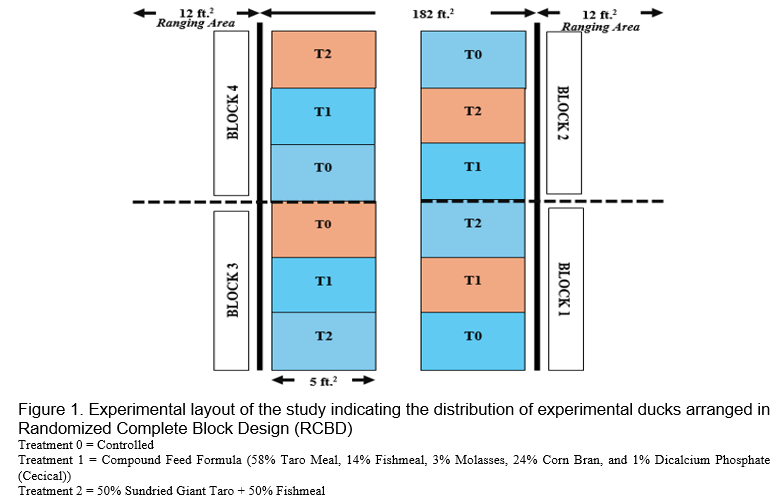
The study was arranged in a Randomized Complete Block Design (RCBD) with sex and weight of the experimental animals as the basis for blocking. A total of 36 Muscovy ducklings (indigenous breed) were randomly distributed across 3 dietary treatments and 4 replications, with 3 ducks per experimental unit. The experimental layout is shown in Figure 1.
Cultural management and procedures
Animal housing. The experimental ducklings were kept in 5x5 sq. ft. cages inside a bamboo housing. The bigger pens were divided into 3 individual pens which represent the four replications of each treatment. Feeding troughs and waterers were properly placed in each cage. The ducks were also provided with a 12 sq. m. ranging area near the housing.
Preparation of experimental animals. Muscovy ducks, aged from 3-4 months, were carefully selected, making sure that they were healthy and showed no signs of deformities. Ducklings were segregated according to sex and initial weight and were fed by the commercial feeds from the 2nd day until 4th day before starting the transition of feed. The temperature was maintained steadily to normal ambient temperatures. Initial weighing was done a day before the start of the experimental trial. The ducklings were accustomed to the experimental feeds from the fifth (5th) to the seventh (7th) day by gradually increasing the amount for each treatment. The full administration of the experimental feeding was on the seventh (7th) day up to the final day of the transition period. Weighing was done every week for a total of 6 weeks, or 45 days, of experimental trials. The researcher also sought certification from the municipal veterinarian to assess whether the animal housing passed the animal ethics and welfare.
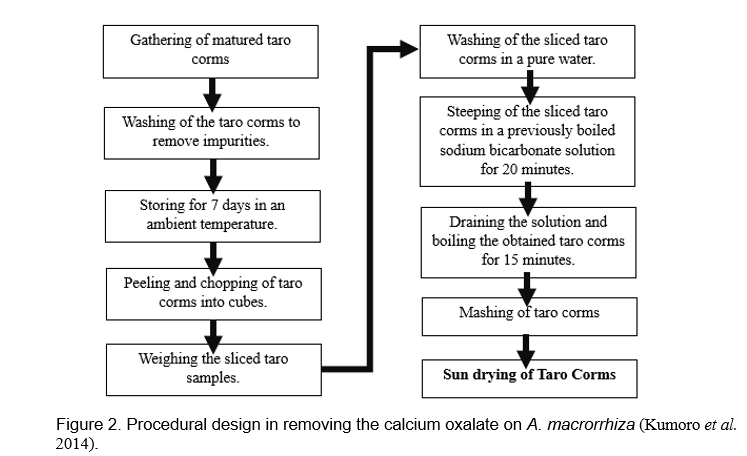
Preparation of a giant taro meal. Matured Giant taro (A. macrorrhiza) was randomly harvested from its natural habitat at the forested area of Northern Iloilo State University in Batad Campus. These were placed in a storage room and stored under prevailing tropical ambient conditions for one week before they were used in the experiment. The giant taro corms were then washed with clean water, peeled with a stainless-steel knife, and sliced into cubes. 150 liters with a 5% sodium bicarbonate solution was poured into a pot and heated on a hot plate at the desired temperature at 100oC. Approximately 50 kilograms of sliced giant taro corm cubes were steeped in the warm sodium bicarbonate solution and soaked for 20 minutes. The sodium bicarbonate solution was drained after 20-minutes. The hot samples were exposed to air for 20 minutes to allow surface water to evaporate and as pre-treatment intended to reduce calcium oxalate and associated acridity in the Giant Taro corms.
The sample was mashed using a mortar and pestle and was sundried for two days (Kumoro et al. 2014).
The study did not independently quantify calcium oxalate concentration before and after processing; therefore, the effectiveness of the treatment in reducing the residual calcium oxalate was inferred from the established processing procedure rather than directly measured.
Preparation of experimental treatments. The locally available alternative feedstuff was formulated using the Trial and Error Method of feed formulation (PCARRD, 2006). The formulated feedstuff was composed of 58% Taro Meal, 14% Fishmeal, 3% Molasses, 24% Rice Bran, and 1% Dicalcium Phosphate (Cecical). The compounded feeds were given to the Muscovy ducklings observing the following treatments: Treatment 0- Controlled, Treatment 1-Compound Feed Formula, and Treatment 2- 50% Sundried Giant Taro Corms + 50% Fishmeal.
Feeding and watering of the experimental animals. The ducklings were fed with rice bran, which was bought from a commercial feed establishment from day 1 until day 2, before starting the experimental trials. The ducklings were accustomed to the experimental treatments from day 3 up to day 7 through gradual feeding.
From the 8th day onwards, the ducks were fed experimental feeds containing three treatments: Treatment 0 = Controlled; Treatment 1 = Compound Feed Formula; Treatment 2 = 50% Sundried Giant Taro Corms + 50% Fishmeal. The ducks were fed in cages thrice daily. Water was always freely available.
Data gathering on growth parameters
Growth performance of Muscovy ducklings was determined using the following formula for the parameters evaluated:
Average Feed Consumption. The average feed consumption was computed weekly by subtracting the feed refuse from the total feed given per treatment, divided by the number of days.

Average Weight Gain. The average weight gain was measured weekly by subtracting the initial weight from the final weight divided by the total number of Muscovy ducks per replication.

Feed Conversion Ratio (FCR). The feed supplied was weighed every morning. Feed residues were collected and weighed the following morning. FCR is determined by dividing the total feed consumption of Muscovy ducks by the total weight gain per replication.


Data analysis procedures
The data gathered were analyzed using the Analysis of Variance (ANOVA) for Randomized Complete Block Design (RCBD). Comparison among treatment means was done using the Least Significant Difference (LSD) Test. Statistical analysis was carried out using the computer software, Statistical Tool for Agricultural Research (STAR). The alpha level of significance was set at .05.
RESULTS AND DISCUSSION
Average weight gain
Table 1. Average gain in weight (grams) of muscovy ducks fed with locally available alternative feedstuffs
|
Treatment
|
Average Weight Gain (g)
|
|
T0 – Commercial Feeds
|
2362.50a
|
|
T1 – Compound Feed Formula
|
1775.00b
|
|
T2 – 50% Sundried Giant Taro Corms + 50% Fish Meal
|
1675.00b
|
|
F-Value
|
8.92*
|
|
p-Value
|
0.0159
|
|
CV (%)
|
12.84
|
Note. Means having the same letter superscripts are not significantly different from each other.
* - significant at 5% level.
Specifically, ducks fed with commercial feeds gain the highest weight gain, significantly comparable between ducks fed with compounded feed rations and those fed with 50% taro meal and 50% fishmeal. This supports to the claim of Ndimetang et al. (2006) as stated in the study of Okonkwo (2020), that taro corm meal is rich in nutrients and palatable, and therefore, increases its acceptability in poultry diets that potentially improves feed intake, body weight gain, feed conversion efficiency, including egg weight.
Average feed consumption
Table 2. Average Feed Consumption (grams) of Muscovy Ducks Fed with Locally Available Alternative Feedstuffs
|
Treatment
|
Average Feed Consumption (g)
|
|
T0 – Commercial Feeds
|
11543.67a
|
|
T1 – Compound Feed Formula
|
10784.77b
|
|
T2 – 50% Sundried Giant Taro Corms + 50% Fish Meal
|
10638.72b
|
|
F-Value
|
11.14*
|
|
p-Value
|
0.0096
|
|
CV (%)
|
2.65
|
Note. Means having the same letter superscripts are not significantly different from each other, * - significant at 5% level.
Table 2 shows the average feed consumption of Muscovy ducks fed with locally available alternative feedstuffs. Results showed significant differences between treatments (p= 0.0096). The highest AFC was noted in commercial feeds with a mean of 11543.67 grams. Meanwhile, the compound feed formula has a comparable AFC of 10784.77 to 50% sundried giant taro + 50% fishmeal, with a mean of 10638.72 grams in 45 days of feeding.
Furthermore, Analysis of Variance revealed that there is a significant difference (p-value >.05) among treatment means. This implies that differences in the average feed consumptions were influenced with the application of treatments. Specifically, ducks fed with commercial feeds gain the highest feed consumption, then, are significantly comparable between ducks fed with compounded feed ration and those fed with 50% composition, both in Giant taro meal and fishmeal. Though commercial feeds significantly affect the feed consumption of ducks, alternative feedstuffs still showed promising results, as feed consumption was not far from that of commercial feeds (Menes and Lucero, 2003).
Feed conversion ratio
Table 3 shows the feed conversion ratio of Muscovy ducks fed with locally available alternative feedstuffs. Results showed significant differences between treatments (p= 0.0433). The highest FCR was noted in 50% sundried giant taro and 50% fishmeal, which obtained the highest feed conversion ratio of 6.39, followed by the compound feed formula with a mean of 6.13 in 45 days of feeding. Meanwhile, commercial feeds have the lowest FCR of 4.94.
Analysis of variance revealed a significant difference in FCR among treatments (p = 0.0433 < 0.05). Commercial feed produced the lowest and therefore most efficient FCR (4.94), whereas the 50% Giant Taro–50% fishmeal diet had the highest FCR (6.39). The compounded feed formulation (6.13) and the Giant Taro–fishmeal diet (6.39) was statistically comparable based on the mean separation.
The corresponding result supports the notion that commercial feeds undergo rigorous trial and laboratory analysis, securing the adequacy of nutrients required based on the stage of development of Muscovy duck, which, on the other hand, was the limitation to both the 50% sundried giant taro and 50% fishmeal and compounded feed formula. Moreover, considering the latter as a potential alternative, the lack of an appropriate nutritional balance among ingredients after formulation, particularly in the balance of amino acids and energy, may compromise feed quality, potentially affecting the feed conversion ratio in poultry (Corzo et al., 2011).
Table 3. Feed Conversion Ratio of Muscovy Ducks Fed with Locally Available Alternative Feedstuffs
|
Treatment
|
Feed Conversion Ratio (kg)
|
|
T0 – Commercial Feeds
|
4.94b
|
|
T1 – Compound Feed Formula
|
6.13a
|
|
T2 – 50% Sundried Giant Taro Corms + 50% Fish Meal
|
6.39a
|
|
F-value
|
5.55*
|
|
p-value
|
0.0433
|
|
CV (%)
|
11.27
|
* - Note. Means having the same letter superscripts are not significantly different from each other, significant at 5% level.
Table 4. Projected feed cost and economic utility of the experimental diets in Philippine peso
|
Economic indicator
|
T0 – Commercial Feed
|
T1 – Compound Feed
|
T2 – 50% Giant Taro + 50% Fishmeal
|
|
Feed consumption (kg)
|
11.544
|
10.785
|
10.639
|
|
Assumed feed cost (₱/kg)
|
20.00
|
20.00
|
20.00
|
|
Estimated feed cost (₱)
|
230.87
|
215.70
|
212.77
|
|
Average weight gain (kg)
|
2.363
|
1.775
|
1.675
|
|
Feed cost/kg weight gain (₱)
|
97.72
|
121.52
|
127.03
|
The projected economic analysis showed that the Giant Taro–fishmeal diet had the lowest estimated feed cost based on cumulative feed consumption, amounting to approximately ₱212.77 (US$3.45), followed by the compounded diet at ₱215.70 (US$3.50) and the commercial diet at ₱230.87 (US$3.74). However, feed cost alone did not translate into greater economic efficiency because the Giant Taro–fishmeal diet produced the lowest average weight gain among the three treatments. Consequently, the estimated feed cost per kilogram of weight gain was highest for the Giant Taro–fishmeal diet (₱127.03/kg gain or US$2.06/kg gain), followed by the compounded diet (₱121.52/kg gain or US$1.97/kg gain), while the commercial diet had the lowest cost per kilogram of weight gain (₱97.72/kg gain or US$1.58/kg gain).
These results indicate that although the Giant Taro-based diet may reduce the direct cost of feed, its lower growth performance and poorer feed conversion efficiency offset the apparent advantage in feed price. Thus, the economic feasibility of Giant Taro as a feed ingredient should not be evaluated solely on the basis of ingredient or feed cost per kilogram but should also consider weight gain, feed conversion, and the costs associated with processing. The present analysis did not include separate costs for labor, energy, sodium bicarbonate, drying, milling, and other processing activities; therefore, the projected economic advantage should be interpreted cautiously. A more comprehensive cost-benefit analysis incorporating these processing expenses is recommended.
Synthesis
This study was conducted to determine the performance of Muscovy ducks (Cairina moschata) fed with alternative feedstuffs, in terms of average weight gain, average feed consumption, and feed conversion ratio (FCR). Thirty-six (36) Muscovy ducks were tested using Randomized Complete Block Design (RCBD) with sex and initial weight as the basis for blocking and were distributed into three (3) dietary treatments replicated 4 times with 3 ducks per experimental unit. Treatments were as follows; Treatment 0 = Controlled, Treatment 1 = Compound Feed Formula and Treatment 2 = 50% Sundried Giant Taro + 50% Fishmeal. Data gathered were analyzed using Analysis of Variance (ANOVA) in RCBD, and comparison of treatment means was done using Least Significant Difference (LSD) test at 5% level of significance. Statistical analysis was carried out using the computer software, Statistical Tool for Agricultural Research (STAR).
Study revealed that in terms of weight gain, Muscovy ducks fed commercial feeds showed the highest average weight gain at 2362.50 grams. However, weight gains were not significantly different between ducks fed a compound feed formulation (1775 grams) and those fed a diet of 50% sundried giant taro + 50% fishmeal (1675 grams). The alternative feedstuff of 50% taro meal and 50% fishmeal produced comparable results, though with lower weight gains. For average feed consumption, Muscovy ducks fed commercial feed had the highest mean, at 11543.67 grams. The ducks fed compounded feeds had the highest average consumption, with a mean of 10784.77 grams. The diet of 50% sundried giant taro + 50% fishmeal had the lowest average consumption, with a mean of 10638.72 grams. However, the compounded feeds and the 50% taro meal + 50% fishmeal diets showed similar levels. The study suggests that the alternative diet showed promising results, as the feed consumption was not significantly different from the commercial feeds. For the FCR, the highest value was 6.39 for ducks fed a diet of 50% sundried giant taro and 50% fishmeal. The compounded feeds had a mean feed conversion ratio of 6.13, while commercial feeds had the lowest at 4.94.
The analysis of variance showed significant differences in feed conversion efficiency among treatment groups, indicating the influence of the diets. Commercial feeds had the best feed-to-weight ratio, but there was no significant difference between ducks fed compounded feeds and those fed the 50% taro meal + 50% fishmeal diet. The alternative diet shows promise as a potential feedstuff, but the lack of precise nutritional balance may compromise its efficiency.
The study aims to determine the performance of Muscovy ducks (Cairina moschata) fed with alternative feedstuffs, in terms of average weight gain, average feed consumption, and feed conversion ratio (FCR). The findings of the study indicate that:
1. AWG was not significantly different between ducks fed a compound feed formulation and those fed a diet of 50% sundried giant taro + 50% fishmeal. The alternative feedstuff of 50% taro meal and 50% fishmeal produced comparable results, though with lower weight gains.
2. The AFC of Muscovy ducks fed with compound feed formulation and 50% sundried giant taro + 50% fishmeal showed the same levels, with no significant differences from the commercial feeds.
3. The FCR of Muscovy ducks showed significant differences in feed conversion efficiency among treatment groups, indicating the diets' influence. Commercial feeds had the best feed-to-weight ratio, but there was no significant difference between ducks fed compounded feeds and those fed the 50% taro meal + 50% fishmeal diet.
4. The alternative diet shows promise as a potential feedstuff, but the lack of precise nutritional balance may compromise its efficiency.
5. Overall, the results demonstrate that Giant Taro tuber meal has potential as a locally available alternative feed ingredient, but the present formulation did not achieve growth performance comparable with commercial feed. The Giant Taro–fishmeal diet resulted in the lowest average weight gain and the highest FCR among the treatments. Although its estimated feed cost was lower, its cost per kilogram of weight gain was higher than that of the commercial diet. Therefore, the practical utilization of Giant Taro should focus on optimizing processing, inclusion level, nutrient balance, and overall production cost rather than simply replacing commercial feed on an ingredient-cost basis.
CONCLUSION
Based on the results of the study, the following conclusions are drawn:
1. The dietary treatments significantly affected average weight gain, feed consumption, and feed conversion ratio. Commercial feed produced the highest average weight gain and the most efficient FCR, while the compounded and Giant Taro–fishmeal diets produced lower growth performance.
2. The 50% Giant Taro–50% fishmeal diet demonstrated potential as an alternative feed formulation; however, its lower weight gain and higher FCR indicate that further optimization of processing, nutrient balance, and inclusion level is necessary. The projected economic analysis further showed that a lower feed cost does not necessarily result in lower cost per unit of weight gain.
3. The economic feasibility of Giant Taro as a duck feed ingredient should be evaluated using a comprehensive cost analysis that includes ingredient procurement, processing, labor, energy, drying, and milling costs. Its long-term utilization should likewise consider local availability and sustainable harvesting practices.
RECOMMENDATIONS
Based on the results of the study, the following recommendations are offered:
1. Further studies should evaluate different inclusion levels of Giant Taro tuber meal to determine the optimum level that can provide acceptable growth performance without compromising feed efficiency.
2. Different processing methods should be compared to improve the utilization of Giant Taro and reduce calcium oxalate and associated acridity. Residual calcium oxalate should preferably be quantified after processing.
3. Proximate analysis, mineral analysis, and assessment of relevant antinutritional factors should be conducted to better characterize the nutritional quality of processed Giant Taro tuber meal.
4. Future economic analyses should incorporate all costs associated with Giant Taro utilization, including collection or procurement, labor, water, sodium bicarbonate, fuel or electricity, drying, milling, storage, and feed preparation.
5. The availability, seasonal abundance, regeneration, and sustainable harvesting of Giant Taro should be assessed before recommending its long-term or large-scale utilization as an alternative duck feed resource.
REFERENCES
Adejumo, Isaac. (2011). Effects of differently processed taro (Colocasia esculenta [(L.) Schott]) on growth performance and carcass characteristics of broiler finishers. International Journal of AgriScience. 1. 444-448.
Adeola, O. (2006). Review of research in duck nutrient utilization. International Journal of Poultry Science, 5(3), 201-218.
Adugna, A. A., Habib, K. M., Odier, O., & Gebresilase, T. Effects of Fish By-product Meal Inclusion in Broiler Feeds on Growth Performance.
Ajetunmobi, A. W., Eguaoje, S. A., Adeniji, C. A., Omesa, M. T., & Iwegbu, A. (2019). Growth performance of broiler chicks fed graded levels of processed taro cocoyam (Colocasia esculenta) meal-based diet. Nigerian Journal of Animal Production, 46 (3), 276–281. https://doi.org/10.51791/njap.v46i3.991
Ambrose, D. C. (2022). Peeling. In Elsevier eBooks (pp. 105–117). https://doi.org/10.1016/b978-0-12-818572-8.00009-7
Andri, Cahyo, Kumoro., Catarina, Sri, Budiyati., Diah, Susetyo, Retnowati. (2014). Calcium oxalate reduction during soaking of giant taro (Alocasia macrorrhiza (L.) Schott) corm chips in sodium bicarbonate solution... international food research journal, 21(4):1583-1588.
Baéza, E. (2006). Major trends in research into domestic ducks and recent results concerning meat quality. Proceedings of the 12th Eur Poult Conference.
Baéza, E. (2016). Nutritional requirements and feed management of meat type ducks. World's Poultry Science Journal, 72(1), 5-20.
Barszcz, M., Tuśnio, A., & Taciak, M. (2022). Poultry nutrition. Physical Sciences Reviews, (0).
Bowen, J., & Duthie, C. A. (2023). Feed conversion ratio (FCR) and performance group estimation based on predicted feed intake for the optimisation of beef production. Sensors, 23(10), 4621.
Buchanan, N. P. (2008). Diet formulation and manufacturing technique interactions affect pellet quality and broiler growth. West Virginia University.
Buchanan, N. P., & Moritz, J. S. (2009). Main effects and interactions of varying formulation protein, fiber, and moisture on feed manufacture and pellet quality. Journal of Applied Poultry Research, 18(2), 274-283.
Caballero, B. (2019). Encyclopedia of Food Sciences and Nutrition | ScienceDirect.Sciencedirect.com.https://www.sciencedirect.com/referencework/9780122270550/encyclopedia-o...
Charles, A.L., Sriroth, K. And Tozou-Chi, H., 2005. Proximate composition, mineral contents, hydrogen cyanide and phytic acid of 5 cassava genotypes. Food Chemistry 92(4): 615-620
C. O., 2018. Types of Ducks to Raise in the Philippines. Retrieved February 25, 2023, from Poultry Manual website: https://poultrymanual.com/2018/01/03/types-of-ducks-to-raise-in-the-philippines/#:~:text=Even%20before%20the%20advent%20of
Corzo, A., Mejia, L., & Loar II, R. E. (2011). Effect of pellet quality on various broiler production parameters. Journal of Applied Poultry Research, 20(1), 68-74.
Costa, V. R., Cruz, F. G. G., Rufino, J. P. F., Silva, A. F., Freitas, B. K. M., Feijó, J. C., & Guimarães, C. C. (2019). Available phosphorus levels in diets for Muscovy ducks in housing. Brazilian Journal of Poultry Science, 21.
Cox, L. M. (2016). Antibiotics shape microbiota and weight gain across the animal kingdom. Animal Frontiers, 6(3), 8-14.
Dagaas, C. T., & Chang, H. S. C. (2004). The Philippine duck industry: issues and research needs.
Davison, C., Michie, C., Tachtatzis, C., Andonovic, I., Bowen, J., & Duthie, C. A. (2023). Feed conversion ratio (FCR) and performance group estimation based on predicted feed intake for the optimisation of beef production. Sensors, 23(10), 4621.
Diarra, Siaka S. And Oikali, C. And Rasch, Isabell M. And Taro, Lenior and Vatigava, Michael and Amosa, Falaniko (2016). Giant Taro (Alocasia macrorrhiza) Root Meal with or without Coconut Oil Slurry as Source of Dietary Energy for Laying Hens. Malaysian Journal of Animal Science, 19 (2). pp. 31-38. ISSN 1394-3227
Dictionary by Merriam-Webster. (2024)., In Merriam-Webster. https://www.merriam-webster.com/dictionary/
Duck Situation Report, October-December 2021 | Philippine Statistics Authority | Republic of the Philippines. (n.d.). Psa.gov.ph. Retrieved July 29, 2024, from https://psa.gov.ph/content/duck-situation-report-october-december-2021-0
Fanatico, A. C., Arsi, K., Upadhyaya, I., Ramos, J. M., Donoghue, D., & Donoghue, A. M. (2018). Sustainable fish and invertebrate meals for methionine and protein feeds in organic poultry production. Journal of Applied Poultry Research, 27(4), 437-448.
Habibu, B., Ikira, N. M., Buhari, H. U., Aluwong, T., Kawu, M. U., Yaqub, L. S., ... & Isa, H. I. (2014). Effect of molasses supplementation on live weight gain, haematologic parameters and erythrocyte osmotic fragility of broiler chickens in the hot-dry season.
Holden, P. J., & Loosli, J. K. (1998). Feed | Livestock, Crops & Animals. Encyclopedia Britannica. https://www.britannica.com/topic/feed-agriculture
International Food Policy Research Institute (IFPRI), 2005, "feed consumption run ed.xls", Philippines, Smallholder livestock production dataset, 2000-2001, https://doi.org/10.7910/DVN/CXGYJ7/VD5XSP, Harvard Dataverse, V1
Karimi, A. (2006). The effects of varying fishmeal inclusion levels (%) on performance of broiler chicks. International Journal of Poultry Science, 5(3), 255-258.
Kumar, V., Chavan, S. M., Jain, S. K., Salvi, B. L., Jain, N. K., Kumar, A., & Meena, K. K. (2019). Peeling of tough skinned fruits and vegetables: A. IJCS, 7(2), 1825-1829.
Kumoro, A. C., Budiyati, C. S., & Retnowati, D. S. (2014). Calcium oxalate reduction during soaking of giant taro (Alocasia macrorrhiza (L.) Schott) corm chips in sodium bicarbonate solution. International Food Research Journal, 21(4).
Kumoro, A. (n.d.). A.2. Development of efficient calcium oxalate … Development of Efficient Calcium Oxalate Removal Techniques from Taro Corms. Retrieved February 25, 2023, from https://core.ac.uk/download/pdf/236430347.pdf
Mahmoud, M. S. B., Abdalla, S. A. A., & Abdalla, H. O. (2018). Effect of dietary incorporation of sugar cane molasses and sexing on broiler performance and carcass characteristics.
Menes, S. P., & Lucero, J. S. (2003). Performance of broilers (Cobb Strain) fed with different levels of galiang tuber meal (Alocasia macrorrhiza) as feed supplement. Research Journal - Agriculture Department DMMMSU. https://agris.fao.org/agris-search/search.do?recordID=PH2006M00013
Mirza, M. A., Bhatti, S. A., & Ur Rehman, M. S. (2021). Effect of exogenous protease on growth performance and meat quality in broilers reared on fishmeal-based diets. South African Journal of Animal Science, 51(5), 635-646.
Moitra, M. (2022). A review of Delineation, Burgeoning and Performance of Solar Energy for Drying Technology. In 2022 2nd International Conference on Emerging Frontiers in Electrical and Electronic Technologies (ICEFEET) (pp. 1-4). IEEE.
Muramatsu, K., Massuquetto, A., Dahlke, F., & Maiorka, A. (2015). Factors that affect pellet quality: a review. Journal of Agricultural Science and Technology, 9(2), 717-722. Muscovy Duck Definition & Meaning | YourDictionary. (n.d.). In YourDictionary. https://www.yourdictionary.com/muscovy-duck
Nauheimer, Lars, Peter C. Boyce, And Susanne S. Renner. "Giant taro and its relatives: a phylogeny of the large genus Alocasia (Araceae) sheds light on Miocene floristic exchange in the Malesian region." Molecular Phylogenetics and Evolution 63.1 (2012): 43-51.
Ndimetang, B.C., O. Asinobi, N. Obiakor, (2006). The effect of different processing method on some anti-nutritional factors content of Ede Uhie (Xanthosoma sagittifolium) and edeocha (Colocasia esculenta). Int. Journal of Agriculture and Rural Development, 7(2), 7-14.
Nirmalya, Jata., R, K, Swain., Aditya, Raula., Nirali, Prangya, Priyadarshini. (2024). Alternative feed ingredients for sustainable livestock production. doi: 10.58532/v3bcag24ch16
Nouroudine, Alimi., Alassan, Seidou, Assani., Hilaire, S., Sanni, Worogo., Nasser, Baco., Ibrahim, Alkoiret, Traoré. (2024). Livestock feed resources used as alternatives during feed shortages and their impact on the environment and ruminant performance in West Africa: a systematic review. Frontiers in Veterinary Science, doi: 10.3389/fvets.2024.1352235
Okon, B., Ibom, L. A., Nsa, E. E., & Okoh, O. (2013). Swamp taro cocoyam (cytosperma chamissonis) as a potential feedstuff for livestock. Global Journal of Agricultural Sciences, 12(2), 101-107.
Okonkwo, V. N. (2020). Performance of laying hens fed graded levels of dried yellow cocoyam corm meal (Xanthosoma sagittifolium) as partial replacement for maize. Journal of Agriculture and Food Sciences, 18(1), 27-39.
Olomu, J. M., & Nwachuku, D. A. (1977). Nutritive value of locally prepared fishmeals for broiler chickens. Nigerian Journal of Animal Production, 4(2), 24-30.
Philippine Council for Agriculture, Forestry and Natural Resources Research and Development. (1987). The Philippines recommends for livestock feed formulation. Philippine Council for Agriculture, Forestry and Natural Resources Research and Development.
Sanjaya, I. G. A. M. P., Kaca, I. N., & Suwitari, N. K. E. (2023). Education on Making Native Chicken Feed Based on Taro in the Manuk Amertha Native Chicken Group in Asahduren Village. Jurnal Pengabdian Masyarakat Formosa, 2(3), 121-126.
Sollid, K., (2021). What is Molasses? Food Insight. https://foodinsight.org/what-is-molasses/
Tanganyika, J., & Webb, E. C. (2019). Influence of production systems and sex on nutritional value and meat quality of native Malawian Muscovy ducks. South African Journal of Animal Science, 49(6), 1113-1126.
Temesgen, M., & Retta, N. (2015). Nutritional potential, health and food security benefits of taro Colocasia esculenta (L.): A review. Food Science and Quality Management, 36(0), 23-30.
Toan, N. H., & Preston, T. R. (2010). Taro as a local feed resource for pigs in small scale household condition. Livestock Research for Rural Development, 22(8), 256-345.
Tsoy, Z., Nikulin, Y., & Nikulina, O. (2020). Effect of marine feed additions on the digestibility of poultry nutrients. In E3S Web of Conferences (Vol. 210, p. 06022). EDP Sciences.
Upadhyaya, I., Arsi, K., Fanatico, A., Wagle, B., Shrestha, S., Upadhyay, A., & Donoghue, A. M. (2022). Impact of feeding bigheaded carp fish meal on meat quality and sensory attributes in organic broiler chickens. Journal of Applied Poultry Research, 31(1), 100224.
Watson, A. G., Mujumdar, A. S., Thorat, B. N., Shirkole, S. S., & Bhatkar, N. S. (2024). A simple solar crop drying and pasteurizing system appropriate for smallholder and subsistence farmers in tropical and subtropical regions. Drying Technology 42(3), 407-422.
Wills, R. B. H., Lim, J. S. K., Greenfield, H., & Bayliss-Smith, T. (1983). Nutrient composition of taro (Colocasia esculenta) cultivars from the Papua New Guinea highlands. Journal of the Science of Food and Agriculture, 34(10), 1137–1142. https://doi.org/10.1002/jsfa.2740341015
Zheng, Z., Li, Y., Wang, M., Ruan, R., Yang, B., Zhu, T., ... & Han, S. (2023). Leaf spot on Alocasia macrorrhizos caused by Fusarium asiaticum in Sichuan, China. Plant Disease, 107(4), 1220.
Zulhazman, H., Asraf Fizree, M., Muhamad Azahar, A., Mohd Fadzelly, A. B., & Nazahatul Anis, A. (2021). A Survey on Edible Aroids Consumed by Locals in Kelantan, Peninsular Malaysia. IOP Conference Series: Earth and Environmental Science, 736(1), 012076. https://doi.org/10.1088/1755-1315/736/1/01207


Growth Performance of Muscovy Ducks (Cairina moschata) Fed Diets Containing Giant Taro (Alocasia macrorrhizos) Tuber Meal and Indigenous Feedstuffs
ABSTRACT
This study evaluated the growth performance of Muscovy ducks (Cairina moschata) fed diets incorporating Giant Taro (Alocasia macrorrhizos) tuber meal combined with locally available feedstuffs. Thirty-six ducks were assigned to three dietary treatments: commercial feeds, compounded feed formulation, and a diet consisting of 50% sundried taro tuber meal mixed with 50% fish meal. The experiment followed a Randomized Complete Block Design (RCBD), with sex and initial body weight used as blocking criteria. Growth parameters measured included average weight gain, feed consumption, and feed conversion ratio (FCR). Data were analyzed using analysis of variance (ANOVA), and treatment means were compared using the Least Significant Difference (LSD) test at 5% level of significance. Results indicated that ducks fed commercial feeds achieved the highest average weight gain (2,362.50 g), which was significantly higher than those fed the compounded feed formulation (1,775.00 g) and the 50% Giant Taro-50% fishmeal diet (1,675.00 g). The latter two treatments did not differ significantly from each other. Feed consumption was highest for ducks fed with commercial feeds (11,543.67grams), while those on the Giant Taro-fish meal diet consumed less (10,638.72 grams), showing a significant difference (p<0.05) among treatments. The highest FCR (6.39) was observed in ducks fed with 50% Giant Taro-50% fishmeal diet, whereas compounded feeds recorded an FCR of 6.13. These findings suggest that incorporating Giant Taro tuber meal with locally available alternative feed ingredients can serve as a viable feed option for Muscovy ducks, offering potential cost savings while maintaining acceptable growth performance under small-scale or resource-limited production systems.
Keywords: Muscovy ducks, giant taro, feedstuff, growth performance
INTRODUCTION
Duck farming is an integral component of Philippine agriculture, providing livelihood opportunities and serving as a major source of animal protein through products such as balut and salted eggs (Poultry Manual, 2023). Among duck species, the Muscovy duck (Cairina moschata) is recognized for its adaptability, disease resistance, and high-quality meat, making it a valuable genetic resource for meat production. However, the profitability of duck production is constrained by the high cost of commercial feeds, which constitutes the largest share of total production expenses (Dagaas & Chang, 2024)
The search for alternative, locally available feed ingredients is therefore a strategic approach to enhancing feed sustainability and reducing dependence on costly commercial sources. Giant taro (Alocasia macrorrhizos), locally known as “badyang” is a readily available root crop in tropical regions. It is rich in carbohydrates and essential minerals, although the raw form contains calcium oxalate crystals that require adequate processing for safe utilization (Nauheimer et al., 2011; Temesgen & Retta, 2015). Previous studies have demonstrated the potential of giant taro as a feed ingredient for swine and poultry (Toan & Preston, 2010; Diarra, 2018), indicating its value as an unconventional yet sustainable feed resource.
Although previous studies have examined the utilization of Giant Taro and other taro species as alternative feed resources, information on the use of Giant Taro tuber meal in Muscovy ducks, particularly under small-scale production conditions, remains limited. Moreover, the practical value of an alternative feed ingredient depends not only on growth performance but also on feed efficiency, processing requirements, and economic feasibility. Therefore, evaluating these considerations is important in determining whether Giant Taro can serve as practical locally available feed source.
Given these considerations, the present study aims to evaluate the growth performance of Muscovy ducks (Cairina moschata) fed diets containing giant taro (Alocasia macrorrhizos) tuber meal mixed with locally available alternative feedstuffs, thereby contributing to the development of cost-effective and sustainable duck production systems in the Philippines.
Objectives of the study
This study aimed to assess the performance of Muscovy ducks (Cairina moschata) fed alternative feedstuffs. Specifically, this study aims to assess the effects of formulated feed alternatives on Muscovy ducks, in terms of:
MATERIALS
The materials used in the study were 36 Muscovy ducks (indigenous breed), Alocasia macrorrhiza corms, Trichanthera leaves, feeding troughs and waterers. For the preparation of fishmeal, assorted fish (Jaco) were used, while the other materials used were sugarcane molasses, potable water, pail, old newspapers, tubes, weighing scale, record book, dipper, chopping board, knife, strainer, basin, gloves, facemask, and rubbing alcohol.
METHODS
Experimental design and treatments
The study was arranged in a Randomized Complete Block Design (RCBD) with sex and weight of the experimental animals as the basis for blocking. A total of 36 Muscovy ducklings (indigenous breed) were randomly distributed across 3 dietary treatments and 4 replications, with 3 ducks per experimental unit. The experimental layout is shown in Figure 1.
Cultural management and procedures
Animal housing. The experimental ducklings were kept in 5x5 sq. ft. cages inside a bamboo housing. The bigger pens were divided into 3 individual pens which represent the four replications of each treatment. Feeding troughs and waterers were properly placed in each cage. The ducks were also provided with a 12 sq. m. ranging area near the housing.
Preparation of experimental animals. Muscovy ducks, aged from 3-4 months, were carefully selected, making sure that they were healthy and showed no signs of deformities. Ducklings were segregated according to sex and initial weight and were fed by the commercial feeds from the 2nd day until 4th day before starting the transition of feed. The temperature was maintained steadily to normal ambient temperatures. Initial weighing was done a day before the start of the experimental trial. The ducklings were accustomed to the experimental feeds from the fifth (5th) to the seventh (7th) day by gradually increasing the amount for each treatment. The full administration of the experimental feeding was on the seventh (7th) day up to the final day of the transition period. Weighing was done every week for a total of 6 weeks, or 45 days, of experimental trials. The researcher also sought certification from the municipal veterinarian to assess whether the animal housing passed the animal ethics and welfare.
Preparation of a giant taro meal. Matured Giant taro (A. macrorrhiza) was randomly harvested from its natural habitat at the forested area of Northern Iloilo State University in Batad Campus. These were placed in a storage room and stored under prevailing tropical ambient conditions for one week before they were used in the experiment. The giant taro corms were then washed with clean water, peeled with a stainless-steel knife, and sliced into cubes. 150 liters with a 5% sodium bicarbonate solution was poured into a pot and heated on a hot plate at the desired temperature at 100oC. Approximately 50 kilograms of sliced giant taro corm cubes were steeped in the warm sodium bicarbonate solution and soaked for 20 minutes. The sodium bicarbonate solution was drained after 20-minutes. The hot samples were exposed to air for 20 minutes to allow surface water to evaporate and as pre-treatment intended to reduce calcium oxalate and associated acridity in the Giant Taro corms.
The sample was mashed using a mortar and pestle and was sundried for two days (Kumoro et al. 2014).
The study did not independently quantify calcium oxalate concentration before and after processing; therefore, the effectiveness of the treatment in reducing the residual calcium oxalate was inferred from the established processing procedure rather than directly measured.
Preparation of experimental treatments. The locally available alternative feedstuff was formulated using the Trial and Error Method of feed formulation (PCARRD, 2006). The formulated feedstuff was composed of 58% Taro Meal, 14% Fishmeal, 3% Molasses, 24% Rice Bran, and 1% Dicalcium Phosphate (Cecical). The compounded feeds were given to the Muscovy ducklings observing the following treatments: Treatment 0- Controlled, Treatment 1-Compound Feed Formula, and Treatment 2- 50% Sundried Giant Taro Corms + 50% Fishmeal.
Feeding and watering of the experimental animals. The ducklings were fed with rice bran, which was bought from a commercial feed establishment from day 1 until day 2, before starting the experimental trials. The ducklings were accustomed to the experimental treatments from day 3 up to day 7 through gradual feeding.
From the 8th day onwards, the ducks were fed experimental feeds containing three treatments: Treatment 0 = Controlled; Treatment 1 = Compound Feed Formula; Treatment 2 = 50% Sundried Giant Taro Corms + 50% Fishmeal. The ducks were fed in cages thrice daily. Water was always freely available.
Data gathering on growth parameters
Growth performance of Muscovy ducklings was determined using the following formula for the parameters evaluated:
Average Feed Consumption. The average feed consumption was computed weekly by subtracting the feed refuse from the total feed given per treatment, divided by the number of days.
Average Weight Gain. The average weight gain was measured weekly by subtracting the initial weight from the final weight divided by the total number of Muscovy ducks per replication.
Feed Conversion Ratio (FCR). The feed supplied was weighed every morning. Feed residues were collected and weighed the following morning. FCR is determined by dividing the total feed consumption of Muscovy ducks by the total weight gain per replication.
Data analysis procedures
The data gathered were analyzed using the Analysis of Variance (ANOVA) for Randomized Complete Block Design (RCBD). Comparison among treatment means was done using the Least Significant Difference (LSD) Test. Statistical analysis was carried out using the computer software, Statistical Tool for Agricultural Research (STAR). The alpha level of significance was set at .05.
RESULTS AND DISCUSSION
Average weight gain
Table 1. Average gain in weight (grams) of muscovy ducks fed with locally available alternative feedstuffs
Treatment
Average Weight Gain (g)
T0 – Commercial Feeds
2362.50a
T1 – Compound Feed Formula
1775.00b
T2 – 50% Sundried Giant Taro Corms + 50% Fish Meal
1675.00b
F-Value
8.92*
p-Value
0.0159
CV (%)
12.84
Note. Means having the same letter superscripts are not significantly different from each other.
* - significant at 5% level.
Specifically, ducks fed with commercial feeds gain the highest weight gain, significantly comparable between ducks fed with compounded feed rations and those fed with 50% taro meal and 50% fishmeal. This supports to the claim of Ndimetang et al. (2006) as stated in the study of Okonkwo (2020), that taro corm meal is rich in nutrients and palatable, and therefore, increases its acceptability in poultry diets that potentially improves feed intake, body weight gain, feed conversion efficiency, including egg weight.
Average feed consumption
Table 2. Average Feed Consumption (grams) of Muscovy Ducks Fed with Locally Available Alternative Feedstuffs
Treatment
Average Feed Consumption (g)
T0 – Commercial Feeds
11543.67a
T1 – Compound Feed Formula
10784.77b
T2 – 50% Sundried Giant Taro Corms + 50% Fish Meal
10638.72b
F-Value
11.14*
p-Value
0.0096
CV (%)
2.65
Note. Means having the same letter superscripts are not significantly different from each other, * - significant at 5% level.
Table 2 shows the average feed consumption of Muscovy ducks fed with locally available alternative feedstuffs. Results showed significant differences between treatments (p= 0.0096). The highest AFC was noted in commercial feeds with a mean of 11543.67 grams. Meanwhile, the compound feed formula has a comparable AFC of 10784.77 to 50% sundried giant taro + 50% fishmeal, with a mean of 10638.72 grams in 45 days of feeding.
Furthermore, Analysis of Variance revealed that there is a significant difference (p-value >.05) among treatment means. This implies that differences in the average feed consumptions were influenced with the application of treatments. Specifically, ducks fed with commercial feeds gain the highest feed consumption, then, are significantly comparable between ducks fed with compounded feed ration and those fed with 50% composition, both in Giant taro meal and fishmeal. Though commercial feeds significantly affect the feed consumption of ducks, alternative feedstuffs still showed promising results, as feed consumption was not far from that of commercial feeds (Menes and Lucero, 2003).
Feed conversion ratio
Table 3 shows the feed conversion ratio of Muscovy ducks fed with locally available alternative feedstuffs. Results showed significant differences between treatments (p= 0.0433). The highest FCR was noted in 50% sundried giant taro and 50% fishmeal, which obtained the highest feed conversion ratio of 6.39, followed by the compound feed formula with a mean of 6.13 in 45 days of feeding. Meanwhile, commercial feeds have the lowest FCR of 4.94.
Analysis of variance revealed a significant difference in FCR among treatments (p = 0.0433 < 0.05). Commercial feed produced the lowest and therefore most efficient FCR (4.94), whereas the 50% Giant Taro–50% fishmeal diet had the highest FCR (6.39). The compounded feed formulation (6.13) and the Giant Taro–fishmeal diet (6.39) was statistically comparable based on the mean separation.
The corresponding result supports the notion that commercial feeds undergo rigorous trial and laboratory analysis, securing the adequacy of nutrients required based on the stage of development of Muscovy duck, which, on the other hand, was the limitation to both the 50% sundried giant taro and 50% fishmeal and compounded feed formula. Moreover, considering the latter as a potential alternative, the lack of an appropriate nutritional balance among ingredients after formulation, particularly in the balance of amino acids and energy, may compromise feed quality, potentially affecting the feed conversion ratio in poultry (Corzo et al., 2011).
Table 3. Feed Conversion Ratio of Muscovy Ducks Fed with Locally Available Alternative Feedstuffs
Treatment
Feed Conversion Ratio (kg)
T0 – Commercial Feeds
4.94b
T1 – Compound Feed Formula
6.13a
T2 – 50% Sundried Giant Taro Corms + 50% Fish Meal
6.39a
F-value
5.55*
p-value
0.0433
CV (%)
11.27
* - Note. Means having the same letter superscripts are not significantly different from each other, significant at 5% level.
Table 4. Projected feed cost and economic utility of the experimental diets in Philippine peso
Economic indicator
T0 – Commercial Feed
T1 – Compound Feed
T2 – 50% Giant Taro + 50% Fishmeal
Feed consumption (kg)
11.544
10.785
10.639
Assumed feed cost (₱/kg)
20.00
20.00
20.00
Estimated feed cost (₱)
230.87
215.70
212.77
Average weight gain (kg)
2.363
1.775
1.675
Feed cost/kg weight gain (₱)
97.72
121.52
127.03
The projected economic analysis showed that the Giant Taro–fishmeal diet had the lowest estimated feed cost based on cumulative feed consumption, amounting to approximately ₱212.77 (US$3.45), followed by the compounded diet at ₱215.70 (US$3.50) and the commercial diet at ₱230.87 (US$3.74). However, feed cost alone did not translate into greater economic efficiency because the Giant Taro–fishmeal diet produced the lowest average weight gain among the three treatments. Consequently, the estimated feed cost per kilogram of weight gain was highest for the Giant Taro–fishmeal diet (₱127.03/kg gain or US$2.06/kg gain), followed by the compounded diet (₱121.52/kg gain or US$1.97/kg gain), while the commercial diet had the lowest cost per kilogram of weight gain (₱97.72/kg gain or US$1.58/kg gain).
These results indicate that although the Giant Taro-based diet may reduce the direct cost of feed, its lower growth performance and poorer feed conversion efficiency offset the apparent advantage in feed price. Thus, the economic feasibility of Giant Taro as a feed ingredient should not be evaluated solely on the basis of ingredient or feed cost per kilogram but should also consider weight gain, feed conversion, and the costs associated with processing. The present analysis did not include separate costs for labor, energy, sodium bicarbonate, drying, milling, and other processing activities; therefore, the projected economic advantage should be interpreted cautiously. A more comprehensive cost-benefit analysis incorporating these processing expenses is recommended.
Synthesis
This study was conducted to determine the performance of Muscovy ducks (Cairina moschata) fed with alternative feedstuffs, in terms of average weight gain, average feed consumption, and feed conversion ratio (FCR). Thirty-six (36) Muscovy ducks were tested using Randomized Complete Block Design (RCBD) with sex and initial weight as the basis for blocking and were distributed into three (3) dietary treatments replicated 4 times with 3 ducks per experimental unit. Treatments were as follows; Treatment 0 = Controlled, Treatment 1 = Compound Feed Formula and Treatment 2 = 50% Sundried Giant Taro + 50% Fishmeal. Data gathered were analyzed using Analysis of Variance (ANOVA) in RCBD, and comparison of treatment means was done using Least Significant Difference (LSD) test at 5% level of significance. Statistical analysis was carried out using the computer software, Statistical Tool for Agricultural Research (STAR).
Study revealed that in terms of weight gain, Muscovy ducks fed commercial feeds showed the highest average weight gain at 2362.50 grams. However, weight gains were not significantly different between ducks fed a compound feed formulation (1775 grams) and those fed a diet of 50% sundried giant taro + 50% fishmeal (1675 grams). The alternative feedstuff of 50% taro meal and 50% fishmeal produced comparable results, though with lower weight gains. For average feed consumption, Muscovy ducks fed commercial feed had the highest mean, at 11543.67 grams. The ducks fed compounded feeds had the highest average consumption, with a mean of 10784.77 grams. The diet of 50% sundried giant taro + 50% fishmeal had the lowest average consumption, with a mean of 10638.72 grams. However, the compounded feeds and the 50% taro meal + 50% fishmeal diets showed similar levels. The study suggests that the alternative diet showed promising results, as the feed consumption was not significantly different from the commercial feeds. For the FCR, the highest value was 6.39 for ducks fed a diet of 50% sundried giant taro and 50% fishmeal. The compounded feeds had a mean feed conversion ratio of 6.13, while commercial feeds had the lowest at 4.94.
The analysis of variance showed significant differences in feed conversion efficiency among treatment groups, indicating the influence of the diets. Commercial feeds had the best feed-to-weight ratio, but there was no significant difference between ducks fed compounded feeds and those fed the 50% taro meal + 50% fishmeal diet. The alternative diet shows promise as a potential feedstuff, but the lack of precise nutritional balance may compromise its efficiency.
The study aims to determine the performance of Muscovy ducks (Cairina moschata) fed with alternative feedstuffs, in terms of average weight gain, average feed consumption, and feed conversion ratio (FCR). The findings of the study indicate that:
1. AWG was not significantly different between ducks fed a compound feed formulation and those fed a diet of 50% sundried giant taro + 50% fishmeal. The alternative feedstuff of 50% taro meal and 50% fishmeal produced comparable results, though with lower weight gains.
2. The AFC of Muscovy ducks fed with compound feed formulation and 50% sundried giant taro + 50% fishmeal showed the same levels, with no significant differences from the commercial feeds.
3. The FCR of Muscovy ducks showed significant differences in feed conversion efficiency among treatment groups, indicating the diets' influence. Commercial feeds had the best feed-to-weight ratio, but there was no significant difference between ducks fed compounded feeds and those fed the 50% taro meal + 50% fishmeal diet.
4. The alternative diet shows promise as a potential feedstuff, but the lack of precise nutritional balance may compromise its efficiency.
5. Overall, the results demonstrate that Giant Taro tuber meal has potential as a locally available alternative feed ingredient, but the present formulation did not achieve growth performance comparable with commercial feed. The Giant Taro–fishmeal diet resulted in the lowest average weight gain and the highest FCR among the treatments. Although its estimated feed cost was lower, its cost per kilogram of weight gain was higher than that of the commercial diet. Therefore, the practical utilization of Giant Taro should focus on optimizing processing, inclusion level, nutrient balance, and overall production cost rather than simply replacing commercial feed on an ingredient-cost basis.
CONCLUSION
Based on the results of the study, the following conclusions are drawn:
1. The dietary treatments significantly affected average weight gain, feed consumption, and feed conversion ratio. Commercial feed produced the highest average weight gain and the most efficient FCR, while the compounded and Giant Taro–fishmeal diets produced lower growth performance.
2. The 50% Giant Taro–50% fishmeal diet demonstrated potential as an alternative feed formulation; however, its lower weight gain and higher FCR indicate that further optimization of processing, nutrient balance, and inclusion level is necessary. The projected economic analysis further showed that a lower feed cost does not necessarily result in lower cost per unit of weight gain.
3. The economic feasibility of Giant Taro as a duck feed ingredient should be evaluated using a comprehensive cost analysis that includes ingredient procurement, processing, labor, energy, drying, and milling costs. Its long-term utilization should likewise consider local availability and sustainable harvesting practices.
RECOMMENDATIONS
Based on the results of the study, the following recommendations are offered:
1. Further studies should evaluate different inclusion levels of Giant Taro tuber meal to determine the optimum level that can provide acceptable growth performance without compromising feed efficiency.
2. Different processing methods should be compared to improve the utilization of Giant Taro and reduce calcium oxalate and associated acridity. Residual calcium oxalate should preferably be quantified after processing.
3. Proximate analysis, mineral analysis, and assessment of relevant antinutritional factors should be conducted to better characterize the nutritional quality of processed Giant Taro tuber meal.
4. Future economic analyses should incorporate all costs associated with Giant Taro utilization, including collection or procurement, labor, water, sodium bicarbonate, fuel or electricity, drying, milling, storage, and feed preparation.
5. The availability, seasonal abundance, regeneration, and sustainable harvesting of Giant Taro should be assessed before recommending its long-term or large-scale utilization as an alternative duck feed resource.
REFERENCES
Adejumo, Isaac. (2011). Effects of differently processed taro (Colocasia esculenta [(L.) Schott]) on growth performance and carcass characteristics of broiler finishers. International Journal of AgriScience. 1. 444-448.
Adeola, O. (2006). Review of research in duck nutrient utilization. International Journal of Poultry Science, 5(3), 201-218.
Adugna, A. A., Habib, K. M., Odier, O., & Gebresilase, T. Effects of Fish By-product Meal Inclusion in Broiler Feeds on Growth Performance.
Ajetunmobi, A. W., Eguaoje, S. A., Adeniji, C. A., Omesa, M. T., & Iwegbu, A. (2019). Growth performance of broiler chicks fed graded levels of processed taro cocoyam (Colocasia esculenta) meal-based diet. Nigerian Journal of Animal Production, 46 (3), 276–281. https://doi.org/10.51791/njap.v46i3.991
Ambrose, D. C. (2022). Peeling. In Elsevier eBooks (pp. 105–117). https://doi.org/10.1016/b978-0-12-818572-8.00009-7
Andri, Cahyo, Kumoro., Catarina, Sri, Budiyati., Diah, Susetyo, Retnowati. (2014). Calcium oxalate reduction during soaking of giant taro (Alocasia macrorrhiza (L.) Schott) corm chips in sodium bicarbonate solution... international food research journal, 21(4):1583-1588.
Baéza, E. (2006). Major trends in research into domestic ducks and recent results concerning meat quality. Proceedings of the 12th Eur Poult Conference.
Baéza, E. (2016). Nutritional requirements and feed management of meat type ducks. World's Poultry Science Journal, 72(1), 5-20.
Barszcz, M., Tuśnio, A., & Taciak, M. (2022). Poultry nutrition. Physical Sciences Reviews, (0).
Bowen, J., & Duthie, C. A. (2023). Feed conversion ratio (FCR) and performance group estimation based on predicted feed intake for the optimisation of beef production. Sensors, 23(10), 4621.
Buchanan, N. P. (2008). Diet formulation and manufacturing technique interactions affect pellet quality and broiler growth. West Virginia University.
Buchanan, N. P., & Moritz, J. S. (2009). Main effects and interactions of varying formulation protein, fiber, and moisture on feed manufacture and pellet quality. Journal of Applied Poultry Research, 18(2), 274-283.
Caballero, B. (2019). Encyclopedia of Food Sciences and Nutrition | ScienceDirect.Sciencedirect.com.https://www.sciencedirect.com/referencework/9780122270550/encyclopedia-o...
Charles, A.L., Sriroth, K. And Tozou-Chi, H., 2005. Proximate composition, mineral contents, hydrogen cyanide and phytic acid of 5 cassava genotypes. Food Chemistry 92(4): 615-620
C. O., 2018. Types of Ducks to Raise in the Philippines. Retrieved February 25, 2023, from Poultry Manual website: https://poultrymanual.com/2018/01/03/types-of-ducks-to-raise-in-the-philippines/#:~:text=Even%20before%20the%20advent%20of
Corzo, A., Mejia, L., & Loar II, R. E. (2011). Effect of pellet quality on various broiler production parameters. Journal of Applied Poultry Research, 20(1), 68-74.
Costa, V. R., Cruz, F. G. G., Rufino, J. P. F., Silva, A. F., Freitas, B. K. M., Feijó, J. C., & Guimarães, C. C. (2019). Available phosphorus levels in diets for Muscovy ducks in housing. Brazilian Journal of Poultry Science, 21.
Cox, L. M. (2016). Antibiotics shape microbiota and weight gain across the animal kingdom. Animal Frontiers, 6(3), 8-14.
Dagaas, C. T., & Chang, H. S. C. (2004). The Philippine duck industry: issues and research needs.
Davison, C., Michie, C., Tachtatzis, C., Andonovic, I., Bowen, J., & Duthie, C. A. (2023). Feed conversion ratio (FCR) and performance group estimation based on predicted feed intake for the optimisation of beef production. Sensors, 23(10), 4621.
Diarra, Siaka S. And Oikali, C. And Rasch, Isabell M. And Taro, Lenior and Vatigava, Michael and Amosa, Falaniko (2016). Giant Taro (Alocasia macrorrhiza) Root Meal with or without Coconut Oil Slurry as Source of Dietary Energy for Laying Hens. Malaysian Journal of Animal Science, 19 (2). pp. 31-38. ISSN 1394-3227
Dictionary by Merriam-Webster. (2024)., In Merriam-Webster. https://www.merriam-webster.com/dictionary/
Duck Situation Report, October-December 2021 | Philippine Statistics Authority | Republic of the Philippines. (n.d.). Psa.gov.ph. Retrieved July 29, 2024, from https://psa.gov.ph/content/duck-situation-report-october-december-2021-0
Fanatico, A. C., Arsi, K., Upadhyaya, I., Ramos, J. M., Donoghue, D., & Donoghue, A. M. (2018). Sustainable fish and invertebrate meals for methionine and protein feeds in organic poultry production. Journal of Applied Poultry Research, 27(4), 437-448.
Habibu, B., Ikira, N. M., Buhari, H. U., Aluwong, T., Kawu, M. U., Yaqub, L. S., ... & Isa, H. I. (2014). Effect of molasses supplementation on live weight gain, haematologic parameters and erythrocyte osmotic fragility of broiler chickens in the hot-dry season.
Holden, P. J., & Loosli, J. K. (1998). Feed | Livestock, Crops & Animals. Encyclopedia Britannica. https://www.britannica.com/topic/feed-agriculture
International Food Policy Research Institute (IFPRI), 2005, "feed consumption run ed.xls", Philippines, Smallholder livestock production dataset, 2000-2001, https://doi.org/10.7910/DVN/CXGYJ7/VD5XSP, Harvard Dataverse, V1
Karimi, A. (2006). The effects of varying fishmeal inclusion levels (%) on performance of broiler chicks. International Journal of Poultry Science, 5(3), 255-258.
Kumar, V., Chavan, S. M., Jain, S. K., Salvi, B. L., Jain, N. K., Kumar, A., & Meena, K. K. (2019). Peeling of tough skinned fruits and vegetables: A. IJCS, 7(2), 1825-1829.
Kumoro, A. C., Budiyati, C. S., & Retnowati, D. S. (2014). Calcium oxalate reduction during soaking of giant taro (Alocasia macrorrhiza (L.) Schott) corm chips in sodium bicarbonate solution. International Food Research Journal, 21(4).
Kumoro, A. (n.d.). A.2. Development of efficient calcium oxalate … Development of Efficient Calcium Oxalate Removal Techniques from Taro Corms. Retrieved February 25, 2023, from https://core.ac.uk/download/pdf/236430347.pdf
Mahmoud, M. S. B., Abdalla, S. A. A., & Abdalla, H. O. (2018). Effect of dietary incorporation of sugar cane molasses and sexing on broiler performance and carcass characteristics.
Menes, S. P., & Lucero, J. S. (2003). Performance of broilers (Cobb Strain) fed with different levels of galiang tuber meal (Alocasia macrorrhiza) as feed supplement. Research Journal - Agriculture Department DMMMSU. https://agris.fao.org/agris-search/search.do?recordID=PH2006M00013
Mirza, M. A., Bhatti, S. A., & Ur Rehman, M. S. (2021). Effect of exogenous protease on growth performance and meat quality in broilers reared on fishmeal-based diets. South African Journal of Animal Science, 51(5), 635-646.
Moitra, M. (2022). A review of Delineation, Burgeoning and Performance of Solar Energy for Drying Technology. In 2022 2nd International Conference on Emerging Frontiers in Electrical and Electronic Technologies (ICEFEET) (pp. 1-4). IEEE.
Muramatsu, K., Massuquetto, A., Dahlke, F., & Maiorka, A. (2015). Factors that affect pellet quality: a review. Journal of Agricultural Science and Technology, 9(2), 717-722. Muscovy Duck Definition & Meaning | YourDictionary. (n.d.). In YourDictionary. https://www.yourdictionary.com/muscovy-duck
Nauheimer, Lars, Peter C. Boyce, And Susanne S. Renner. "Giant taro and its relatives: a phylogeny of the large genus Alocasia (Araceae) sheds light on Miocene floristic exchange in the Malesian region." Molecular Phylogenetics and Evolution 63.1 (2012): 43-51.
Ndimetang, B.C., O. Asinobi, N. Obiakor, (2006). The effect of different processing method on some anti-nutritional factors content of Ede Uhie (Xanthosoma sagittifolium) and edeocha (Colocasia esculenta). Int. Journal of Agriculture and Rural Development, 7(2), 7-14.
Nirmalya, Jata., R, K, Swain., Aditya, Raula., Nirali, Prangya, Priyadarshini. (2024). Alternative feed ingredients for sustainable livestock production. doi: 10.58532/v3bcag24ch16
Nouroudine, Alimi., Alassan, Seidou, Assani., Hilaire, S., Sanni, Worogo., Nasser, Baco., Ibrahim, Alkoiret, Traoré. (2024). Livestock feed resources used as alternatives during feed shortages and their impact on the environment and ruminant performance in West Africa: a systematic review. Frontiers in Veterinary Science, doi: 10.3389/fvets.2024.1352235
Okon, B., Ibom, L. A., Nsa, E. E., & Okoh, O. (2013). Swamp taro cocoyam (cytosperma chamissonis) as a potential feedstuff for livestock. Global Journal of Agricultural Sciences, 12(2), 101-107.
Okonkwo, V. N. (2020). Performance of laying hens fed graded levels of dried yellow cocoyam corm meal (Xanthosoma sagittifolium) as partial replacement for maize. Journal of Agriculture and Food Sciences, 18(1), 27-39.
Olomu, J. M., & Nwachuku, D. A. (1977). Nutritive value of locally prepared fishmeals for broiler chickens. Nigerian Journal of Animal Production, 4(2), 24-30.
Philippine Council for Agriculture, Forestry and Natural Resources Research and Development. (1987). The Philippines recommends for livestock feed formulation. Philippine Council for Agriculture, Forestry and Natural Resources Research and Development.
Sanjaya, I. G. A. M. P., Kaca, I. N., & Suwitari, N. K. E. (2023). Education on Making Native Chicken Feed Based on Taro in the Manuk Amertha Native Chicken Group in Asahduren Village. Jurnal Pengabdian Masyarakat Formosa, 2(3), 121-126.
Sollid, K., (2021). What is Molasses? Food Insight. https://foodinsight.org/what-is-molasses/
Tanganyika, J., & Webb, E. C. (2019). Influence of production systems and sex on nutritional value and meat quality of native Malawian Muscovy ducks. South African Journal of Animal Science, 49(6), 1113-1126.
Temesgen, M., & Retta, N. (2015). Nutritional potential, health and food security benefits of taro Colocasia esculenta (L.): A review. Food Science and Quality Management, 36(0), 23-30.
Toan, N. H., & Preston, T. R. (2010). Taro as a local feed resource for pigs in small scale household condition. Livestock Research for Rural Development, 22(8), 256-345.
Tsoy, Z., Nikulin, Y., & Nikulina, O. (2020). Effect of marine feed additions on the digestibility of poultry nutrients. In E3S Web of Conferences (Vol. 210, p. 06022). EDP Sciences.
Upadhyaya, I., Arsi, K., Fanatico, A., Wagle, B., Shrestha, S., Upadhyay, A., & Donoghue, A. M. (2022). Impact of feeding bigheaded carp fish meal on meat quality and sensory attributes in organic broiler chickens. Journal of Applied Poultry Research, 31(1), 100224.
Watson, A. G., Mujumdar, A. S., Thorat, B. N., Shirkole, S. S., & Bhatkar, N. S. (2024). A simple solar crop drying and pasteurizing system appropriate for smallholder and subsistence farmers in tropical and subtropical regions. Drying Technology 42(3), 407-422.
Wills, R. B. H., Lim, J. S. K., Greenfield, H., & Bayliss-Smith, T. (1983). Nutrient composition of taro (Colocasia esculenta) cultivars from the Papua New Guinea highlands. Journal of the Science of Food and Agriculture, 34(10), 1137–1142. https://doi.org/10.1002/jsfa.2740341015
Zheng, Z., Li, Y., Wang, M., Ruan, R., Yang, B., Zhu, T., ... & Han, S. (2023). Leaf spot on Alocasia macrorrhizos caused by Fusarium asiaticum in Sichuan, China. Plant Disease, 107(4), 1220.
Zulhazman, H., Asraf Fizree, M., Muhamad Azahar, A., Mohd Fadzelly, A. B., & Nazahatul Anis, A. (2021). A Survey on Edible Aroids Consumed by Locals in Kelantan, Peninsular Malaysia. IOP Conference Series: Earth and Environmental Science, 736(1), 012076. https://doi.org/10.1088/1755-1315/736/1/01207