ABSTRACT
Taiwan faces compounding agricultural challenges: a subtropical climate prone to typhoons and drought, an aging farm workforce, shrinking arable land, and a food import dependency exceeding 60% of caloric supply. Against this backdrop, the government has progressively assembled a climate-smart agriculture (CSA) framework that integrates digital and smart technologies, including the Internet of Things (IoT), artificial intelligence (AI), unmanned aerial vehicles (UAVs), remote sensing, and blockchain, with overarching climate governance. This article examines the architecture of Taiwan's CSA policy, tracing its evolution from the New Agriculture Innovation Promotion Program (2017–2020) through the Climate Change Response Act (2023) and the current National Climate Change Adaptation Plan (2023–2026). Key findings indicate that while Taiwan has made substantial progress in deploying precision agriculture tools and embedding net-zero commitments into law, persistent structural barriers-particularly the fragmented smallholder landscape and high technology costs-continue to constrain equitable adoption. The article concludes with policy recommendations for deepening the integration of smart technologies into climate-resilient food systems.
Keywords: climate-smart agriculture, smart farming, Taiwan, IoT, precision agriculture, climate policy, net-zero
INTRODUCTION
Climate change represents one of the most formidable threats to global food security in the 21st century. Small island states and densely populated economies with limited arable land are disproportionately exposed. Taiwan, with its 23 million inhabitants and just 1.9 million acres of cultivable land, epitomizes this vulnerability. The island experiences three to five typhoons annually; in 2023 alone, agricultural losses attributable to typhoons and climate-related disasters reached 4.7 billion NTD (149.46 million USD) (Taiwan Smart Agriweek, 2025). Urban expansion and industrial land conversion have simultaneously reduced farmland by more than 20 % since 1990. Layered on top of these physical stressors is a demographic crisis: Taiwan's low birth rate and aging population have produced a severe rural labor shortage that threatens the operational continuity of farms nationwide.
Climate-smart agriculture (CSA) has emerged as a global framework to simultaneously address productivity, resilience, and greenhouse gas mitigation goals in the food sector (FAO, 2013). Taiwan's government has progressively adopted this framework, channeling the island's formidable technological capabilities in semiconductors, IoT hardware, and software engineering into agricultural modernization. The trajectory runs from early precision-farming pilots in the late 2010s to an ambitious, legally binding net-zero pathway enshrined in the Climate Change Response Act of 2023.
This article critically evaluates Taiwan's CSA policy landscape, technology deployment, institutional architecture, and remaining challenges. Section 2 contextualizes the concept of CSA and its relevance to Taiwan. Section 3 traces the evolution of relevant national policies. Section 4 documents the smart technologies being deployed. Section 5 analyses structural challenges. Section 6 offers conclusions and recommendations.
Conceptual framework: climate-smart agriculture
The Food and Agriculture Organization of the United Nations (FAO, 2013) defines climate-smart agriculture as an approach that transforms and reorients agricultural systems to support food security in the face of new realities of climate change. The framework rests on three pillars: (i) sustainably increasing agricultural productivity and incomes; (ii) adapting and building resilience to climate change; and (iii) reducing or removing greenhouse gas emissions where possible. These three objectives are pursued simultaneously, though trade-offs may exist between them in specific contexts.
Smart technologies amplify CSA's potential by enabling more precise, data-driven management of farm inputs and resources. The integration of GPS and IoT technologies facilitates the creation of comprehensive field maps, the tracking of machinery movement, and the enhancement of automated systems, including tractors and drones (PMC, 2025). Variable rate technology allows farmers to apply precise amounts of seeds, fertilizers, or water in designated areas, thus reducing waste and improving efficiency. Drone-IoT integration, combining multispectral imaging, real-time sensor data, and machine learning analytics, provides actionable insights into soil health, crop conditions, and pest control (Springer Nature, 2024).
Taiwan is unusually well-positioned to implement CSA with smart technologies. As the second-largest semiconductor manufacturer globally, Taiwan produces the majority of the sensors, microcontrollers, and data-processing chips embedded in precision agriculture systems worldwide (BusinessMirror, 2019). This domestic supply chain advantage substantially lowers the cost of technology deployment relative to countries that must rely entirely on imported hardware.
Evolution of Taiwan's climate-smart agriculture policy
The New Agriculture Innovation Promotion Program (2017–2020 and 2.0 2021–2024)
The Council of Agriculture (COA)-restructured as the Ministry of Agriculture (MOA) in August 2023-launched the New Agriculture Innovation Promotion Program in 2017 to address intersecting challenges of climate change, trade liberalization, labor shortage, and food security (USDA GAIN, 2023). The program embedded smart agriculture as one of seven high-growth sectors under the Tsai administration's industrial transformation strategy. Two principal strategies digitized characterized the Smart Agriculture Program: Smart Production, which covered IoT-enabled monitoring, automation, and precision input management; and Digital Service, which digitized supply chains, agricultural marketing, and e-commerce platforms.
Program 2.0 (2021–2024) deepened these priorities, with specific emphasis on integrating sensors, IoT, and big data to achieve what the COA termed 'digital knowledge, smart production, optimized products, convenient operation, and cloud tracing' (FFTC, 2021). The program also targeted the perennial challenge of smallholder engagement by developing shared-service models and co-operative technology platforms to make precision tools financially accessible to farmers with limited capital.
The Climate Change Response Act and Net-Zero Commitments (2023)
A watershed moment in Taiwan's climate governance came in January 2023, when the Legislative Yuan enacted the Climate Change Response Act (CCRA). Following 136 countries, Taiwan explicitly incorporated the net-zero emissions goal by 2050 into domestic law (FFTC, 2023). While the energy sector accounts for 54 % of Taiwan's carbon emissions, agriculture is uniquely positioned as both a contributor to and co-beneficiary of the net-zero transition. The sector’s strategy is anchored by an ambitious net-zero target built upon four main pillars: emission reduction, carbon sequestration, the circular economy, and green trends. Key tasks include deploying precision farming and smart water management to lower methane and nitrous oxide emissions, alongside expanding "Green, Yellow, and Blue" carbon sinks through afforestation, soil-enriching biochar, and coastal mangrove restoration.
In March 2023, the government published the 2050 National Action Plan for Reaching Net-Zero Emission, comprising 12 key strategies. Agricultural adaptation was embedded across multiple strategy areas, including energy transition (agrivoltaic systems), nature-based solutions (agroforestry and wetland restoration), and demand-side management (sustainable food systems). The Ministry of Environment also promulgated a carbon fee regime in August 2024, set at 300 NTD (9.54 USD) per ton of CO2 equivalent, with the scheme commencing in May 2026 for large emitters—an incentive structure that will gradually extend to the agri-food processing sector (Chambers and Partners, 2025).
The National Climate Change Adaptation Plan for Agriculture (2023–2026)
Building on two prior adaptation action plans (2013–2017 and 2018–2022), Taiwan's MOA developed the third-phase National Climate Change Adaptation Plan for the Agricultural Sector (2023–2026) in accordance with the CCRA. The plan is organized around three strategic pillars: strengthening ecosystem services and biodiversity; enhancing agricultural resilience to climate risks; and exploring opportunities in response to climate change (FFTC, 2024).
Key initiatives under the plan include climate simulation modeling using SSP (Shared Socioeconomic Pathway) scenarios to project impacts on crop yields and livestock productivity; construction of ecological niches for 30 threatened plant species; expansion of the Taiwan Biodiversity Observation Network; and integration of marine ecology monitoring into coastal aquaculture management. The plan also mandates collaboration across the newly restructured MOA departments, particularly the Department of Resource Sustainability and the Agency of Rural Development and Soil and Water Conservation, to build comprehensive climate risk response capacities at the farm and watershed levels.
Table 1. Key Policy Milestones in Taiwan's Climate-Smart Agriculture Framework
|
Year / Period
|
Policy / Programme
|
Key features
|
|
2017–2020
|
New Agriculture Innovation Promotion Program
|
First national smart agriculture push; IoT, climate resilience, labor solutions
|
|
2021–2024
|
New Agriculture Innovation Promotion Program 2.0
|
Extended smart production & digital services; big-data market monitoring
|
|
Jan 2023
|
Climate Change Response Act (CCRA)
|
Net-zero 2050 is legally binding; agricultural adaptation mandated
|
|
Mar 2023
|
2050 Net-Zero National Action Plan
|
12 key strategies incl. agriculture decarbonization
|
|
Aug 2023
|
Ministry of Agriculture (MOA) Established
|
COA upgraded; new Dept. of Resource Sustainability created
|
|
2023–2026
|
National Climate Change Adaptation Plan (Phase 3)
|
Three pillars: biodiversity, resilience, opportunity; links to CCRA
|
Source: Compiled by the author from USDA GAIN (2023), FFTC (2021, 2024), Chambers and Partners (2025).
Smart Technologies Deployed in Taiwan's Agricultural Sector
Internet of Things and Sensor Networks
IoT-based smart agriculture systems form the technological backbone of Taiwan's CSA strategy. Remote process control, combined with sensors, internet connectivity, and IoT, enables farmers to monitor their farms remotely via mobile devices and to systematically link agricultural production, marketing, and consumer markets (FFTC, 2021). Soil moisture sensors and automated irrigation systems optimize water consumption, while GPS-guided machinery ensures precise application of seeds, fertilizers, and pesticides. A notable case is Tainan's smart tomato greenhouse complex, where AI-based image recognition continuously tracks crop health indicators and triggers automated environmental adjustments (Taiwan Smart Agriweek, 2025).
Taiwan's government has used big data analytics drawn from IoT networks to monitor agricultural import and export market conditions, enabling real-time guidance to farmers on production adjustments that stabilize prices and reduce surplus-induced income volatility (FFTC, 2021). The convergence of IoT, AI, and edge computing also supports cloud-based traceability systems that log every stage of production—enabling blockchain-secured farm-to-fork transparency essential for premium export markets.
Unmanned Aerial Vehicles (UAVs) and Drone Technology
Taiwan has been an early adopter of agricultural drones, leveraging its domestic aerospace and electronics manufacturing base. UAVs equipped with multispectral cameras and AI-driven disease-detection algorithms provide early warning of crop health deterioration across large field areas. The Thunder Hawk, produced by Taiwan's robotics firm Thunder Tiger, can spray pesticides across a hectare of land within eight minutes, significantly improving agricultural efficiency and reducing human and plant exposure to chemicals (BusinessMirror, 2019). The Alpas II drone from Geosat Aerospace and Technology uses dual laser sensors and computer-controlled flight paths for precise and automatic spraying across variable terrain.
At the global level, drone usage helped save 210 million tons of water and 47,000 tons of fertilizer across agricultural operations in 2024 alone (Telefónica Tech, 2025). Taiwan's integration of drone data with farm management software platforms amplifies these efficiency gains by enabling systematic tracking and optimization across entire agricultural districts rather than individual farms. The national government has supported drone adoption through subsidies and regulatory frameworks that streamline commercial UAV licensing for agricultural use.
Artificial Intelligence and Predictive Analytics
AI applications in Taiwan's agricultural sector span yield forecasting, pest and disease outbreak prediction, climate risk modeling, and market analytics. Machine learning algorithms integrated into IoT platforms analyze historical and real-time sensor data to generate farm-specific recommendations on planting schedules, input quantities, and harvesting windows. These systems are particularly valuable for adapting to the increasingly erratic rainfall patterns and temperature extremes projected under climate change scenarios.
Taiwan's semiconductor ecosystem provides a critical foundation for on-farm AI processing. Edge computing chips manufactured domestically allow AI inference to occur directly on agricultural sensors and machinery without constant cloud connectivity-a significant advantage in remote upland farming areas where network coverage may be unreliable. This capability supports real-time disease detection, automated irrigation triggering, and autonomous drone navigation without latency penalties.
Agrivoltaic Systems and Renewable Energy Integration
An emerging dimension of Taiwan's CSA framework is the integration of solar photovoltaic (PV) systems with agricultural production, known as agrivoltaics. Given Taiwan's ambitious renewable energy targets (20 % by 2025, 60-70 % by 2050) and limited non-agricultural land, the government has explored dual-use farmland strategies. However, approximately 4,684 hectares of agricultural land had already been converted to ground-mounted solar farms as of 2020, raising concerns about food security (FFTC, 2023). Agrivoltaics can succeed by exploiting the "light saturation point" of crops, where partial shade actually prevents heat stress and conserves soil moisture without hurting photosynthesis. Leafy greens (like lettuce and spinach), root vegetables (like potatoes), and high-value herbs are ideal candidates that maintain or even increase yields under solar canopies. Policy responses have also emphasized roof-type solar PV on agricultural buildings and greenhouse-integrated solar canopies that allow crops to grow underneath, rather than full land conversion.
Table 2. Smart Technologies and Their Applications in Taiwan's Agriculture
|
Technology
|
Application
|
Outcomes
|
|
IoT Sensors
|
Soil moisture, temperature & nutrient monitoring in real time
|
Optimized irrigation; reduced water & fertilizer waste
|
|
UAV / Drones
|
Crop health surveillance, pesticide & fertilizer spraying
|
10 ha/hr coverage; saves 210M tons water globally (2024)
|
|
AI & Big Data
|
Yield prediction, pest early-warning, market price analysis
|
Data-driven planting decisions; reduced post-harvest loss
|
|
Smart Greenhouses
|
Environment-controlled tomato & orchid production
|
Year-round production; lower climate-risk exposure
|
|
Remote Sensing
|
Satellite & aerial multispectral imaging
|
Precision crop mapping; disaster impact assessment
|
|
Blockchain Traceability
|
Farm-to-fork QR code supply chain logging
|
Transparency; consumer confidence; export compliance
|
Source: Compiled by the author from FFTC (2021), Taiwan Smart Agriweek (2025), BusinessMirror (2019), Telefónica Tech (2025).
Structural Challenges and Policy Gaps
Despite substantial policy commitment and technological capability, Taiwan's transition to climate-smart agriculture faces persistent structural barriers that limit the equitable and comprehensive adoption of smart technologies.
Smallholder Fragmentation and Affordability
Small-scale farmers constitute the dominant population in Taiwan's agricultural sector. The financial affordability of smart agriculture tools is very limited for small-scale farmers, and yet there are still many challenges and response policies deployed by the COA in increasing coverage of smart agriculture in this population (FFTC, 2021). High upfront costs of sensors, drones, and AI platforms create a structural divide between well-capitalized commercial operations and family farms. Policy interventions have included equipment leasing co-operatives, shared-service hubs, and graduated subsidy programs, but uptake remains uneven across crop types and regions.
Aging Workforce and Knowledge Transfer
Taiwan's agricultural workforce is predominantly older and may lack the digital literacy required to operate advanced smart farming systems. The government has framed smart agriculture partly as a solution to the labor shortage itself, replacing manual tasks with automation, but this also requires training investments and a cultural shift in farming practices. Attracting younger entrants to agriculture through the appeal of high-tech farming environments has been identified as a priority, though progress has been gradual (FFTC, 2021).
Food Import Dependency and Self-Sufficiency
Taiwan's reliance on food imports exceeding 60% of caloric supply represents a systemic food security vulnerability that climate-smart agriculture alone cannot resolve in the short term. Taiwan's limited arable land, combined with its reliance on food imports to meet more than 60 % of its domestic demand, makes the country highly susceptible to global market fluctuations and supply chain disruptions (FFTC, 2025). Climate-smart agriculture can improve yields and reduce climate-induced losses on existing farmland, but structural self-sufficiency gains require longer-term investments in vertical farming, controlled-environment agriculture, and dietary shifts.
Table 3. Key Challenges and Policy Responses in Taiwan's CSA Transition
|
Challenge
|
Impact on Agriculture
|
Policy / Technology Response
|
|
Aging farm workforce
|
Labor scarcity; knowledge loss
|
Subsidies for smart machinery; youth recruitment campaigns
|
|
Smallholder fragmentation
|
Low ROI on high-cost sensors
|
Shared service platforms; co-operative IoT leasing
|
|
Climate extremes (typhoons, drought)
|
4.7B NTD (149.46 million USD) crop losses in 2023
|
Disaster insurance; climate-resilient crop varieties; smart early-warning
|
|
Farmland loss (>20% since 1990)
|
Reduced production capacity
|
Vertical farming, urban greenhouses, and strict land-use regulation
|
|
Food import dependency (>60% caloric)
|
Supply-chain vulnerability
|
R&D on climate-tolerant varieties; boosting self-sufficiency targets
|
|
Carbon fee regime (from May 2026)
|
New compliance cost for the agri-industry
|
VER credits for low-carbon farming; green finance incentives
|
Source: Compiled by the author from FFTC (2021, 2024, 2025), Taiwan Smart Agriweek (2025), Chambers and Partners (2025).
CONCLUSION AND POLICY RECOMMENDATIONS
Taiwan has constructed one of Asia's most comprehensive climate-smart agriculture policy frameworks, integrating binding net-zero legislation, sectoral adaptation planning, and active deployment of precision agriculture technologies. The alignment of domestic semiconductor manufacturing capability with agricultural digitalization needs gives Taiwan a structural comparative advantage that few comparable economies possess. The Smart Agriculture Program's emphasis on IoT, AI, drones, and big data analytics has generated measurable improvements in resource efficiency, disaster response, and market transparency.
Nevertheless, the transition remains incomplete. Smallholder fragmentation, affordability barriers, an aging workforce, and deep structural food import dependency represent challenges that require sustained, coordinated policy attention.
Figure 1 illustrates how Taiwan integrates policy frameworks and smart technologies (e.g., IoT, AI, UAVs) to enhance agricultural productivity, resilience, and sustainability. Despite these advancements, structural challenges-such as smallholder fragmentation, aging workforce, and high technology costs-continue to constrain equitable adoption.

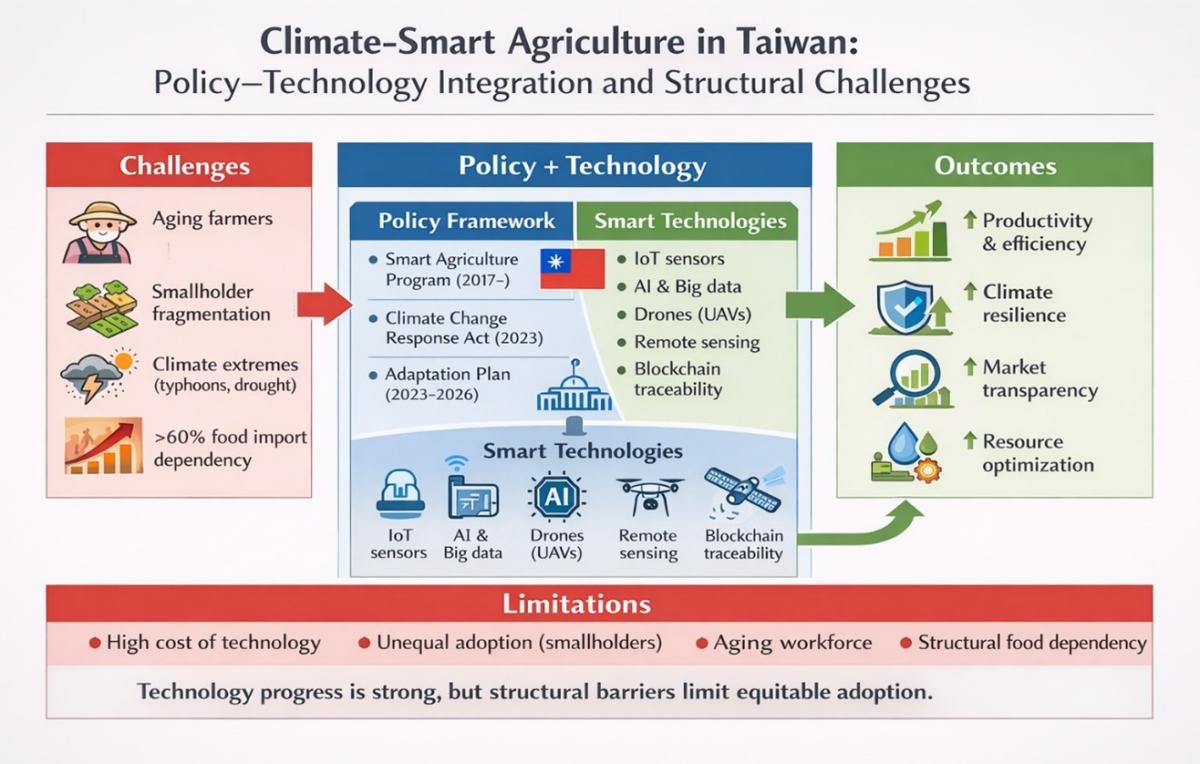
Figure 1. Graphical abstract of Taiwan’s climate-smart agriculture framework.
The following recommendations emerge from this analysis:
- Scale shared-service IoT infrastructure: Government-subsidized sensor-as-a-service platforms operated through farmers' associations can reduce per-farm technology costs while aggregating data at the district level for more powerful analytics.
- Integrate carbon credits into farm income: Develop a robust voluntary emission reduction (VER) registry for agricultural practices-cover crops, precision fertilization, agroforestry-to allow farmers to monetize carbon sequestration under the 2026 carbon fee regime.
- Invest in climate-resilient crop research: Accelerate breeding programs for heat-tolerant, drought-resistant, and typhoon-hardy varieties tailored to Taiwan's shifting climate envelopes, combining genomic techniques with traditional germplasm conservation.
- Expand digital literacy and youth recruitment: Embed smart agriculture training modules in agricultural colleges and high schools; offer paid apprenticeships on digitally managed farms to attract the next generation of farmers.
- Pursue regional CSA knowledge diplomacy: Leverage bilateral agriculture partnerships, already active in Central America and Africa, to exchange precision agriculture expertise and build regional CSA capacity, enhancing Taiwan's international agricultural standing.
Taiwan's experience demonstrates that CSA transition is ultimately a governance challenge as much as a technology challenge. The most sophisticated drones and sensors will yield limited societal benefit if policy frameworks fail to ensure equitable access, meaningful carbon incentives, and robust institutional coordination across the food system. With continued policy refinement, Taiwan has the potential to serve as a model for climate-smart, technology-enabled agriculture in densely populated, climate-vulnerable economies worldwide.
REFERENCES
BusinessMirror. (2019, September 17). Taiwan cultivates the future of smart agriculture. BusinessMirror. https://businessmirror.com.ph/2019/09/17/taiwan-cultivates-the-future-of...
Chambers and Partners. (2025). Climate Change Regulation 2025-Taiwan. Global Practice Guides. https://practiceguides.chambers.com/practice-guides/climate-change-regul...
Food and Agriculture Organization of the United Nations (FAO). (2013). Climate-smart agriculture sourcebook. FAO.
Food and Fertilizer Technology Center for the Asian and Pacific Region (FFTC). (2021). Taiwan's smart agriculture strategies in response to climate change. FFTC Agricultural Policy Platform. https://ap.fftc.org.tw/article/2718
Food and Fertilizer Technology Center for the Asian and Pacific Region (FFTC). (2023). Balancing renewable energy development and agriculture policy: Taiwan's experience. FFTC Agricultural Policy Platform. https://ap.fftc.org.tw/article/3459
Food and Fertilizer Technology Center for the Asian and Pacific Region (FFTC). (2024). Climate change adaptation strategies for Taiwan's agricultural sector (2023–2026). FFTC Agricultural Policy Platform. https://ap.fftc.org.tw/article/3572
Food and Fertilizer Technology Center for the Asian and Pacific Region (FFTC). (2025). Strategies for ensuring food security in Taiwan amid climate change challenges. FFTC Agricultural Policy Platform. https://ap.fftc.org.tw/article/3730
PMC – National Library of Medicine. (2025). Integration of smart sensors and IoT in precision agriculture: Trends, challenges and future prospectives. PMC. https://pmc.ncbi.nlm.nih.gov/articles/PMC12116683/
Springer Nature / Discover Sustainability. (2024). Future of sustainable farming: Exploring opportunities and overcoming barriers in drone-IoT integration. Discover Sustainability. https://link.springer.com/article/10.1007/s43621-024-00736-y
Taiwan Smart Agriweek. (2025, March 31). Overview of Taiwan's agricultural sector. https://www.taiwanagriweek.com/en/media-detail/503/
Telefónica Tech. (2025). Drones, AI and IoT in precision agriculture: Innovation across the phenological cycle. https://telefonicatech.com/en/blog/drones-ai-and-iot-in-precision-agricu...
United States Department of Agriculture (USDA) Foreign Agricultural Service. (2023). Taiwan upgrades Council of Agriculture to Ministry of Agriculture (GAIN Report TW2023-0044). USDA. https://apps.fas.usda.gov/newgainapi/api/Report/DownloadReportByFileName...


Taiwan's Policy on Climate-Smart Agriculture with Smart Technologies
ABSTRACT
Taiwan faces compounding agricultural challenges: a subtropical climate prone to typhoons and drought, an aging farm workforce, shrinking arable land, and a food import dependency exceeding 60% of caloric supply. Against this backdrop, the government has progressively assembled a climate-smart agriculture (CSA) framework that integrates digital and smart technologies, including the Internet of Things (IoT), artificial intelligence (AI), unmanned aerial vehicles (UAVs), remote sensing, and blockchain, with overarching climate governance. This article examines the architecture of Taiwan's CSA policy, tracing its evolution from the New Agriculture Innovation Promotion Program (2017–2020) through the Climate Change Response Act (2023) and the current National Climate Change Adaptation Plan (2023–2026). Key findings indicate that while Taiwan has made substantial progress in deploying precision agriculture tools and embedding net-zero commitments into law, persistent structural barriers-particularly the fragmented smallholder landscape and high technology costs-continue to constrain equitable adoption. The article concludes with policy recommendations for deepening the integration of smart technologies into climate-resilient food systems.
Keywords: climate-smart agriculture, smart farming, Taiwan, IoT, precision agriculture, climate policy, net-zero
INTRODUCTION
Climate change represents one of the most formidable threats to global food security in the 21st century. Small island states and densely populated economies with limited arable land are disproportionately exposed. Taiwan, with its 23 million inhabitants and just 1.9 million acres of cultivable land, epitomizes this vulnerability. The island experiences three to five typhoons annually; in 2023 alone, agricultural losses attributable to typhoons and climate-related disasters reached 4.7 billion NTD (149.46 million USD) (Taiwan Smart Agriweek, 2025). Urban expansion and industrial land conversion have simultaneously reduced farmland by more than 20 % since 1990. Layered on top of these physical stressors is a demographic crisis: Taiwan's low birth rate and aging population have produced a severe rural labor shortage that threatens the operational continuity of farms nationwide.
Climate-smart agriculture (CSA) has emerged as a global framework to simultaneously address productivity, resilience, and greenhouse gas mitigation goals in the food sector (FAO, 2013). Taiwan's government has progressively adopted this framework, channeling the island's formidable technological capabilities in semiconductors, IoT hardware, and software engineering into agricultural modernization. The trajectory runs from early precision-farming pilots in the late 2010s to an ambitious, legally binding net-zero pathway enshrined in the Climate Change Response Act of 2023.
This article critically evaluates Taiwan's CSA policy landscape, technology deployment, institutional architecture, and remaining challenges. Section 2 contextualizes the concept of CSA and its relevance to Taiwan. Section 3 traces the evolution of relevant national policies. Section 4 documents the smart technologies being deployed. Section 5 analyses structural challenges. Section 6 offers conclusions and recommendations.
Conceptual framework: climate-smart agriculture
The Food and Agriculture Organization of the United Nations (FAO, 2013) defines climate-smart agriculture as an approach that transforms and reorients agricultural systems to support food security in the face of new realities of climate change. The framework rests on three pillars: (i) sustainably increasing agricultural productivity and incomes; (ii) adapting and building resilience to climate change; and (iii) reducing or removing greenhouse gas emissions where possible. These three objectives are pursued simultaneously, though trade-offs may exist between them in specific contexts.
Smart technologies amplify CSA's potential by enabling more precise, data-driven management of farm inputs and resources. The integration of GPS and IoT technologies facilitates the creation of comprehensive field maps, the tracking of machinery movement, and the enhancement of automated systems, including tractors and drones (PMC, 2025). Variable rate technology allows farmers to apply precise amounts of seeds, fertilizers, or water in designated areas, thus reducing waste and improving efficiency. Drone-IoT integration, combining multispectral imaging, real-time sensor data, and machine learning analytics, provides actionable insights into soil health, crop conditions, and pest control (Springer Nature, 2024).
Taiwan is unusually well-positioned to implement CSA with smart technologies. As the second-largest semiconductor manufacturer globally, Taiwan produces the majority of the sensors, microcontrollers, and data-processing chips embedded in precision agriculture systems worldwide (BusinessMirror, 2019). This domestic supply chain advantage substantially lowers the cost of technology deployment relative to countries that must rely entirely on imported hardware.
Evolution of Taiwan's climate-smart agriculture policy
The New Agriculture Innovation Promotion Program (2017–2020 and 2.0 2021–2024)
The Council of Agriculture (COA)-restructured as the Ministry of Agriculture (MOA) in August 2023-launched the New Agriculture Innovation Promotion Program in 2017 to address intersecting challenges of climate change, trade liberalization, labor shortage, and food security (USDA GAIN, 2023). The program embedded smart agriculture as one of seven high-growth sectors under the Tsai administration's industrial transformation strategy. Two principal strategies digitized characterized the Smart Agriculture Program: Smart Production, which covered IoT-enabled monitoring, automation, and precision input management; and Digital Service, which digitized supply chains, agricultural marketing, and e-commerce platforms.
Program 2.0 (2021–2024) deepened these priorities, with specific emphasis on integrating sensors, IoT, and big data to achieve what the COA termed 'digital knowledge, smart production, optimized products, convenient operation, and cloud tracing' (FFTC, 2021). The program also targeted the perennial challenge of smallholder engagement by developing shared-service models and co-operative technology platforms to make precision tools financially accessible to farmers with limited capital.
The Climate Change Response Act and Net-Zero Commitments (2023)
A watershed moment in Taiwan's climate governance came in January 2023, when the Legislative Yuan enacted the Climate Change Response Act (CCRA). Following 136 countries, Taiwan explicitly incorporated the net-zero emissions goal by 2050 into domestic law (FFTC, 2023). While the energy sector accounts for 54 % of Taiwan's carbon emissions, agriculture is uniquely positioned as both a contributor to and co-beneficiary of the net-zero transition. The sector’s strategy is anchored by an ambitious net-zero target built upon four main pillars: emission reduction, carbon sequestration, the circular economy, and green trends. Key tasks include deploying precision farming and smart water management to lower methane and nitrous oxide emissions, alongside expanding "Green, Yellow, and Blue" carbon sinks through afforestation, soil-enriching biochar, and coastal mangrove restoration.
In March 2023, the government published the 2050 National Action Plan for Reaching Net-Zero Emission, comprising 12 key strategies. Agricultural adaptation was embedded across multiple strategy areas, including energy transition (agrivoltaic systems), nature-based solutions (agroforestry and wetland restoration), and demand-side management (sustainable food systems). The Ministry of Environment also promulgated a carbon fee regime in August 2024, set at 300 NTD (9.54 USD) per ton of CO2 equivalent, with the scheme commencing in May 2026 for large emitters—an incentive structure that will gradually extend to the agri-food processing sector (Chambers and Partners, 2025).
The National Climate Change Adaptation Plan for Agriculture (2023–2026)
Building on two prior adaptation action plans (2013–2017 and 2018–2022), Taiwan's MOA developed the third-phase National Climate Change Adaptation Plan for the Agricultural Sector (2023–2026) in accordance with the CCRA. The plan is organized around three strategic pillars: strengthening ecosystem services and biodiversity; enhancing agricultural resilience to climate risks; and exploring opportunities in response to climate change (FFTC, 2024).
Key initiatives under the plan include climate simulation modeling using SSP (Shared Socioeconomic Pathway) scenarios to project impacts on crop yields and livestock productivity; construction of ecological niches for 30 threatened plant species; expansion of the Taiwan Biodiversity Observation Network; and integration of marine ecology monitoring into coastal aquaculture management. The plan also mandates collaboration across the newly restructured MOA departments, particularly the Department of Resource Sustainability and the Agency of Rural Development and Soil and Water Conservation, to build comprehensive climate risk response capacities at the farm and watershed levels.
Table 1. Key Policy Milestones in Taiwan's Climate-Smart Agriculture Framework
Year / Period
Policy / Programme
Key features
2017–2020
New Agriculture Innovation Promotion Program
First national smart agriculture push; IoT, climate resilience, labor solutions
2021–2024
New Agriculture Innovation Promotion Program 2.0
Extended smart production & digital services; big-data market monitoring
Jan 2023
Climate Change Response Act (CCRA)
Net-zero 2050 is legally binding; agricultural adaptation mandated
Mar 2023
2050 Net-Zero National Action Plan
12 key strategies incl. agriculture decarbonization
Aug 2023
Ministry of Agriculture (MOA) Established
COA upgraded; new Dept. of Resource Sustainability created
2023–2026
National Climate Change Adaptation Plan (Phase 3)
Three pillars: biodiversity, resilience, opportunity; links to CCRA
Source: Compiled by the author from USDA GAIN (2023), FFTC (2021, 2024), Chambers and Partners (2025).
Smart Technologies Deployed in Taiwan's Agricultural Sector
Internet of Things and Sensor Networks
IoT-based smart agriculture systems form the technological backbone of Taiwan's CSA strategy. Remote process control, combined with sensors, internet connectivity, and IoT, enables farmers to monitor their farms remotely via mobile devices and to systematically link agricultural production, marketing, and consumer markets (FFTC, 2021). Soil moisture sensors and automated irrigation systems optimize water consumption, while GPS-guided machinery ensures precise application of seeds, fertilizers, and pesticides. A notable case is Tainan's smart tomato greenhouse complex, where AI-based image recognition continuously tracks crop health indicators and triggers automated environmental adjustments (Taiwan Smart Agriweek, 2025).
Taiwan's government has used big data analytics drawn from IoT networks to monitor agricultural import and export market conditions, enabling real-time guidance to farmers on production adjustments that stabilize prices and reduce surplus-induced income volatility (FFTC, 2021). The convergence of IoT, AI, and edge computing also supports cloud-based traceability systems that log every stage of production—enabling blockchain-secured farm-to-fork transparency essential for premium export markets.
Unmanned Aerial Vehicles (UAVs) and Drone Technology
Taiwan has been an early adopter of agricultural drones, leveraging its domestic aerospace and electronics manufacturing base. UAVs equipped with multispectral cameras and AI-driven disease-detection algorithms provide early warning of crop health deterioration across large field areas. The Thunder Hawk, produced by Taiwan's robotics firm Thunder Tiger, can spray pesticides across a hectare of land within eight minutes, significantly improving agricultural efficiency and reducing human and plant exposure to chemicals (BusinessMirror, 2019). The Alpas II drone from Geosat Aerospace and Technology uses dual laser sensors and computer-controlled flight paths for precise and automatic spraying across variable terrain.
At the global level, drone usage helped save 210 million tons of water and 47,000 tons of fertilizer across agricultural operations in 2024 alone (Telefónica Tech, 2025). Taiwan's integration of drone data with farm management software platforms amplifies these efficiency gains by enabling systematic tracking and optimization across entire agricultural districts rather than individual farms. The national government has supported drone adoption through subsidies and regulatory frameworks that streamline commercial UAV licensing for agricultural use.
Artificial Intelligence and Predictive Analytics
AI applications in Taiwan's agricultural sector span yield forecasting, pest and disease outbreak prediction, climate risk modeling, and market analytics. Machine learning algorithms integrated into IoT platforms analyze historical and real-time sensor data to generate farm-specific recommendations on planting schedules, input quantities, and harvesting windows. These systems are particularly valuable for adapting to the increasingly erratic rainfall patterns and temperature extremes projected under climate change scenarios.
Taiwan's semiconductor ecosystem provides a critical foundation for on-farm AI processing. Edge computing chips manufactured domestically allow AI inference to occur directly on agricultural sensors and machinery without constant cloud connectivity-a significant advantage in remote upland farming areas where network coverage may be unreliable. This capability supports real-time disease detection, automated irrigation triggering, and autonomous drone navigation without latency penalties.
Agrivoltaic Systems and Renewable Energy Integration
An emerging dimension of Taiwan's CSA framework is the integration of solar photovoltaic (PV) systems with agricultural production, known as agrivoltaics. Given Taiwan's ambitious renewable energy targets (20 % by 2025, 60-70 % by 2050) and limited non-agricultural land, the government has explored dual-use farmland strategies. However, approximately 4,684 hectares of agricultural land had already been converted to ground-mounted solar farms as of 2020, raising concerns about food security (FFTC, 2023). Agrivoltaics can succeed by exploiting the "light saturation point" of crops, where partial shade actually prevents heat stress and conserves soil moisture without hurting photosynthesis. Leafy greens (like lettuce and spinach), root vegetables (like potatoes), and high-value herbs are ideal candidates that maintain or even increase yields under solar canopies. Policy responses have also emphasized roof-type solar PV on agricultural buildings and greenhouse-integrated solar canopies that allow crops to grow underneath, rather than full land conversion.
Table 2. Smart Technologies and Their Applications in Taiwan's Agriculture
Technology
Application
Outcomes
IoT Sensors
Soil moisture, temperature & nutrient monitoring in real time
Optimized irrigation; reduced water & fertilizer waste
UAV / Drones
Crop health surveillance, pesticide & fertilizer spraying
10 ha/hr coverage; saves 210M tons water globally (2024)
AI & Big Data
Yield prediction, pest early-warning, market price analysis
Data-driven planting decisions; reduced post-harvest loss
Smart Greenhouses
Environment-controlled tomato & orchid production
Year-round production; lower climate-risk exposure
Remote Sensing
Satellite & aerial multispectral imaging
Precision crop mapping; disaster impact assessment
Blockchain Traceability
Farm-to-fork QR code supply chain logging
Transparency; consumer confidence; export compliance
Source: Compiled by the author from FFTC (2021), Taiwan Smart Agriweek (2025), BusinessMirror (2019), Telefónica Tech (2025).
Structural Challenges and Policy Gaps
Despite substantial policy commitment and technological capability, Taiwan's transition to climate-smart agriculture faces persistent structural barriers that limit the equitable and comprehensive adoption of smart technologies.
Smallholder Fragmentation and Affordability
Small-scale farmers constitute the dominant population in Taiwan's agricultural sector. The financial affordability of smart agriculture tools is very limited for small-scale farmers, and yet there are still many challenges and response policies deployed by the COA in increasing coverage of smart agriculture in this population (FFTC, 2021). High upfront costs of sensors, drones, and AI platforms create a structural divide between well-capitalized commercial operations and family farms. Policy interventions have included equipment leasing co-operatives, shared-service hubs, and graduated subsidy programs, but uptake remains uneven across crop types and regions.
Aging Workforce and Knowledge Transfer
Taiwan's agricultural workforce is predominantly older and may lack the digital literacy required to operate advanced smart farming systems. The government has framed smart agriculture partly as a solution to the labor shortage itself, replacing manual tasks with automation, but this also requires training investments and a cultural shift in farming practices. Attracting younger entrants to agriculture through the appeal of high-tech farming environments has been identified as a priority, though progress has been gradual (FFTC, 2021).
Food Import Dependency and Self-Sufficiency
Taiwan's reliance on food imports exceeding 60% of caloric supply represents a systemic food security vulnerability that climate-smart agriculture alone cannot resolve in the short term. Taiwan's limited arable land, combined with its reliance on food imports to meet more than 60 % of its domestic demand, makes the country highly susceptible to global market fluctuations and supply chain disruptions (FFTC, 2025). Climate-smart agriculture can improve yields and reduce climate-induced losses on existing farmland, but structural self-sufficiency gains require longer-term investments in vertical farming, controlled-environment agriculture, and dietary shifts.
Table 3. Key Challenges and Policy Responses in Taiwan's CSA Transition
Challenge
Impact on Agriculture
Policy / Technology Response
Aging farm workforce
Labor scarcity; knowledge loss
Subsidies for smart machinery; youth recruitment campaigns
Smallholder fragmentation
Low ROI on high-cost sensors
Shared service platforms; co-operative IoT leasing
Climate extremes (typhoons, drought)
4.7B NTD (149.46 million USD) crop losses in 2023
Disaster insurance; climate-resilient crop varieties; smart early-warning
Farmland loss (>20% since 1990)
Reduced production capacity
Vertical farming, urban greenhouses, and strict land-use regulation
Food import dependency (>60% caloric)
Supply-chain vulnerability
R&D on climate-tolerant varieties; boosting self-sufficiency targets
Carbon fee regime (from May 2026)
New compliance cost for the agri-industry
VER credits for low-carbon farming; green finance incentives
Source: Compiled by the author from FFTC (2021, 2024, 2025), Taiwan Smart Agriweek (2025), Chambers and Partners (2025).
CONCLUSION AND POLICY RECOMMENDATIONS
Taiwan has constructed one of Asia's most comprehensive climate-smart agriculture policy frameworks, integrating binding net-zero legislation, sectoral adaptation planning, and active deployment of precision agriculture technologies. The alignment of domestic semiconductor manufacturing capability with agricultural digitalization needs gives Taiwan a structural comparative advantage that few comparable economies possess. The Smart Agriculture Program's emphasis on IoT, AI, drones, and big data analytics has generated measurable improvements in resource efficiency, disaster response, and market transparency.
Nevertheless, the transition remains incomplete. Smallholder fragmentation, affordability barriers, an aging workforce, and deep structural food import dependency represent challenges that require sustained, coordinated policy attention.
Figure 1 illustrates how Taiwan integrates policy frameworks and smart technologies (e.g., IoT, AI, UAVs) to enhance agricultural productivity, resilience, and sustainability. Despite these advancements, structural challenges-such as smallholder fragmentation, aging workforce, and high technology costs-continue to constrain equitable adoption.
Figure 1. Graphical abstract of Taiwan’s climate-smart agriculture framework.
The following recommendations emerge from this analysis:
Taiwan's experience demonstrates that CSA transition is ultimately a governance challenge as much as a technology challenge. The most sophisticated drones and sensors will yield limited societal benefit if policy frameworks fail to ensure equitable access, meaningful carbon incentives, and robust institutional coordination across the food system. With continued policy refinement, Taiwan has the potential to serve as a model for climate-smart, technology-enabled agriculture in densely populated, climate-vulnerable economies worldwide.
REFERENCES
BusinessMirror. (2019, September 17). Taiwan cultivates the future of smart agriculture. BusinessMirror. https://businessmirror.com.ph/2019/09/17/taiwan-cultivates-the-future-of...
Chambers and Partners. (2025). Climate Change Regulation 2025-Taiwan. Global Practice Guides. https://practiceguides.chambers.com/practice-guides/climate-change-regul...
Food and Agriculture Organization of the United Nations (FAO). (2013). Climate-smart agriculture sourcebook. FAO.
Food and Fertilizer Technology Center for the Asian and Pacific Region (FFTC). (2021). Taiwan's smart agriculture strategies in response to climate change. FFTC Agricultural Policy Platform. https://ap.fftc.org.tw/article/2718
Food and Fertilizer Technology Center for the Asian and Pacific Region (FFTC). (2023). Balancing renewable energy development and agriculture policy: Taiwan's experience. FFTC Agricultural Policy Platform. https://ap.fftc.org.tw/article/3459
Food and Fertilizer Technology Center for the Asian and Pacific Region (FFTC). (2024). Climate change adaptation strategies for Taiwan's agricultural sector (2023–2026). FFTC Agricultural Policy Platform. https://ap.fftc.org.tw/article/3572
Food and Fertilizer Technology Center for the Asian and Pacific Region (FFTC). (2025). Strategies for ensuring food security in Taiwan amid climate change challenges. FFTC Agricultural Policy Platform. https://ap.fftc.org.tw/article/3730
PMC – National Library of Medicine. (2025). Integration of smart sensors and IoT in precision agriculture: Trends, challenges and future prospectives. PMC. https://pmc.ncbi.nlm.nih.gov/articles/PMC12116683/
Springer Nature / Discover Sustainability. (2024). Future of sustainable farming: Exploring opportunities and overcoming barriers in drone-IoT integration. Discover Sustainability. https://link.springer.com/article/10.1007/s43621-024-00736-y
Taiwan Smart Agriweek. (2025, March 31). Overview of Taiwan's agricultural sector. https://www.taiwanagriweek.com/en/media-detail/503/
Telefónica Tech. (2025). Drones, AI and IoT in precision agriculture: Innovation across the phenological cycle. https://telefonicatech.com/en/blog/drones-ai-and-iot-in-precision-agricu...
United States Department of Agriculture (USDA) Foreign Agricultural Service. (2023). Taiwan upgrades Council of Agriculture to Ministry of Agriculture (GAIN Report TW2023-0044). USDA. https://apps.fas.usda.gov/newgainapi/api/Report/DownloadReportByFileName...