ABSTRACT
As countries advance their climate commitments and global markets increasingly demand transparency in environmental performance, the role of Measurement, Reporting, and Verification (MRV) systems in agriculture is rapidly expanding. Originally developed to support greenhouse gas (GHG) inventories and climate reporting, MRV is now becoming a critical foundation for carbon markets, sustainability disclosure, climate finance, and low-carbon agricultural supply chains. In Thailand, where rice cultivation represents the largest source of GHG emissions within the agricultural sector, the need for reliable and scalable climate data is becoming increasingly important to support both national climate objectives and emerging market requirements. This article examines the growing importance of agricultural MRV in the context of Thailand's transition toward climate-smart and low-carbon agriculture. Drawing on lessons learned from Thailand's rice sector, including recent large-scale climate-smart rice initiatives, the article highlights key challenges associated with conventional MRV approaches, such as the high costs of data collection, the diversity of farming systems, and fragmented data management. It then discusses how Digital MRV (dMRV), through the integration of remote sensing, geospatial technologies, digital platforms, and advanced analytics, can improve the efficiency, transparency, and scalability of agricultural climate information systems. Beyond GHG accounting, the article explores emerging opportunities for dMRV in supporting carbon markets, Scope 3 emissions reporting, product carbon footprints, sustainable finance, and climate-smart supply chains. The article concludes with policy recommendations for strengthening Thailand's agricultural data ecosystem and argues that trusted climate data should be viewed not merely as a reporting requirement, but as a strategic asset for enhancing the competitiveness, sustainability, and resilience of the agricultural sector. Ultimately, the pathway toward low-carbon agriculture depends not only on the adoption of climate-smart practices, but also on the ability to transform measurement into market opportunities.
Keywords: Digital MRV (dMRV), climate-smart agriculture, greenhouse gas measurement, rice sector, carbon markets, product carbon footprint, low-carbon agriculture, Thailand
INTRODUCTION
A rice farmer in central Thailand adopts alternate wetting and drying (AWD) to reduce methane (CH4) emissions. Another farmer in the northeast stops burning rice straw and incorporates crop residues into the soil. Across the country, thousands of farmers are encouraged to adopt climate-smart agricultural practices through various national and international initiatives to reduce greenhouse gas (GHG) emissions and improve productivity and resilience (GIZ, 2024). But a critical question remains: How can we verify that these climate benefits are actually happening?
This question is becoming increasingly important as countries, companies, and financial institutions accelerate their commitments toward carbon neutrality and net-zero emissions (UNFCCC, 2021). Agricultural products are no longer evaluated solely based on yield, quality, or price. Today, global markets are demanding evidence of sustainability, including carbon footprints, Scope 3 emissions reporting, deforestation-free supply chains, and compliance with emerging sustainability disclosure requirements (GHG Protocol, 2023; ISSB, 2023). In this new landscape, trusted climate data has become as valuable as the agricultural commodity itself.
The challenge is particularly significant in agriculture, where millions of smallholder farmers manage diverse production systems across vast geographic areas. Measuring GHG emissions directly at the farm level is often costly, time-consuming, and technically complex. Traditional monitoring approaches, which rely heavily on field surveys, paper-based records, and manual verification, are increasingly unable to meet the growing demand for timely, transparent, and scalable climate data. This is where Measurement, Reporting and Verification (MRV) systems play a crucial role. MRV provides a systematic framework for quantifying greenhouse gas emissions and emission reductions, reporting the results, and ensuring their credibility through verification processes (UNFCCC, 2021; IPCC, 2019). However, as climate policies and carbon markets continue to expand, conventional MRV systems are facing increasing limitations in cost, efficiency, and scalability.
Recent advances in digital technologies are creating new opportunities to transform agricultural MRV. The integration of satellite observations, remote sensing, mobile applications, geographic information systems (GIS), artificial intelligence (AI), Internet of Things (IoT) devices, and cloud-based data platforms has given rise to a new generation of Digital MRV (dMRV) systems (World Bank, 2024). These technologies offer the potential to monitor climate-smart agricultural practices across millions of smallholder farms more efficiently than conventional field-based approaches. For Thailand, the development of agricultural dMRV is becoming increasingly strategic as the country advances its Nationally Determined Contributions (NDCs) and explores agricultural carbon market mechanisms under its long-term low-emission development pathway (DCCE, 2025; TGO, 2025). Beyond supporting GHG accounting, dMRV has the potential to become a critical enabling infrastructure connecting farmers, policymakers, carbon markets, financial institutions, and international buyers.
This article discusses the growing importance of digital MRV systems in Thailand’s agricultural sector, examines current challenges and emerging opportunities, and proposes policy recommendations to support the country’s transition toward a more transparent, climate-resilient, and low-carbon agricultural future. In the emerging low-carbon economy, the question is no longer whether farmers can reduce emissions, but whether those reductions can be measured, verified, and trusted.
WHY MEASUREMENT MATTERS
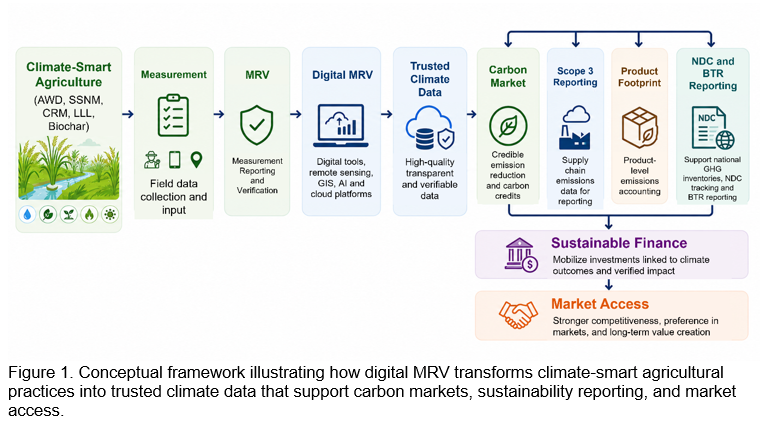
Climate-smart agricultural technologies such as alternate wetting and drying (AWD), site-specific nutrient management (SSNM), crop residue management (CRM), laser land leveling (LLL), and biochar application are increasingly promoted as important strategies for reducing GHG emissions while strengthening agricultural productivity and resilience (FAO, 2021). However, as countries move toward carbon neutrality and net-zero emissions targets, promoting climate-smart practices alone is no longer sufficient. Stakeholders increasingly need to know not only whether a practice has been adopted, but also whether it is delivering measurable climate benefits. For example, if a farmer adopts AWD, how much CH4 reduction is actually achieved? Are the benefits consistent across different farming systems and environmental conditions? Without reliable measurement, these questions remain difficult to answer.
Measurement has therefore become the foundation of climate accountability. It enables policymakers to assess progress toward Nationally Determined Contributions (NDCs), supports the evaluation of mitigation programs, and provides evidence for climate finance and carbon market mechanisms (UNFCCC, 2021). In agriculture, this is particularly important because greenhouse gas emissions are influenced by a wide range of factors, including climate conditions, soil characteristics, water management, crop varieties, and fertilizer use (IPCC, 2019). As a result, emission reductions cannot simply be assumed based on technology adoption; they must be quantified using scientifically sound approaches.
The growing importance of measurement is also being driven by changes in global markets. Carbon footprints, Scope 3 emissions, sustainability reporting, and environmental disclosure requirements are becoming increasingly important in investment and procurement decisions (GHG Protocol, 2023; ISSB, 2023). In this context, trusted data has become as valuable as the agricultural commodity itself. Reliable measurement systems help build trust among farmers, governments, investors, carbon markets, and consumers by providing evidence of environmental performance and climate benefits.
In Thailand, where rice cultivation remains the largest source of GHG emissions in the agricultural sector, measurement is becoming increasingly important to support national climate commitments and the transition toward low-carbon agriculture. As the agricultural sector enters an era shaped by carbon accounting, sustainability disclosure, and climate-related investment, the ability to generate reliable, transparent, and scalable data will become a critical competitive advantage. The future of climate-smart agriculture will depend not only on the adoption of better farming practices, but also on the ability to measure, verify, and communicate their impacts.
THE GROWING DEMAND FOR AGRICULTURAL MRV
The demand for MRV systems in agriculture has grown rapidly over the past decade. Originally developed to support GHG inventories and international climate reporting under the United Nations Framework Convention on Climate Change (UNFCCC), MRV has evolved into an essential tool for implementing climate policies, tracking mitigation outcomes, and supporting low-emission development strategies (UNFCCC, 2021; World Bank, 2024). Following the Paris Agreement, countries are expected not only to establish NDCs but also to demonstrate measurable progress toward achieving them. Because agriculture is both a significant source of GHG emissions and one of the sectors most vulnerable to climate change, reliable MRV systems are increasingly needed to quantify emission reductions, assess program effectiveness, and ensure accountability in the use of climate finance (IPCC, 2023).
The growing importance of agricultural MRV is also being driven by changes in global markets. Carbon markets, sustainability reporting frameworks, and corporate net-zero commitments are increasing demand for credible environmental data across agricultural supply chains. Carbon credits can only be generated when emission reductions are quantified and verified using scientifically robust methodologies, while companies seeking to reduce Scope 3 emissions increasingly require reliable information on the carbon footprint of agricultural products (GHG Protocol, 2023; TGO, 2025). At the same time, investors, financial institutions, and development organizations are placing greater emphasis on measurable climate outcomes and transparent sustainability reporting (ISSB, 2023). This represents a shift from activity-based reporting to outcome-based assessment, in which trusted data is essential for demonstrating environmental performance and supporting climate-related decision-making.
Thailand reflects many of these global trends. The country has strengthened its climate commitments through its updated NDC and long-term low-emission development strategy while promoting climate-smart agriculture as a key mitigation pathway (DCCE, 2025). At the same time, Thailand's voluntary carbon market and initiatives such as Premium T-VER are creating new opportunities for agricultural carbon credit projects that require robust quantification and verification of emission reductions (TGO, 2025). As demand for climate-related information continues to grow, MRV is becoming more than a reporting requirement; it is increasingly a strategic tool for supporting sustainable supply chains, attracting climate finance, and enhancing the competitiveness of agricultural products in domestic and international markets. These emerging demands are also exposing the limitations of conventional data collection approaches and creating momentum for more efficient and scalable digital MRV systems.
THAILAND'S MRV CHALLENGE: LESSONS FROM THE RICE SECTOR
Thailand's rice sector illustrates both the opportunities and challenges of implementing agricultural MRV systems at scale. Rice cultivation remains the largest source of greenhouse gas emissions within Thailand's agricultural sector, primarily through CH4 emissions from flooded rice fields (DCCE, 2025). As a result, rice production has become a major focus of climate mitigation efforts, including the Thai Rice NAMA project and the Climate-Smart Rice Project supported by the Green Climate Fund (GCF) (Green Climate Fund, 2023). These programs have demonstrated the potential of climate-smart practices such as AWD, SSNM, and sustainable residue management to reduce emissions while maintaining productivity. At the same time, they have highlighted the practical challenges of measuring and verifying mitigation outcomes across thousands of smallholder farmers.
One of the key challenges is the diversity of Thailand's rice production systems. Rice is cultivated under a wide range of agroecological conditions, including irrigated and rainfed systems, different soil types, rice varieties, and water management practices. Because GHG emissions are strongly influenced by these factors, reliable estimation requires detailed activity data and robust methodologies (IPCC, 2019). Collecting such information through conventional approaches often involves extensive field surveys, farmer interviews, and data validation processes that require substantial time, financial resources, and technical capacity.
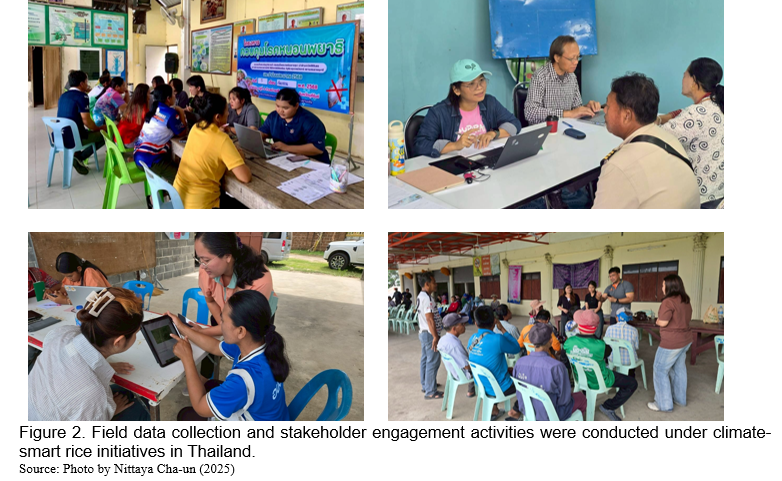
Recent baseline assessments conducted under Thailand's climate-smart rice programs illustrate the scale of this challenge. Data collection from more than 3,400 farming households across 14 provinces provided valuable insights into farming practices and drivers of emissions, but also revealed the difficulties of generating reliable datasets at scale. Even well-designed surveys remain vulnerable to recall bias, incomplete records, and verification challenges. Moreover, many mitigation interventions are implemented through management changes rather than direct measurement of emissions, requiring the use of activity data, emission factors, and models to estimate emission reductions (IPCC, 2019; TGO, 2025). Experiences from recent baseline assessments and climate-smart rice initiatives illustrate the scale of data collection efforts required to support agricultural MRV systems in Thailand. Examples of field surveys, farmer interviews, and stakeholder engagement activities are presented in Figure 2.
Institutional fragmentation presents an additional challenge. Agricultural and climate-related data are collected by multiple agencies for different purposes and often stored in separate systems. As demand for carbon accounting, climate reporting, and carbon market participation continues to grow, greater coordination and interoperability among these datasets will become increasingly important. The experience in Thailand's rice sector suggests that the challenge is no longer simply about collecting more data, but about developing systems capable of producing trusted, timely, and scalable climate information. Addressing this challenge will require a transition from conventional MRV approaches to more integrated, digitized systems that can support future climate policies, carbon markets, and sustainable agricultural supply chains.
FROM TRADITIONAL MRV TO DIGITAL MRV
The challenges observed in Thailand's rice sector are not unique. Similar issues are being reported across many agricultural systems worldwide, where conventional MRV approaches often struggle to keep pace with the growing demand for climate-related data. Traditional MRV systems rely heavily on field surveys, paper-based records, manual data entry, and periodic verification processes. While these approaches can provide reliable information, they are often labor-intensive, costly, and difficult to scale across large numbers of geographically dispersed farms (FAO, 2023; World Bank, 2024). As climate-smart agriculture programs expand and carbon markets increasingly require transparent and verifiable data, new approaches are needed to improve efficiency while maintaining scientific credibility.
Recent advances in digital technologies have created opportunities to transform agricultural MRV systems. Digital MRV (dMRV) is the integration of digital tools and data sources to support the measurement, reporting, and verification of GHG emissions and mitigation outcomes. Rather than relying solely on field visits and farmer interviews, dMRV combines multiple sources of information, including mobile applications, satellite imagery, remote sensing, geospatial information systems (GIS), farm management platforms, sensor technologies, and cloud-based databases (World Bank, 2024). These technologies can improve data collection, reduce reporting burdens, strengthen data traceability, and enable more frequent monitoring of agricultural activities.
For example, satellite observations and remote sensing technologies can provide valuable information on land use, crop distribution, flooding conditions, vegetation growth, and residue management practices. Mobile applications can facilitate real-time collection of farm activity data, while cloud-based platforms allow information to be stored, integrated, and analyzed more efficiently. Advances in artificial intelligence (AI) and machine learning are further expanding the ability to process large datasets, identify anomalies, and support data validation processes. Together, these technologies have the potential to reduce transaction costs while improving the transparency and consistency of agricultural MRV systems (OECD, 2022).
For Thailand, the transition toward dMRV offers particular advantages. The country's rice sector is characterized by millions of smallholder farmers operating under diverse environmental and management conditions. Conventional approaches that rely primarily on field surveys can be effective for pilot projects but become increasingly difficult to sustain as programs scale up. By combining field observations with digital technologies, Thailand can move toward a more efficient MRV framework that supports national climate reporting, carbon market participation, and large-scale climate-smart agriculture initiatives. Importantly, dMRV should not be viewed as a replacement for field measurements or scientific assessments. Instead, it should be seen as a complementary approach that enhances data quality, improves operational efficiency, and enables the generation of climate information at the scale required by future climate policies and market demands.
The transition from traditional MRV to digital MRV therefore represents more than a technological upgrade. It reflects a broader shift toward data-driven climate governance, in which trusted information underpins policy implementation, carbon accounting, climate finance, and sustainable agricultural development. As digital technologies continue to evolve, dMRV has the potential to become a critical enabling infrastructure connecting farmers, government agencies, researchers, carbon markets, and global supply chains. In this sense, digital MRV is not simply about measuring emissions more efficiently; it is about creating the information systems needed to support the future low-carbon agricultural economy.
EMERGING OPPORTUNITIES BEYOND CARBON ACCOUNTING
The value of agricultural MRV extends far beyond GHG accounting. While MRV systems were initially developed to quantify emissions and support climate reporting, the rapid expansion of sustainability requirements is creating new opportunities for agricultural producers, agribusinesses, and governments. Increasingly, climate-related data are becoming a strategic asset that can support market access, attract investment, strengthen supply chain transparency, and create new income opportunities for farmers. In this context, digital MRV (dMRV) should be viewed not only as a climate reporting tool but also as an enabling infrastructure for the emerging low-carbon economy. The potential applications of digital MRV extend far beyond greenhouse gas accounting. As summarized in Table 1, trusted climate data generated through dMRV can support a wide range of emerging opportunities, including carbon markets, sustainability reporting, product carbon footprinting, sustainable finance, and national climate reporting.
Table 1. Emerging opportunities enabled by dMRV
|
Opportunity
|
Why data matters
|
|
1. Carbon Markets
|
Quantify and verify emission reductions for carbon credit generation
|
|
2. Scope 3 Reporting
|
Provide farm-level emissions data for corporate value chains
|
|
3. Product Carbon Footprint
|
Support product-level carbon accounting and sustainability claims
|
|
4. Sustainable Finance
|
Demonstrate environmental performance and climate outcomes
|
|
5. Sustainable Supply Chains
|
Improve traceability, transparency, and market access
|
|
6. NDC and BTR Reporting
|
Support national GHG inventories, NDC tracking, and Biennial Transparency Reports (BTR) through more timely and accurate agricultural emissions data
|
These opportunities illustrate how dMRV is evolving from a technical reporting system into a strategic enabler of climate policy implementation, sustainable finance, and market transformation. The following sections discuss these emerging applications in greater detail.
One of the most immediate opportunities lies in agricultural carbon markets. As demand for high-quality carbon credits continues to grow, agricultural mitigation activities such as improved water management, optimized fertilizer use, residue management, and soil carbon enhancement are attracting increasing attention (World Bank, 2024; TGO, 2025). However, participation in carbon markets depends on the ability to generate transparent, traceable, and verifiable data. dMRV can help reduce transaction costs, improve monitoring efficiency, and increase confidence in emission-reduction estimates, thereby making carbon market participation more accessible to smallholder-based agricultural systems. Beyond carbon markets, global supply chains are increasingly focusing on Scope 3 emissions, which often account for the majority of emissions associated with food and agricultural products (GHG Protocol, 2023). Food companies, retailers, and exporters are under growing pressure to quantify emissions across their value chains and demonstrate progress toward corporate climate commitments. This trend is creating demand for farm-level activity data and emissions information that can be aggregated across production systems. As a result, agricultural MRV is evolving from a project-level requirement into a business necessity. Producers and exporters that can provide credible environmental data may gain a competitive advantage in increasingly sustainability-conscious markets.
Another emerging opportunity is the growing use of Product Carbon Footprints (PCFs) and environmental product information. Consumers, retailers, and regulators are increasingly interested in understanding the environmental impacts of agricultural products. At the same time, several jurisdictions are introducing sustainability-related regulations and disclosure requirements that require greater transparency throughout supply chains (ISSB, 2023; European Commission, 2024). Digital MRV systems can support the generation of reliable activity data and emissions estimates needed for carbon footprint assessments, sustainability reporting, and future initiatives such as Digital Product Passports (DPP). These developments are expected to become increasingly important for export-oriented agricultural sectors seeking access to premium and environmentally conscious markets.
Reliable climate data may also unlock new forms of climate finance and sustainability-linked investment. Financial institutions are increasingly incorporating climate-related risks and environmental performance into lending and investment decisions. As a result, farmers, cooperatives, and agribusinesses that can demonstrate measurable climate outcomes may gain improved access to green finance, sustainability-linked loans, and climate investment programs (FAO, 2023; World Bank, 2024). In the future, trusted environmental data could become as important as traditional financial indicators when evaluating agricultural investment opportunities.
Beyond market applications, dMRV can also strengthen national climate governance. As countries move toward enhanced transparency requirements under the Paris Agreement, governments need more timely, accurate, and disaggregated emissions data to support National Greenhouse Gas Inventories, NDC tracking, and Biennial Transparency Reports (BTRs) (UNFCCC, 2021). In Thailand, agricultural dMRV could help improve the consistency and efficiency of emissions reporting while reducing the burden of conventional data collection and compilation. In this regard, investments in dMRV can generate benefits not only for farmers and supply chains but also for national climate policy implementation and international reporting obligations.
For Thailand, these developments present an opportunity to position its agricultural sector in the growing global market for sustainable, low-carbon products. The country's experience in climate-smart rice production, agricultural carbon markets, and GHG mitigation provides a strong foundation for future innovation. By investing in digital MRV systems today, Thailand can build the data infrastructure needed not only for climate reporting but also for supporting carbon markets, sustainability disclosure, green finance, and climate-smart supply chains. In this sense, the future role of MRV extends far beyond measurement itself. It is becoming a critical mechanism for transforming climate data into economic value, creating a direct pathway from measurement to market.
POLICY RECOMMENDATIONS
To fully realize the potential of dMRV, Thailand should move beyond project-based initiatives and adopt a long-term strategy for developing a national agricultural climate data ecosystem. The first priority is to establish a national agricultural dMRV platform that can serve as a common infrastructure for GHG accounting, climate-smart agriculture programs, carbon market mechanisms, and sustainability reporting. Such a platform should integrate activity data, geospatial information, emissions estimation tools, and reporting functions while maintaining transparency, data quality, and interoperability across sectors (FAO, 2023; World Bank, 2024). Equally important is improving data integration among government agencies. Agricultural and climate-related datasets are currently managed by multiple organizations, often using different methodologies and systems. Strengthening coordination and data sharing among agencies would reduce duplication, improve efficiency, and support more consistent climate reporting (DCCE, 2025).
The second priority is to strengthen the technological and human capacities required to support dMRV implementation. Continued investment in remote sensing, geospatial technologies, artificial intelligence (AI), and digital data management systems will be essential for improving the efficiency and scalability of agricultural MRV (OECD, 2022). However, technology alone is insufficient. Capacity building is equally important for farmers, extension officers, researchers, and project developers who will be responsible for generating, managing, and utilizing climate-related data. Developing a workforce capable of implementing and maintaining dMRV systems should therefore be considered a strategic investment in Thailand's climate and agricultural future.
Finally, Thailand should strengthen the linkage between dMRV systems and emerging market opportunities. As demand for carbon credits, Scope 3 emissions reporting, sustainability disclosure, and Product Carbon Footprints continues to grow, trusted climate data will become increasingly valuable for farmers and agribusinesses (GHG Protocol, 2023; ISSB, 2023). Integrating dMRV into carbon market frameworks, sustainable finance mechanisms, and low-carbon supply chain initiatives can help transform climate data into tangible economic benefits. Such an approach would not only support Thailand's climate commitments but also enhance the competitiveness of its agricultural sector in a global economy that increasingly rewards transparency, sustainability, and environmental performance.
CONCLUSION
As countries accelerate their transitions toward low-carbon and climate-resilient development, the role of agriculture is evolving beyond food production alone. Farmers are increasingly expected to contribute to climate mitigation, supply chain transparency, and sustainability goals while maintaining productivity and livelihoods. In this changing landscape, the question is no longer whether climate-smart agricultural practices can reduce GHG emissions, but whether those reductions can be measured, verified, and trusted.
Thailand's experience in the rice sector demonstrates both the opportunities and challenges of implementing agricultural MRV systems at scale. While climate-smart practices such as alternate wetting and drying, improved nutrient management, and sustainable residue management offer significant mitigation potential, generating credible evidence of their impacts remains a complex and resource-intensive task. At the same time, growing demands from climate policies, carbon markets, sustainability reporting frameworks, and global supply chains are increasing the need for reliable and transparent climate data.
Digital MRV offers a pathway to address these challenges. By integrating field data with remote sensing, geospatial information, digital platforms, and advanced analytics, dMRV can improve the efficiency, transparency, and scalability of agricultural climate information systems. More importantly, it can help transform climate data from a reporting requirement into a strategic asset that supports carbon markets, climate finance, sustainable supply chains, and low-carbon agricultural development.
Ultimately, the future value of MRV extends far beyond carbon accounting. The countries that can generate trusted, transparent, and scalable climate data will be best positioned to access emerging opportunities in sustainable finance, environmental markets, and climate-smart trade. For Thailand, investing in digital MRV today is not simply an investment in better measurement; it is an investment in the information infrastructure needed to support the future competitiveness and sustainability of its agricultural sector. In this sense, the journey toward low-carbon agriculture is not only about reducing emissions; it is about creating a pathway from measurement to market.
REFERENCES
Department of Climate Change and Environment. (2025). Thailand's second nationally determined contribution (NDC 3.0). Ministry of Natural Resources and Environment. DCCE. https://unfccc.int/sites/default/files/2026-01/TH%20NDC%203.0.pdf
Deutsche Gesellschaft für Internationale Zusammenarbeit. (2024). Thai Rice NAMA. https://www.thai-german-cooperation.info/thai-rice-nama-nationally-appropriate-mitigation-action/?e-page-d351b7b=2
European Commission. (2024). Digital product passport: Requirements and implementation framework under the Ecodesign for Sustainable Products Regulation. European Commission. https://green-forum.ec.europa.eu/implementing-ecodesign-sustainable-products-regulation_en#digital-product-passport
Food and Agriculture Organization of the United Nations. (2021). Climate-smart agriculture sourcebook (3rd ed.). FAO. https://www.fao.org/climatechange/37491-0c425f2caa2f5e6f3b9162d39c8507fa3.pdf
Food and Agriculture Organization of the United Nations. (2023). The state of food and agriculture 2023: Revealing the true cost of food to transform agrifood systems. FAO. https://openknowledge.fao.org/items/1516eb79-8b43-400e-b3cb-130fd70853b0
GHG Protocol. (2023). Corporate value chain (Scope 3) accounting and reporting standard. World Resources Institute & World Business Council for Sustainable Development. https://ghgprotocol.org/sites/default/files/standards/Corporate-Value-Chain-Accounting-Reporing-Standard_041613_2.pdf
Green Climate Fund. (2023). Funding proposal FP145: Strengthening climate-smart rice farming in Thailand. Green Climate Fund (GCF). https://www.greenclimate.fund/document/thai-rice-strengthening-climate-smart-rice-farming-0
Intergovernmental Panel on Climate Change. (2019). 2019 refinement to the 2006 IPCC guidelines for national greenhouse gas inventories. IPCC. https://www.ipcc-nggip.iges.or.jp/public/2019rf
Intergovernmental Panel on Climate Change. (2023). Climate change 2023: Synthesis report. Contribution of Working Groups I, II and III to the Sixth Assessment Report of the Intergovernmental Panel on Climate Change. IPCC. https://www.ipcc.ch/report/ar6/syr
International Sustainability Standards Board. (2023). IFRS S1 general requirements for disclosure of sustainability-related financial information. IFRS Foundation. https://www.ifrs.org
International Sustainability Standards Board. (2023). IFRS S2 climate-related disclosures. IFRS Foundation. https://www.ifrs.org
Organisation for Economic Co-operation and Development. (2022). Digital opportunities for better agricultural policies. OECD Publishing. https://www.oecd.org/en/publications/digital-opportunities-for-better-agricultural-policies_571a0812-en.html
Thailand Greenhouse Gas Management Organization (TGO). (2025). Guideline for Premium Thailand Voluntary Emission Reduction Program (Premium T-VER) (Version 5.0). https://ghgreduction.tgo.or.th/th/component/flexicontent/download/13218/3697/32.html?method=view
United Nations Framework Convention on Climate Change. (2021). Measurement, reporting and verification (MRV): Technical materials for the Consultative Group of Experts. UNFCCC. https://unfccc.int/process-and-meetings/transparency-and-reporting/support-for-developing-countries/consultative-group-of-experts/measurement-reporting-and-verification-technical-material
Verra. (2024). Verified Carbon Standard (VCS) program guide. Verra. https://verra.org
World Bank. (2024). Recipe for a Livable Planet: Achieving Net Zero Emissions in the Agrifood System. World Bank. https://www.worldbank.org/en/topic/agriculture/publication/recipe-for-livable-planet

From Measurement to Market: Building Digital MRV Systems for Climate-Smart Agriculture in Thailand
ABSTRACT
As countries advance their climate commitments and global markets increasingly demand transparency in environmental performance, the role of Measurement, Reporting, and Verification (MRV) systems in agriculture is rapidly expanding. Originally developed to support greenhouse gas (GHG) inventories and climate reporting, MRV is now becoming a critical foundation for carbon markets, sustainability disclosure, climate finance, and low-carbon agricultural supply chains. In Thailand, where rice cultivation represents the largest source of GHG emissions within the agricultural sector, the need for reliable and scalable climate data is becoming increasingly important to support both national climate objectives and emerging market requirements. This article examines the growing importance of agricultural MRV in the context of Thailand's transition toward climate-smart and low-carbon agriculture. Drawing on lessons learned from Thailand's rice sector, including recent large-scale climate-smart rice initiatives, the article highlights key challenges associated with conventional MRV approaches, such as the high costs of data collection, the diversity of farming systems, and fragmented data management. It then discusses how Digital MRV (dMRV), through the integration of remote sensing, geospatial technologies, digital platforms, and advanced analytics, can improve the efficiency, transparency, and scalability of agricultural climate information systems. Beyond GHG accounting, the article explores emerging opportunities for dMRV in supporting carbon markets, Scope 3 emissions reporting, product carbon footprints, sustainable finance, and climate-smart supply chains. The article concludes with policy recommendations for strengthening Thailand's agricultural data ecosystem and argues that trusted climate data should be viewed not merely as a reporting requirement, but as a strategic asset for enhancing the competitiveness, sustainability, and resilience of the agricultural sector. Ultimately, the pathway toward low-carbon agriculture depends not only on the adoption of climate-smart practices, but also on the ability to transform measurement into market opportunities.
Keywords: Digital MRV (dMRV), climate-smart agriculture, greenhouse gas measurement, rice sector, carbon markets, product carbon footprint, low-carbon agriculture, Thailand
INTRODUCTION
A rice farmer in central Thailand adopts alternate wetting and drying (AWD) to reduce methane (CH4) emissions. Another farmer in the northeast stops burning rice straw and incorporates crop residues into the soil. Across the country, thousands of farmers are encouraged to adopt climate-smart agricultural practices through various national and international initiatives to reduce greenhouse gas (GHG) emissions and improve productivity and resilience (GIZ, 2024). But a critical question remains: How can we verify that these climate benefits are actually happening?
This question is becoming increasingly important as countries, companies, and financial institutions accelerate their commitments toward carbon neutrality and net-zero emissions (UNFCCC, 2021). Agricultural products are no longer evaluated solely based on yield, quality, or price. Today, global markets are demanding evidence of sustainability, including carbon footprints, Scope 3 emissions reporting, deforestation-free supply chains, and compliance with emerging sustainability disclosure requirements (GHG Protocol, 2023; ISSB, 2023). In this new landscape, trusted climate data has become as valuable as the agricultural commodity itself.
The challenge is particularly significant in agriculture, where millions of smallholder farmers manage diverse production systems across vast geographic areas. Measuring GHG emissions directly at the farm level is often costly, time-consuming, and technically complex. Traditional monitoring approaches, which rely heavily on field surveys, paper-based records, and manual verification, are increasingly unable to meet the growing demand for timely, transparent, and scalable climate data. This is where Measurement, Reporting and Verification (MRV) systems play a crucial role. MRV provides a systematic framework for quantifying greenhouse gas emissions and emission reductions, reporting the results, and ensuring their credibility through verification processes (UNFCCC, 2021; IPCC, 2019). However, as climate policies and carbon markets continue to expand, conventional MRV systems are facing increasing limitations in cost, efficiency, and scalability.
Recent advances in digital technologies are creating new opportunities to transform agricultural MRV. The integration of satellite observations, remote sensing, mobile applications, geographic information systems (GIS), artificial intelligence (AI), Internet of Things (IoT) devices, and cloud-based data platforms has given rise to a new generation of Digital MRV (dMRV) systems (World Bank, 2024). These technologies offer the potential to monitor climate-smart agricultural practices across millions of smallholder farms more efficiently than conventional field-based approaches. For Thailand, the development of agricultural dMRV is becoming increasingly strategic as the country advances its Nationally Determined Contributions (NDCs) and explores agricultural carbon market mechanisms under its long-term low-emission development pathway (DCCE, 2025; TGO, 2025). Beyond supporting GHG accounting, dMRV has the potential to become a critical enabling infrastructure connecting farmers, policymakers, carbon markets, financial institutions, and international buyers.
This article discusses the growing importance of digital MRV systems in Thailand’s agricultural sector, examines current challenges and emerging opportunities, and proposes policy recommendations to support the country’s transition toward a more transparent, climate-resilient, and low-carbon agricultural future. In the emerging low-carbon economy, the question is no longer whether farmers can reduce emissions, but whether those reductions can be measured, verified, and trusted.
WHY MEASUREMENT MATTERS
Climate-smart agricultural technologies such as alternate wetting and drying (AWD), site-specific nutrient management (SSNM), crop residue management (CRM), laser land leveling (LLL), and biochar application are increasingly promoted as important strategies for reducing GHG emissions while strengthening agricultural productivity and resilience (FAO, 2021). However, as countries move toward carbon neutrality and net-zero emissions targets, promoting climate-smart practices alone is no longer sufficient. Stakeholders increasingly need to know not only whether a practice has been adopted, but also whether it is delivering measurable climate benefits. For example, if a farmer adopts AWD, how much CH4 reduction is actually achieved? Are the benefits consistent across different farming systems and environmental conditions? Without reliable measurement, these questions remain difficult to answer.
Measurement has therefore become the foundation of climate accountability. It enables policymakers to assess progress toward Nationally Determined Contributions (NDCs), supports the evaluation of mitigation programs, and provides evidence for climate finance and carbon market mechanisms (UNFCCC, 2021). In agriculture, this is particularly important because greenhouse gas emissions are influenced by a wide range of factors, including climate conditions, soil characteristics, water management, crop varieties, and fertilizer use (IPCC, 2019). As a result, emission reductions cannot simply be assumed based on technology adoption; they must be quantified using scientifically sound approaches.
The growing importance of measurement is also being driven by changes in global markets. Carbon footprints, Scope 3 emissions, sustainability reporting, and environmental disclosure requirements are becoming increasingly important in investment and procurement decisions (GHG Protocol, 2023; ISSB, 2023). In this context, trusted data has become as valuable as the agricultural commodity itself. Reliable measurement systems help build trust among farmers, governments, investors, carbon markets, and consumers by providing evidence of environmental performance and climate benefits.
In Thailand, where rice cultivation remains the largest source of GHG emissions in the agricultural sector, measurement is becoming increasingly important to support national climate commitments and the transition toward low-carbon agriculture. As the agricultural sector enters an era shaped by carbon accounting, sustainability disclosure, and climate-related investment, the ability to generate reliable, transparent, and scalable data will become a critical competitive advantage. The future of climate-smart agriculture will depend not only on the adoption of better farming practices, but also on the ability to measure, verify, and communicate their impacts.
THE GROWING DEMAND FOR AGRICULTURAL MRV
The demand for MRV systems in agriculture has grown rapidly over the past decade. Originally developed to support GHG inventories and international climate reporting under the United Nations Framework Convention on Climate Change (UNFCCC), MRV has evolved into an essential tool for implementing climate policies, tracking mitigation outcomes, and supporting low-emission development strategies (UNFCCC, 2021; World Bank, 2024). Following the Paris Agreement, countries are expected not only to establish NDCs but also to demonstrate measurable progress toward achieving them. Because agriculture is both a significant source of GHG emissions and one of the sectors most vulnerable to climate change, reliable MRV systems are increasingly needed to quantify emission reductions, assess program effectiveness, and ensure accountability in the use of climate finance (IPCC, 2023).
The growing importance of agricultural MRV is also being driven by changes in global markets. Carbon markets, sustainability reporting frameworks, and corporate net-zero commitments are increasing demand for credible environmental data across agricultural supply chains. Carbon credits can only be generated when emission reductions are quantified and verified using scientifically robust methodologies, while companies seeking to reduce Scope 3 emissions increasingly require reliable information on the carbon footprint of agricultural products (GHG Protocol, 2023; TGO, 2025). At the same time, investors, financial institutions, and development organizations are placing greater emphasis on measurable climate outcomes and transparent sustainability reporting (ISSB, 2023). This represents a shift from activity-based reporting to outcome-based assessment, in which trusted data is essential for demonstrating environmental performance and supporting climate-related decision-making.
Thailand reflects many of these global trends. The country has strengthened its climate commitments through its updated NDC and long-term low-emission development strategy while promoting climate-smart agriculture as a key mitigation pathway (DCCE, 2025). At the same time, Thailand's voluntary carbon market and initiatives such as Premium T-VER are creating new opportunities for agricultural carbon credit projects that require robust quantification and verification of emission reductions (TGO, 2025). As demand for climate-related information continues to grow, MRV is becoming more than a reporting requirement; it is increasingly a strategic tool for supporting sustainable supply chains, attracting climate finance, and enhancing the competitiveness of agricultural products in domestic and international markets. These emerging demands are also exposing the limitations of conventional data collection approaches and creating momentum for more efficient and scalable digital MRV systems.
THAILAND'S MRV CHALLENGE: LESSONS FROM THE RICE SECTOR
Thailand's rice sector illustrates both the opportunities and challenges of implementing agricultural MRV systems at scale. Rice cultivation remains the largest source of greenhouse gas emissions within Thailand's agricultural sector, primarily through CH4 emissions from flooded rice fields (DCCE, 2025). As a result, rice production has become a major focus of climate mitigation efforts, including the Thai Rice NAMA project and the Climate-Smart Rice Project supported by the Green Climate Fund (GCF) (Green Climate Fund, 2023). These programs have demonstrated the potential of climate-smart practices such as AWD, SSNM, and sustainable residue management to reduce emissions while maintaining productivity. At the same time, they have highlighted the practical challenges of measuring and verifying mitigation outcomes across thousands of smallholder farmers.
One of the key challenges is the diversity of Thailand's rice production systems. Rice is cultivated under a wide range of agroecological conditions, including irrigated and rainfed systems, different soil types, rice varieties, and water management practices. Because GHG emissions are strongly influenced by these factors, reliable estimation requires detailed activity data and robust methodologies (IPCC, 2019). Collecting such information through conventional approaches often involves extensive field surveys, farmer interviews, and data validation processes that require substantial time, financial resources, and technical capacity.
Recent baseline assessments conducted under Thailand's climate-smart rice programs illustrate the scale of this challenge. Data collection from more than 3,400 farming households across 14 provinces provided valuable insights into farming practices and drivers of emissions, but also revealed the difficulties of generating reliable datasets at scale. Even well-designed surveys remain vulnerable to recall bias, incomplete records, and verification challenges. Moreover, many mitigation interventions are implemented through management changes rather than direct measurement of emissions, requiring the use of activity data, emission factors, and models to estimate emission reductions (IPCC, 2019; TGO, 2025). Experiences from recent baseline assessments and climate-smart rice initiatives illustrate the scale of data collection efforts required to support agricultural MRV systems in Thailand. Examples of field surveys, farmer interviews, and stakeholder engagement activities are presented in Figure 2.
Institutional fragmentation presents an additional challenge. Agricultural and climate-related data are collected by multiple agencies for different purposes and often stored in separate systems. As demand for carbon accounting, climate reporting, and carbon market participation continues to grow, greater coordination and interoperability among these datasets will become increasingly important. The experience in Thailand's rice sector suggests that the challenge is no longer simply about collecting more data, but about developing systems capable of producing trusted, timely, and scalable climate information. Addressing this challenge will require a transition from conventional MRV approaches to more integrated, digitized systems that can support future climate policies, carbon markets, and sustainable agricultural supply chains.
FROM TRADITIONAL MRV TO DIGITAL MRV
The challenges observed in Thailand's rice sector are not unique. Similar issues are being reported across many agricultural systems worldwide, where conventional MRV approaches often struggle to keep pace with the growing demand for climate-related data. Traditional MRV systems rely heavily on field surveys, paper-based records, manual data entry, and periodic verification processes. While these approaches can provide reliable information, they are often labor-intensive, costly, and difficult to scale across large numbers of geographically dispersed farms (FAO, 2023; World Bank, 2024). As climate-smart agriculture programs expand and carbon markets increasingly require transparent and verifiable data, new approaches are needed to improve efficiency while maintaining scientific credibility.
Recent advances in digital technologies have created opportunities to transform agricultural MRV systems. Digital MRV (dMRV) is the integration of digital tools and data sources to support the measurement, reporting, and verification of GHG emissions and mitigation outcomes. Rather than relying solely on field visits and farmer interviews, dMRV combines multiple sources of information, including mobile applications, satellite imagery, remote sensing, geospatial information systems (GIS), farm management platforms, sensor technologies, and cloud-based databases (World Bank, 2024). These technologies can improve data collection, reduce reporting burdens, strengthen data traceability, and enable more frequent monitoring of agricultural activities.
For example, satellite observations and remote sensing technologies can provide valuable information on land use, crop distribution, flooding conditions, vegetation growth, and residue management practices. Mobile applications can facilitate real-time collection of farm activity data, while cloud-based platforms allow information to be stored, integrated, and analyzed more efficiently. Advances in artificial intelligence (AI) and machine learning are further expanding the ability to process large datasets, identify anomalies, and support data validation processes. Together, these technologies have the potential to reduce transaction costs while improving the transparency and consistency of agricultural MRV systems (OECD, 2022).
For Thailand, the transition toward dMRV offers particular advantages. The country's rice sector is characterized by millions of smallholder farmers operating under diverse environmental and management conditions. Conventional approaches that rely primarily on field surveys can be effective for pilot projects but become increasingly difficult to sustain as programs scale up. By combining field observations with digital technologies, Thailand can move toward a more efficient MRV framework that supports national climate reporting, carbon market participation, and large-scale climate-smart agriculture initiatives. Importantly, dMRV should not be viewed as a replacement for field measurements or scientific assessments. Instead, it should be seen as a complementary approach that enhances data quality, improves operational efficiency, and enables the generation of climate information at the scale required by future climate policies and market demands.
The transition from traditional MRV to digital MRV therefore represents more than a technological upgrade. It reflects a broader shift toward data-driven climate governance, in which trusted information underpins policy implementation, carbon accounting, climate finance, and sustainable agricultural development. As digital technologies continue to evolve, dMRV has the potential to become a critical enabling infrastructure connecting farmers, government agencies, researchers, carbon markets, and global supply chains. In this sense, digital MRV is not simply about measuring emissions more efficiently; it is about creating the information systems needed to support the future low-carbon agricultural economy.
EMERGING OPPORTUNITIES BEYOND CARBON ACCOUNTING
The value of agricultural MRV extends far beyond GHG accounting. While MRV systems were initially developed to quantify emissions and support climate reporting, the rapid expansion of sustainability requirements is creating new opportunities for agricultural producers, agribusinesses, and governments. Increasingly, climate-related data are becoming a strategic asset that can support market access, attract investment, strengthen supply chain transparency, and create new income opportunities for farmers. In this context, digital MRV (dMRV) should be viewed not only as a climate reporting tool but also as an enabling infrastructure for the emerging low-carbon economy. The potential applications of digital MRV extend far beyond greenhouse gas accounting. As summarized in Table 1, trusted climate data generated through dMRV can support a wide range of emerging opportunities, including carbon markets, sustainability reporting, product carbon footprinting, sustainable finance, and national climate reporting.
Table 1. Emerging opportunities enabled by dMRV
Opportunity
Why data matters
1. Carbon Markets
Quantify and verify emission reductions for carbon credit generation
2. Scope 3 Reporting
Provide farm-level emissions data for corporate value chains
3. Product Carbon Footprint
Support product-level carbon accounting and sustainability claims
4. Sustainable Finance
Demonstrate environmental performance and climate outcomes
5. Sustainable Supply Chains
Improve traceability, transparency, and market access
6. NDC and BTR Reporting
Support national GHG inventories, NDC tracking, and Biennial Transparency Reports (BTR) through more timely and accurate agricultural emissions data
These opportunities illustrate how dMRV is evolving from a technical reporting system into a strategic enabler of climate policy implementation, sustainable finance, and market transformation. The following sections discuss these emerging applications in greater detail.
One of the most immediate opportunities lies in agricultural carbon markets. As demand for high-quality carbon credits continues to grow, agricultural mitigation activities such as improved water management, optimized fertilizer use, residue management, and soil carbon enhancement are attracting increasing attention (World Bank, 2024; TGO, 2025). However, participation in carbon markets depends on the ability to generate transparent, traceable, and verifiable data. dMRV can help reduce transaction costs, improve monitoring efficiency, and increase confidence in emission-reduction estimates, thereby making carbon market participation more accessible to smallholder-based agricultural systems. Beyond carbon markets, global supply chains are increasingly focusing on Scope 3 emissions, which often account for the majority of emissions associated with food and agricultural products (GHG Protocol, 2023). Food companies, retailers, and exporters are under growing pressure to quantify emissions across their value chains and demonstrate progress toward corporate climate commitments. This trend is creating demand for farm-level activity data and emissions information that can be aggregated across production systems. As a result, agricultural MRV is evolving from a project-level requirement into a business necessity. Producers and exporters that can provide credible environmental data may gain a competitive advantage in increasingly sustainability-conscious markets.
Another emerging opportunity is the growing use of Product Carbon Footprints (PCFs) and environmental product information. Consumers, retailers, and regulators are increasingly interested in understanding the environmental impacts of agricultural products. At the same time, several jurisdictions are introducing sustainability-related regulations and disclosure requirements that require greater transparency throughout supply chains (ISSB, 2023; European Commission, 2024). Digital MRV systems can support the generation of reliable activity data and emissions estimates needed for carbon footprint assessments, sustainability reporting, and future initiatives such as Digital Product Passports (DPP). These developments are expected to become increasingly important for export-oriented agricultural sectors seeking access to premium and environmentally conscious markets.
Reliable climate data may also unlock new forms of climate finance and sustainability-linked investment. Financial institutions are increasingly incorporating climate-related risks and environmental performance into lending and investment decisions. As a result, farmers, cooperatives, and agribusinesses that can demonstrate measurable climate outcomes may gain improved access to green finance, sustainability-linked loans, and climate investment programs (FAO, 2023; World Bank, 2024). In the future, trusted environmental data could become as important as traditional financial indicators when evaluating agricultural investment opportunities.
Beyond market applications, dMRV can also strengthen national climate governance. As countries move toward enhanced transparency requirements under the Paris Agreement, governments need more timely, accurate, and disaggregated emissions data to support National Greenhouse Gas Inventories, NDC tracking, and Biennial Transparency Reports (BTRs) (UNFCCC, 2021). In Thailand, agricultural dMRV could help improve the consistency and efficiency of emissions reporting while reducing the burden of conventional data collection and compilation. In this regard, investments in dMRV can generate benefits not only for farmers and supply chains but also for national climate policy implementation and international reporting obligations.
For Thailand, these developments present an opportunity to position its agricultural sector in the growing global market for sustainable, low-carbon products. The country's experience in climate-smart rice production, agricultural carbon markets, and GHG mitigation provides a strong foundation for future innovation. By investing in digital MRV systems today, Thailand can build the data infrastructure needed not only for climate reporting but also for supporting carbon markets, sustainability disclosure, green finance, and climate-smart supply chains. In this sense, the future role of MRV extends far beyond measurement itself. It is becoming a critical mechanism for transforming climate data into economic value, creating a direct pathway from measurement to market.
POLICY RECOMMENDATIONS
To fully realize the potential of dMRV, Thailand should move beyond project-based initiatives and adopt a long-term strategy for developing a national agricultural climate data ecosystem. The first priority is to establish a national agricultural dMRV platform that can serve as a common infrastructure for GHG accounting, climate-smart agriculture programs, carbon market mechanisms, and sustainability reporting. Such a platform should integrate activity data, geospatial information, emissions estimation tools, and reporting functions while maintaining transparency, data quality, and interoperability across sectors (FAO, 2023; World Bank, 2024). Equally important is improving data integration among government agencies. Agricultural and climate-related datasets are currently managed by multiple organizations, often using different methodologies and systems. Strengthening coordination and data sharing among agencies would reduce duplication, improve efficiency, and support more consistent climate reporting (DCCE, 2025).
The second priority is to strengthen the technological and human capacities required to support dMRV implementation. Continued investment in remote sensing, geospatial technologies, artificial intelligence (AI), and digital data management systems will be essential for improving the efficiency and scalability of agricultural MRV (OECD, 2022). However, technology alone is insufficient. Capacity building is equally important for farmers, extension officers, researchers, and project developers who will be responsible for generating, managing, and utilizing climate-related data. Developing a workforce capable of implementing and maintaining dMRV systems should therefore be considered a strategic investment in Thailand's climate and agricultural future.
Finally, Thailand should strengthen the linkage between dMRV systems and emerging market opportunities. As demand for carbon credits, Scope 3 emissions reporting, sustainability disclosure, and Product Carbon Footprints continues to grow, trusted climate data will become increasingly valuable for farmers and agribusinesses (GHG Protocol, 2023; ISSB, 2023). Integrating dMRV into carbon market frameworks, sustainable finance mechanisms, and low-carbon supply chain initiatives can help transform climate data into tangible economic benefits. Such an approach would not only support Thailand's climate commitments but also enhance the competitiveness of its agricultural sector in a global economy that increasingly rewards transparency, sustainability, and environmental performance.
CONCLUSION
As countries accelerate their transitions toward low-carbon and climate-resilient development, the role of agriculture is evolving beyond food production alone. Farmers are increasingly expected to contribute to climate mitigation, supply chain transparency, and sustainability goals while maintaining productivity and livelihoods. In this changing landscape, the question is no longer whether climate-smart agricultural practices can reduce GHG emissions, but whether those reductions can be measured, verified, and trusted.
Thailand's experience in the rice sector demonstrates both the opportunities and challenges of implementing agricultural MRV systems at scale. While climate-smart practices such as alternate wetting and drying, improved nutrient management, and sustainable residue management offer significant mitigation potential, generating credible evidence of their impacts remains a complex and resource-intensive task. At the same time, growing demands from climate policies, carbon markets, sustainability reporting frameworks, and global supply chains are increasing the need for reliable and transparent climate data.
Digital MRV offers a pathway to address these challenges. By integrating field data with remote sensing, geospatial information, digital platforms, and advanced analytics, dMRV can improve the efficiency, transparency, and scalability of agricultural climate information systems. More importantly, it can help transform climate data from a reporting requirement into a strategic asset that supports carbon markets, climate finance, sustainable supply chains, and low-carbon agricultural development.
Ultimately, the future value of MRV extends far beyond carbon accounting. The countries that can generate trusted, transparent, and scalable climate data will be best positioned to access emerging opportunities in sustainable finance, environmental markets, and climate-smart trade. For Thailand, investing in digital MRV today is not simply an investment in better measurement; it is an investment in the information infrastructure needed to support the future competitiveness and sustainability of its agricultural sector. In this sense, the journey toward low-carbon agriculture is not only about reducing emissions; it is about creating a pathway from measurement to market.
REFERENCES
Department of Climate Change and Environment. (2025). Thailand's second nationally determined contribution (NDC 3.0). Ministry of Natural Resources and Environment. DCCE. https://unfccc.int/sites/default/files/2026-01/TH%20NDC%203.0.pdf
Deutsche Gesellschaft für Internationale Zusammenarbeit. (2024). Thai Rice NAMA. https://www.thai-german-cooperation.info/thai-rice-nama-nationally-appropriate-mitigation-action/?e-page-d351b7b=2
European Commission. (2024). Digital product passport: Requirements and implementation framework under the Ecodesign for Sustainable Products Regulation. European Commission. https://green-forum.ec.europa.eu/implementing-ecodesign-sustainable-products-regulation_en#digital-product-passport
Food and Agriculture Organization of the United Nations. (2021). Climate-smart agriculture sourcebook (3rd ed.). FAO. https://www.fao.org/climatechange/37491-0c425f2caa2f5e6f3b9162d39c8507fa3.pdf
Food and Agriculture Organization of the United Nations. (2023). The state of food and agriculture 2023: Revealing the true cost of food to transform agrifood systems. FAO. https://openknowledge.fao.org/items/1516eb79-8b43-400e-b3cb-130fd70853b0
GHG Protocol. (2023). Corporate value chain (Scope 3) accounting and reporting standard. World Resources Institute & World Business Council for Sustainable Development. https://ghgprotocol.org/sites/default/files/standards/Corporate-Value-Chain-Accounting-Reporing-Standard_041613_2.pdf
Green Climate Fund. (2023). Funding proposal FP145: Strengthening climate-smart rice farming in Thailand. Green Climate Fund (GCF). https://www.greenclimate.fund/document/thai-rice-strengthening-climate-smart-rice-farming-0
Intergovernmental Panel on Climate Change. (2019). 2019 refinement to the 2006 IPCC guidelines for national greenhouse gas inventories. IPCC. https://www.ipcc-nggip.iges.or.jp/public/2019rf
Intergovernmental Panel on Climate Change. (2023). Climate change 2023: Synthesis report. Contribution of Working Groups I, II and III to the Sixth Assessment Report of the Intergovernmental Panel on Climate Change. IPCC. https://www.ipcc.ch/report/ar6/syr
International Sustainability Standards Board. (2023). IFRS S1 general requirements for disclosure of sustainability-related financial information. IFRS Foundation. https://www.ifrs.org
International Sustainability Standards Board. (2023). IFRS S2 climate-related disclosures. IFRS Foundation. https://www.ifrs.org
Organisation for Economic Co-operation and Development. (2022). Digital opportunities for better agricultural policies. OECD Publishing. https://www.oecd.org/en/publications/digital-opportunities-for-better-agricultural-policies_571a0812-en.html
Thailand Greenhouse Gas Management Organization (TGO). (2025). Guideline for Premium Thailand Voluntary Emission Reduction Program (Premium T-VER) (Version 5.0). https://ghgreduction.tgo.or.th/th/component/flexicontent/download/13218/3697/32.html?method=view
United Nations Framework Convention on Climate Change. (2021). Measurement, reporting and verification (MRV): Technical materials for the Consultative Group of Experts. UNFCCC. https://unfccc.int/process-and-meetings/transparency-and-reporting/support-for-developing-countries/consultative-group-of-experts/measurement-reporting-and-verification-technical-material
Verra. (2024). Verified Carbon Standard (VCS) program guide. Verra. https://verra.org
World Bank. (2024). Recipe for a Livable Planet: Achieving Net Zero Emissions in the Agrifood System. World Bank. https://www.worldbank.org/en/topic/agriculture/publication/recipe-for-livable-planet