ABSTRACT
Thailand, the world's leading producer and exporter, with 1.66 million smallholder households generating approximately 4.81 million tons annually and export receipts of 10.82–12.37 billion USD in 2023. Yet this commanding market position rests on a workforce that is structurally invisible to formal labor protection systems. Drawing on a 2026 ILO-commissioned Rapid Diagnostic Assessment conducted across Songkhla and Rayong provinces, encompassing structured interviews with 261 workers and 40 plantation owners across upstream, midstream, and downstream supply chain tiers, supplemented by qualitative engagement with 24 stakeholder organizations, this article documents a pronounced formality gradient in which labor rights and protections improve markedly as rubber moves from plantation to factory. At the upstream tier, hired tappers are legally classified as "business partners" rather than employees under Thai law, excluding them entirely from minimum wage guarantees, Social Security coverage, occupational accident compensation, and the right to organize. Survey data confirm that 100 % of upstream tappers operate under verbal-only agreements, zero % are enrolled in Social Security, and 90 % are unregistered with the Rubber Authority of Thailand, rendering them invisible to both state protection and supply chain traceability systems. In contrast, downstream manufacturing workers benefit from near-universal written contracts (96.2%), formal social security enrollment, ISO-certified safety systems, and average net monthly incomes of USD 531.37, which is more than 60 % above the midstream average of USD 318.41. The midstream processing tier presents a distinct risk profile, characterized by the starkest compliance gap in the dataset: 85.2 % of workers report chemical or fume exposure, yet only 7.4 % wear a mask. These findings carry urgent trade policy implications. Converging international regulatory requirements, including the EU Deforestation Regulation, the EU Corporate Sustainability Due Diligence Directive, and Thailand's forthcoming Human Rights Due Diligence legislation, are transforming upstream labor transparency from a voluntary aspiration into a precondition for market access. Industry leaders have independently warned that failure to document upstream labor conditions risks a market exclusion scenario analogous to Thailand's 2014 IUU fishing Yellow Card. This article argues that bridging the labor rights gap requires, as a prerequisite, resolving the inter-ministerial jurisdictional ambiguity over tapper welfare, followed by regulatory reclassification of profit-sharing tappers, expansion of accessible social protection pathways, and the operationalization of labor condition indicators within existing supply chain traceability frameworks.
Keywords: Rubber supply chain, labor rights, formality gradient, traceability, human rights due diligence
INTRODUCTION
Thailand is the world's single largest producer and exporter of natural rubber. A title that has been held for decades. In 2023, the country's 1.66 million rubber-growing households produced approximately 4.81 million tons from a standing area of 24 million rai (3.85 million hectares), generating export receipts estimated at 10.82–12.37 billion USD. China, Malaysia, the United States, and Japan are the principal buyers. By any measure, this is a sector of profound national importance.
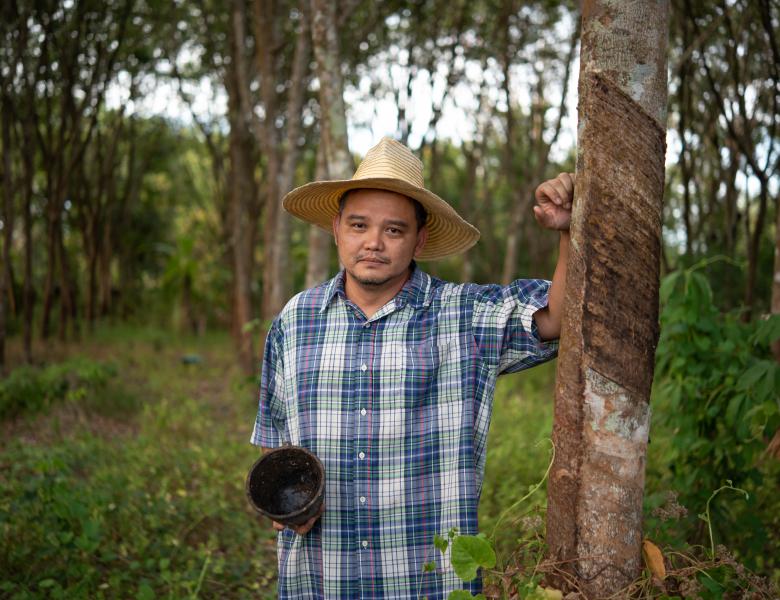
Yet beneath this commanding market position lies a structural paradox. The workers who make this industry possible, particularly the hired tappers who begin their shifts at two or three in the morning, navigating dark plantation paths with headlamps and tapping knives, operate almost entirely outside the protection systems that formal employment is designed to provide. They have no written contracts, no access to social security, no occupational safety standards enforced on their behalf, and, in a legal sense that has far-reaching consequences, they are not classified as employees at all.
This article draws on findings from a 2026 Rapid Diagnostic Assessment (RDA) of labor and socio-economic conditions along Thailand's rubber supply chain, commissioned by the International Labor Organization (ILO) with funding from the Government of Canada and conducted by researchers at Prince of Songkla University, Thailand. The assessment surveyed 261 workers and 40 plantation owners across Songkhla (South) and Rayong (East), representing all three supply chain tiers: upstream plantation tapping, midstream processing and trading, and downstream manufacturing. Qualitative data were gathered through 24 stakeholder organizations and validated at a tripartite workshop in Bangkok in March 2026.
The central finding is best described as a formality gradient: labor rights and protections improve significantly as rubber moves from the farm to the factory. Workers at either end of this gradient inhabit entirely different worlds of work; the same commodity, opposite experiences.
Table 1. Key sector and labor indicators.
|
Indicator
|
Value
|
Significance
|
|
Global rank: natural rubber producer and exporter
|
1
|
Largest share of global output (34.9%)
|
|
Rubber-growing households
|
1.66 million
|
Backbone of upstream smallholder production
|
|
Upstream tappers enrolled in Social Security
|
0%
|
Complete exclusion from the formal protection system
|
|
Midstream workers with chemical/fume exposure
|
85.2%
|
Highest risk group with the lowest compliance
|
|
Midstream workers actually wearing masks
|
7.4%
|
Starkest compliance gap in the dataset
|
|
Annual export receipts (rubber and rubber products)
|
USD 12.37
|
USD 11–13 billion; China, Malaysia, US, Japan
|
|
Upstream workers with written employment contracts
|
0%
|
100% verbal-only; no auditable wage record
|
|
Downstream workers with written contracts
|
96.2%
|
Near universal; all payment via bank transfer
|
Source: RDA Survey, Songkhla and Rayong, 2026; RAOT production data, 2023.
Note: Rubber Authority of Thailand (RAOT)
THE UPSTREAM: THE INVISIBLE "PARTNERS" ON THE PLANTATIONS
The smallholder structure and Its labor reality
Over 90% of Thailand's rubber plantation area is operated by smallholder households, with average farm sizes of approximately 14.5 rai (2.32 hectares). On paper, RAOT records show roughly 80% of plots as "owner-tapped." In reality, field assessment reveals the opposite: an estimated 80 % of actual tapping is carried out by hired labor under verbal profit-sharing arrangements. This inversion is not a minor statistical discrepancy. It defines the entire labor governance problem in the upstream sector.
From the survey data, the upstream workforce is predominantly female (67%), averages 47.2 years of age, and carries an average of 19.2 years of tapping experience. This is a mature, specialized, and aging workforce with no formal pathway into social protection. As younger workers choose factory employment for its stability and regulated hours, labor shortages at the upstream level are already being reported in major producing provinces.
The "Partner" legal classification and its consequences
The most structurally significant finding in the upstream sector concerns the legal classification of hired tappers. Under the current interpretation by Thai government agencies, profit-sharing arrangements, which are typically 50:50, 55:45, or 60:40 splits between tapper and plantation owner, are treated as business partnerships rather than employment relationships. One of the Provincial Labor Protection Offices confirmed this explicitly: profit-sharing constitutes "a contract for work or production partnership, not entering into the characteristic of employee according to labor law." Because of this classification, they are excluded from Thailand's Labor Protection Act, the Labor Relations Act, minimum wage guarantees, Social Security Sections 33 and 39, occupational accident compensation, paid maternity leave, and the right to form trade unions. In addition, this also creates a bureaucratic loophole. There is no clear host who is responsible for this group of workers, as their status definition is uncertain.
The survey data confirms the universality of this classification in practice.
|
100%
None of the upstream tappers operate under verbal agreements only, not a single written contract was recorded in the survey data, which was verified at the validation workshop.
|
0%
None of the upstream tappers are enrolled in Social Security (SSO), meaning they all rely solely on Universal Health Coverage ("Gold Card") for access to health care.
|
|
88%
Approximately 88% of tappers have outstanding debts to plantation owners, which serves as the standard coping mechanism when rain prevents tapping or market prices fall.
|
90%
Many tappers are not registered with RAOT, making them invisible to state protection, labor inspection, and traceability systems.
|
Note: Social Security Office enrollment. (SSO), Rubber Authority of Thailand (RAOT)
Income volatility and the rain-day problem
Upstream income is entirely share-based, tied directly to rubber prices and seasonal yield. The average net monthly income of approximately USD 461.03 is deceptively high in headline terms, masking extreme variance: 25% of tappers earn below USD 12.37 per day, below the national minimum wage, and earnings fall to zero on rainy days or during market disruptions. There is no income floor. All payments are in cash with no auditable wage record.
A farmers' group reported that in some cases, when the market rubber price rises, owners reduce the tapper's percentage from 40 to 35%. When asked about this asymmetry, tappers repeatedly described themselves as having "no bargaining power" - accepting conditions because "if we stop tapping, we will have no income immediately, while plantation owners still can survive from other sources of income."
Occupational safety: a hazardous pre-dawn work
Work begins between 1:00 and 4:00 AM, conducted in darkness on uneven plantation terrain. The top self-reported hazards are: venomous animals (82%), knife cuts (57%), and chemical exposure (20%). One in five tappers (21%) reported a work-related illness or injury in the preceding year with no access to occupational accident compensation. Not a single plantation owner in the survey provided any PPE whatsoever. Tappers self-fund all basic equipment: 98% use headlamps, 88% use boots, 45% use gloves, and 35% use masks, all at personal expense.
Women's compounded vulnerability
The female majority of the upstream workforce (67%) faces compounding disadvantages. Under the profit-sharing arrangement, there is no income replacement during pregnancy, delivery, or recovery. Women tappers often continue working until close to delivery and return to the plantation days after giving birth, driven by economic necessity. With tapping beginning before dawn and no childcare infrastructure, women who are primary caregivers must either bring infants to the plantation or leave older children unsupervised.
MIDSTREAM: THE TRANSFORMATION POINT AND THE WAGE FLOOR
Heterogeneity at the processing stage
The midstream encompasses a wide range of operations, from small roadside buying stations with fewer than ten workers to large agricultural cooperatives with over a hundred employees and ISO certification in progress. The survey of 80 midstream workers revealed that 70.4 % hold written employment contracts. This is a significant step up from zero % upstream. However, 37 % of those with contracts did not receive their own copy. Social security enrollment remains at zero %: all midstream workers surveyed relied exclusively on Universal Health Coverage.
The low-wage paradox
Despite being more formally structured than plantations, midstream workers earn the lowest average net income across all three tiers at approximately USD 318.41 per month, with 77.5% earning between USD 154.61–309.17, clustered near the minimum wage. They also work the most intensively: an average of 29.3 working days per month, with only 2.1 days off.
The chemical exposure crisis
The most acute finding in the midstream sector is the disparity between chemical exposure and the use of protective equipment. Ammonia, formic acid, and processing fumes are endemic to rubber sheet and block rubber production:
Table 2. OSH compliance indicators by supply chain tier.
|
Indicator
|
Share of workers (proportional)
|
%
|
|
Midstream: Chemical/fume exposure
|
█████████████████ 85.2%
|
85.2%
|
|
Midstream: Mask actually worn
|
█ 7.4%
|
7.4%
|
|
Upstream: Work-related injury in the past year
|
████ 21%
|
21%
|
|
Upstream: Owner provides any PPE
|
0.5%
|
0.5%
|
|
Downstream: Full PPE set in use
|
████████ 38.8%
|
38.8%
|
|
Downstream: ISO 45001 certification
|
████████████████████ 100%
|
100%
|
Source: RDA Survey data, Songkhla and Rayong Provinces, 2026 (n = 100 upstream, 80 midstream, 80 downstream workers).
Note: Personal Protective Equipment (PPE), International Organization for Standardization (ISO)
Masks were available at multiple cooperative sites, but workers confirmed that masks were "uncomfortable for sustained use" and were not routinely worn despite committee-approved procurement. The gap between near-universal chemical exposure (85.2%) and near-zero mask compliance (7.4%) is the sharpest single compliance ratio in the entire dataset.
“The most worrying part is this middle part. Because it is a small-scale industry that government agencies might not reach or oversee as they should. And various labor-related organizations with various standards don't really go to talk to or oversee the middle part.” THAI TRADE UNION CONGRESS (TTUC)
DOWNSTREAM: HIGH-VALUE MANUFACTURING AND GLOBAL STANDARDS
A different world of work
The downstream manufacturing tier: producing automotive tires, medical gloves, elastic threads, and industrial rubber components, operates in an environment shaped by export market compliance requirements. All five downstream manufacturers studied hold multiple ISO certifications and are subject to regular external audits by international buyers. Written contracts are near-universal (96.2%), all payments are by bank transfer, the majority of workers are enrolled in Social Security, and large employers additionally provide provident funds and group life insurance.
The average net monthly income of USD 531.37 reflects both the premium that formal industrial employment commands and the stability of regulated shift-based work.
The formality gradient: three tiers compared
The table below illustrates how labor conditions shift dramatically across the three tiers of the supply chain:
Table 3. The Formality Gradient labor conditions by supply chain tier.
|
UPSTREAM Plantation
USD 461.03/month
Hired tappers (share-based)
Written contract 0%
SSO enrollment 0%
Maternity leave None
PPE from employer 0%
Worker rep. access 0%
Days off / month ~11
|
MIDSTREAM Processing
USD 318.41/month
Cooperative and plant workers
Written contract 70.4%
SSO enrollment 0%
Maternity leave , per law
Chemical exposure 85.2%
Mask compliance 7.4%
Days off / month ~2
|
DOWNSTREAM Manufacturing
USD 531.37/month
Production floor workers
Written contract 96.2%
SSO enrollment 52.5%
Maternity leave 90–120 days
ISO certification All sites
Worker rep. access 62.5%
Days off / month ~5
|
Source: RDA Survey, 2026. Income = average net monthly income.
Note: Personal Protective Equipment (PPE), International Organization for Standardization (ISO), Social Security Office enrollment. (SSO)
The power of audits and their limits
Large firms exporting to Europe and North America operate under ISO certifications and regular external audits. This buyer pressure creates genuine compliance improvements at the factory level. However, when a private company was asked about upstream auditing of labor conditions at the plantation source, the response was: "I'm not sure if there is an audit to the original source directly." The compliance cascade loses traction as it moves toward the farm.
THE TRADE READINESS TRIGGER: WHY CHANGE IS NO LONGER OPTIONAL
The IUU fishing warning
Multiple industry leaders, government officials, and civil society representatives independently invoked Thailand's experience with Illegal, Unreported, and Unregulated (IUU) fishing as the calibrating risk scenario for rubber. In 2014–2019, Thailand received an EU Yellow Card for failure to meet traceability and labor standards in its fishing sector, which compelled industry-wide, painful reform.
“If Thailand cannot explain the upstream system clearly, a situation similar to the IUU case of fishing, which is being banned or blacklisted by foreign countries, may occur, and it will be forced to adjust.” THAI RUBBER ASSOCIATION (TRA)
The regulatory pressure landscape
Table 4. Key international regulatory frameworks affecting Thailand's rubber sector.
|
Regulation / Standard
|
Scope
|
Implication for Thailand
|
Timeline
|
|
EU deforestation regulation (EUDR)
|
Plot-level traceability; deforestation-free proof; local law compliance
|
Current systems cover land use, not labor conditions
|
Large: dec 2025; SMEs: Jun 2026
|
|
EU corporate sustainability due diligence directive (CSDDD)
|
HRDD across full supply chains for EU-linked companies
|
Thai exporters to EU must document plantation-level labor conditions
|
Enacted Jun 2024; phased implementation
|
|
Thai HRDD legislation (draft)
|
HRDD for companies above USD 15.46m revenue
|
Large downstream firms must assess upstream labor risks
|
Under development (Ministry of Justice)
|
|
ILO convention no. 155 (OSH)
|
Occupational safety and health obligations at all tiers
|
Thailand ratified Jun 2025; upstream OSH systems do not exist
|
Force: Jun 2026
|
|
OECD accession process
|
Labor rights alignment incl. ILO conventions 87 and 98
|
Union density 3%; migrant workers excluded from founding unions
|
Ongoing
|
Source: Authors' compilation from EUDR (EU Reg. 2023/1115), CSDDD (Directive 2024/1760), ILO, and Thai Ministry of Justice sources.
Note: Occupational Safety and Health (OSH), Human Rights Due Diligence (HRDD), International Labor Organization (ILO), Corporate Sustainability Due Diligence Directive (CSDDD), EU Regulation on Deforestation-free products (EUDR), Small and Medium Enterprises (SMEs)
Table 4 illustrates the converging international and domestic regulatory frameworks that are rapidly increasing compliance pressures on Thailand's rubber sector. Key European mandates, such as the EU Deforestation Regulation (EUDR) and the Corporate Sustainability Due Diligence Directive (CSDDD), will require stringent plot-level traceability and comprehensive human rights due diligence (HRDD) across the supply chain, meaning Thai exporters must soon document labor conditions down to the plantation level. Concurrently, Thailand is facing expanding labor rights obligations through its draft domestic HRDD legislation, the ongoing OECD accession process, and the ratification of ILO Convention No. 155 concerning occupational safety and health (OSH). Because current upstream traceability systems primarily track land use rather than labor conditions, and plantation-level OSH systems currently do not exist, the imminent implementation timelines many taking effect between 2024 and 2026 highlight an urgent need for the industry to document and improve upstream labor standards to maintain global market access.
The traceability disconnect
Existing systems can trace where rubber was grown (land-use traceability). They cannot trace how workers were treated. The survey provides a precise measure of this gap:
Table 5. Upstream labor traceability indicators
|
Documentation marker
|
% Present (n=100 tappers)
|
Implication
|
|
RAOT-registered (formal identity for traceability)
|
10%
|
90% of the tapping workforce is institutionally invisible
|
|
Social Security enrolled (employment verification)
|
0%
|
No formal record of any employment relationship exists
|
|
Written employment contract
|
0%
|
No auditable proof of terms, wages, or working conditions
|
|
OSH information received from plantation owner
|
47.5%
|
More than half received no safety information whatsoever
|
|
Owners informing tappers of right to organize
|
10%
|
90% of owners actively withhold basic rights information
|
Source: RDA Survey data, 2026.
Note: Rubber Authority of Thailand (RAOT), Occupational Safety and Health (OSH)
CONCLUSION AND RECOMMENDATIONS
Thailand's rubber sector stands at a pivotal juncture. Its downstream has the compliance architecture, the buyer relationships, and the institutional capacity to lead a systemic response to rising international labor standards. The most critical near-term task is to use those assets to extend meaningful protections upstream, through formalization frameworks, cooperative certification, and due diligence systems that can reach the plantation level.
The tripartite Validation Workshop of March 2026, bringing together the Royal Thai Government, employer organizations, and worker organizations, confirmed all core findings and identified a prerequisite: resolving the inter-ministerial jurisdictional gap. Upstream rubber tappers currently fall between the Ministry of Labor and the Ministry of Agriculture and Cooperatives/RAOT, with no single body designated as responsible for tapper welfare. All subsequent upstream interventions depend on this governance gap being addressed first.
Priority recommendations
Addressing labor rights deficits in Thailand's rubber supply chain requires action at every tier, beginning with a structural prerequisite that underpins all other interventions: the resolution of the inter-ministerial jurisdictional ambiguity over tapper welfare. Because upstream rubber tappers fall between the mandates of agriculture and labor ministries, no single government body currently bears clear responsibility for their protection. A formal inter-ministerial task force must be convened to designate this responsibility before downstream policy interventions can have meaningful effect.
At the upstream tier, the most urgent priority is to clarify the legal standing of profit-sharing tappers through either a dedicated Ministerial Regulation or a Good Labor Practices certification framework that extends minimum protection without requiring full legislative reclassification. Alongside this, accessible social protection pathways must be opened, particularly occupational accident coverage and income support during involuntary non-work periods, with outreach delivered through existing cooperative networks. Plantation-appropriate occupational safety standards covering pre-dawn working conditions, chemical handling, and first-aid access are equally necessary, as is the mainstreaming of gender-responsive protections, including maternity coverage, childcare support, and formal mechanisms to address violence and harassment.
In the midstream, the most immediately actionable priority is closing the chemical exposure–mask compliance gap through practical ventilation improvements and sustained behavior-change support at cooperative processing facilities. Broader employment formalization, ensuring workers hold written contracts, retain their own copies, and are registered under social security, should be advanced through compliance guidance targeted at smaller operators where informality remains most entrenched. At the downstream tier, the principal task is to operationalize supplier due diligence systems that extend upstream, incorporating labor condition indicators alongside the land-use traceability that EUDR compliance already requires, driven through the existing buyer audit cascade.
Two cross-cutting priorities apply across the entire supply chain. First, advancing ratification of the core ILO conventions on freedom of association and collective bargaining would align Thailand's legal framework with its OECD accession commitments and the expectations of its major trading partners. Second, rights literacy programs targeting upstream and midstream workers are essential: awareness of the right to organize stands at zero % in the upstream and below 50 % in the midstream, making informed worker participation in any formalization process impossible without a deliberate investment in rights education.
The commercial case for action
Continued informality produces two compounding risks. First, the reputational and market-access risk: EU buyers operating under the EUDR and CSDDD obligations cannot credibly certify supply chains in which upstream workers are entirely absent from documentation systems. The IUU fishing precedent makes the direction of travel clear. Second, the structural productivity risk: labor shortages at the upstream level are already acute, driven by younger workers preferring factory employment.
The reported USD 0.05 per kg price premium for EUDR-certified rubber demonstrates that the market will reward this investment. The question is whether the institutional will to bridge the gap from tree to tire can be mobilized before external regulatory pressure forces an adjustment on less favorable terms.
“Sustainability is no longer a choice but a necessity for industrial survival.” THAI RUBBER ASSOCIATION (TRA)
REFERENCES
Association of Southeast Asian Nations (ASEAN). (2023). ASEAN Guidelines on Corporate Social Responsibility in the Rubber Sector. Jakarta: ASEAN Secretariat.
Barrientos, S., Gereffi, G., & Rossi, A. (2011). Economic and social upgrading in global production networks: A new paradigm for a changing world. International Labour Review, 150(3–4), 319–340. https://doi.org/10.1111/j.1564-913X.2011.00119.x
Brillé, J., Neven, I., & Simons, E. (2020). Corporate due diligence legislation: Delivering on UN Guiding Principles. Business and Human Rights Journal, 5(2), 281–304. https://doi.org/10.1017/bhj.2020.17
Dolan, C., & Humphrey, J. (2004). Changing governance patterns in the trade in fresh vegetables between Africa and the United Kingdom. Environment and Planning A, 36(3), 491–509. https://doi.org/10.1068/a35281
European Parliament and Council of the European Union. (2023). Regulation (EU) 2023/1115 on the making available on the Union market and the export from the Union of certain commodities and products associated with deforestation and forest degradation (EU Deforestation Regulation). Official Journal of the European Union, L 150, 206–247.
European Parliament and Council of the European Union. (2024). Directive (EU) 2024/1760 on Corporate Sustainability Due Diligence (CS3D). Official Journal of the European Union, L 2024/1760.
Food and Agriculture Organization of the United Nations (FAO). (2021). Sustainable natural rubber value chains in Southeast Asia: Policy options for inclusive growth. Rome: FAO.
Gereffi, G., Humphrey, J., & Sturgeon, T. (2005). The governance of global value chains. Review of International Political Economy, 12(1), 78–104. https://doi.org/10.1080/09692290500049805
International Labour Organization (ILO). (1981). Convention No. 155 concerning Occupational Safety and Health and the Working Environment. Geneva: ILO.
International Labour Organization (ILO). (2014). Wages and working hours in the textiles, clothing, leather and footwear industries. Issues Paper for Discussion at the Global Dialogue Forum on Wages and Working Hours in the Textiles, Clothing, Leather and Footwear Industries. Geneva: ILO.
International Labour Organization (ILO). (2019). Decent work in global supply chains. Report IV, International Labour Conference, 105th Session. Geneva: ILO.
International Labour Organization (ILO). (2022). Labour migration in Thailand: Key data and trends. Bangkok: ILO Regional Office for Asia and the Pacific.
Lebdioui, A. (2021). The political economy of moving up in global value chains: Malaysia and Thailand in the natural rubber industry. World Development, 140, 105372. https://doi.org/10.1016/j.worlddev.2020.105372
Mayer, F., & Gereffi, G. (2010). Regulation and economic globalization: Prospects and limits of private governance. Business and Politics, 12(3), 1–25. https://doi.org/10.2202/1469-3569.1325
Ministry of Justice, Thailand. (2023). Draft Human Rights Due Diligence Act: Exposure draft and stakeholder consultation framework. Bangkok: Rights and Liberties Protection Department, Ministry of Justice.
OECD. (2018). OECD Due Diligence Guidance for Responsible Business Conduct. Paris: OECD Publishing. https://doi.org/10.1787/9789264303690-en
Pye, O. (2017). A plantation precariat: Fragmentation and organizing potential in the palm oil global production network. Development and Change, 48(5), 942–964. https://doi.org/10.1111/dech.12326
Rubber Authority of Thailand (RAOT). (2023). Thailand rubber statistics 2023. Bangkok: Rubber Authority of Thailand, Ministry of Agriculture and Cooperatives.
Rochanahastin, N., Romyen, A., & Suwannarat, P. (2026). Rapid Diagnostic Assessment of labour and socio-economic conditions along Thailand’s rubber supply chain. Commissioned by the International Labour Organization (ILO) with funding from the Government of Canada. Hat Yai: Faculty of Economics, Prince of Songkla University.
Ruggie, J. G. (2011). Guiding Principles on Business and Human Rights: Implementing the United Nations “Protect, Respect and Remedy” Framework. New York and Geneva: United Nations Human Rights Office of the High Commissioner. UN Doc. A/HRC/17/31.
Serião, I. C., & Gassner, A. (2021). Gender and labour in tropical tree crop value chains: A systematic review. World Development, 139, 105307. https://doi.org/10.1016/j.worlddev.2020.105307
Thailand, Office of the National Economic and Social Development Council (NESDC). (2022). Thailand’s agricultural labour market: Structural trends and policy implications. Bangkok: NESDC.
Thailand, Ministry of Labour. (2022). Labour Protection Act B.E. 2541 (1998) and Amendments. Bangkok: Ministry of Labour, Department of Labour Protection and Welfare.
Vigneri, M., & Kolavalli, S. (2018). Growth through pricing policy: The case of cocoa in Ghana. In F. Reardon & C. P. Timmer (Eds.), The economics of smallholder agriculture and rural development (pp. 241–261). Washington, DC: IFPRI.
Watanabe, T., & Tachibana, S. (2022). Traceability and transparency in natural rubber supply chains: A review of current practice and emerging frameworks. Journal of Cleaner Production, 340, 130758. https://doi.org/10.1016/j.jclepro.2022.130758
Wick, I. (2009). Workers’ tool or PR ploy? A guide to codes of international labour practice (4th ed.). Bonn: Friedrich-Ebert-Stiftung and Südwind Institut.
World Bank. (2020). Women in agriculture: The role of female farmers in attaining sustainable development goals. Washington, DC: World Bank Group. https://doi.org/10.1596/34561
Yeung, H. W. C., & Coe, N. M. (2015). Toward a dynamic theory of global production networks. Economic Geography, 91(1), 29–58. https://doi.org/10.1111/ecge.12063
ACKNOWLEDGMENT
This article is based on the findings of the 2026 Rapid Diagnostic Assessment (RDA) of labor and socio-economic conditions along Thailand’s rubber supply chain. The authors would like to express their sincere gratitude to the International Labor Organization (ILO) for commissioning and supporting this research, with generous funding provided by the Government of Canada. We also extend our thanks to the 261 workers, 40 plantation owners, and 24 stakeholder organizations across Songkhla and Rayong provinces whose participation made this study possible. Special thanks are due to the participants of the tripartite Validation Workshop held in Bangkok in March 2026 for their invaluable feedback and validation of the findings.
AUTHOR’S CONTRIBUTION
Nuttaporn Rochanahastin Lead researcher; contributed to the conceptualization, methodology, and qualitative data analysis of the Rapid Diagnostic Assessment. Arisara Romyen Neranon Corresponding author; responsible for research oversight, data validation during the tripartite workshop, and the formulation of policy recommendations regarding inter-ministerial governance. Pimpawee Suwannarat Research coordinator; conducted field surveys with workers and plantation owners, managed data compilation, and contributed to the analysis of the "formality gradient" across the supply chain tiers.
COMPETING INTEREST
The authors declare that they have no known competing financial interests or personal relationships that could have appeared to influence the work reported in this article. The research was conducted independently by the Faculty of Economics, Prince of Songkla University, as part of a commissioned assessment for the International Labour Organization (ILO).



Thailand's Rubber Sector: Bridging the Labor Rights Gap from Tree to Tire
ABSTRACT
Thailand, the world's leading producer and exporter, with 1.66 million smallholder households generating approximately 4.81 million tons annually and export receipts of 10.82–12.37 billion USD in 2023. Yet this commanding market position rests on a workforce that is structurally invisible to formal labor protection systems. Drawing on a 2026 ILO-commissioned Rapid Diagnostic Assessment conducted across Songkhla and Rayong provinces, encompassing structured interviews with 261 workers and 40 plantation owners across upstream, midstream, and downstream supply chain tiers, supplemented by qualitative engagement with 24 stakeholder organizations, this article documents a pronounced formality gradient in which labor rights and protections improve markedly as rubber moves from plantation to factory. At the upstream tier, hired tappers are legally classified as "business partners" rather than employees under Thai law, excluding them entirely from minimum wage guarantees, Social Security coverage, occupational accident compensation, and the right to organize. Survey data confirm that 100 % of upstream tappers operate under verbal-only agreements, zero % are enrolled in Social Security, and 90 % are unregistered with the Rubber Authority of Thailand, rendering them invisible to both state protection and supply chain traceability systems. In contrast, downstream manufacturing workers benefit from near-universal written contracts (96.2%), formal social security enrollment, ISO-certified safety systems, and average net monthly incomes of USD 531.37, which is more than 60 % above the midstream average of USD 318.41. The midstream processing tier presents a distinct risk profile, characterized by the starkest compliance gap in the dataset: 85.2 % of workers report chemical or fume exposure, yet only 7.4 % wear a mask. These findings carry urgent trade policy implications. Converging international regulatory requirements, including the EU Deforestation Regulation, the EU Corporate Sustainability Due Diligence Directive, and Thailand's forthcoming Human Rights Due Diligence legislation, are transforming upstream labor transparency from a voluntary aspiration into a precondition for market access. Industry leaders have independently warned that failure to document upstream labor conditions risks a market exclusion scenario analogous to Thailand's 2014 IUU fishing Yellow Card. This article argues that bridging the labor rights gap requires, as a prerequisite, resolving the inter-ministerial jurisdictional ambiguity over tapper welfare, followed by regulatory reclassification of profit-sharing tappers, expansion of accessible social protection pathways, and the operationalization of labor condition indicators within existing supply chain traceability frameworks.
Keywords: Rubber supply chain, labor rights, formality gradient, traceability, human rights due diligence
INTRODUCTION
Thailand is the world's single largest producer and exporter of natural rubber. A title that has been held for decades. In 2023, the country's 1.66 million rubber-growing households produced approximately 4.81 million tons from a standing area of 24 million rai (3.85 million hectares), generating export receipts estimated at 10.82–12.37 billion USD. China, Malaysia, the United States, and Japan are the principal buyers. By any measure, this is a sector of profound national importance.
Yet beneath this commanding market position lies a structural paradox. The workers who make this industry possible, particularly the hired tappers who begin their shifts at two or three in the morning, navigating dark plantation paths with headlamps and tapping knives, operate almost entirely outside the protection systems that formal employment is designed to provide. They have no written contracts, no access to social security, no occupational safety standards enforced on their behalf, and, in a legal sense that has far-reaching consequences, they are not classified as employees at all.
This article draws on findings from a 2026 Rapid Diagnostic Assessment (RDA) of labor and socio-economic conditions along Thailand's rubber supply chain, commissioned by the International Labor Organization (ILO) with funding from the Government of Canada and conducted by researchers at Prince of Songkla University, Thailand. The assessment surveyed 261 workers and 40 plantation owners across Songkhla (South) and Rayong (East), representing all three supply chain tiers: upstream plantation tapping, midstream processing and trading, and downstream manufacturing. Qualitative data were gathered through 24 stakeholder organizations and validated at a tripartite workshop in Bangkok in March 2026.
The central finding is best described as a formality gradient: labor rights and protections improve significantly as rubber moves from the farm to the factory. Workers at either end of this gradient inhabit entirely different worlds of work; the same commodity, opposite experiences.
Table 1. Key sector and labor indicators.
Indicator
Value
Significance
Global rank: natural rubber producer and exporter
1
Largest share of global output (34.9%)
Rubber-growing households
1.66 million
Backbone of upstream smallholder production
Upstream tappers enrolled in Social Security
0%
Complete exclusion from the formal protection system
Midstream workers with chemical/fume exposure
85.2%
Highest risk group with the lowest compliance
Midstream workers actually wearing masks
7.4%
Starkest compliance gap in the dataset
Annual export receipts (rubber and rubber products)
USD 12.37
USD 11–13 billion; China, Malaysia, US, Japan
Upstream workers with written employment contracts
0%
100% verbal-only; no auditable wage record
Downstream workers with written contracts
96.2%
Near universal; all payment via bank transfer
Source: RDA Survey, Songkhla and Rayong, 2026; RAOT production data, 2023.
Note: Rubber Authority of Thailand (RAOT)
THE UPSTREAM: THE INVISIBLE "PARTNERS" ON THE PLANTATIONS
The smallholder structure and Its labor reality
Over 90% of Thailand's rubber plantation area is operated by smallholder households, with average farm sizes of approximately 14.5 rai (2.32 hectares). On paper, RAOT records show roughly 80% of plots as "owner-tapped." In reality, field assessment reveals the opposite: an estimated 80 % of actual tapping is carried out by hired labor under verbal profit-sharing arrangements. This inversion is not a minor statistical discrepancy. It defines the entire labor governance problem in the upstream sector.
From the survey data, the upstream workforce is predominantly female (67%), averages 47.2 years of age, and carries an average of 19.2 years of tapping experience. This is a mature, specialized, and aging workforce with no formal pathway into social protection. As younger workers choose factory employment for its stability and regulated hours, labor shortages at the upstream level are already being reported in major producing provinces.
The "Partner" legal classification and its consequences
The most structurally significant finding in the upstream sector concerns the legal classification of hired tappers. Under the current interpretation by Thai government agencies, profit-sharing arrangements, which are typically 50:50, 55:45, or 60:40 splits between tapper and plantation owner, are treated as business partnerships rather than employment relationships. One of the Provincial Labor Protection Offices confirmed this explicitly: profit-sharing constitutes "a contract for work or production partnership, not entering into the characteristic of employee according to labor law." Because of this classification, they are excluded from Thailand's Labor Protection Act, the Labor Relations Act, minimum wage guarantees, Social Security Sections 33 and 39, occupational accident compensation, paid maternity leave, and the right to form trade unions. In addition, this also creates a bureaucratic loophole. There is no clear host who is responsible for this group of workers, as their status definition is uncertain.
The survey data confirms the universality of this classification in practice.
100%
None of the upstream tappers operate under verbal agreements only, not a single written contract was recorded in the survey data, which was verified at the validation workshop.
0%
None of the upstream tappers are enrolled in Social Security (SSO), meaning they all rely solely on Universal Health Coverage ("Gold Card") for access to health care.
88%
Approximately 88% of tappers have outstanding debts to plantation owners, which serves as the standard coping mechanism when rain prevents tapping or market prices fall.
90%
Many tappers are not registered with RAOT, making them invisible to state protection, labor inspection, and traceability systems.
Note: Social Security Office enrollment. (SSO), Rubber Authority of Thailand (RAOT)
Income volatility and the rain-day problem
Upstream income is entirely share-based, tied directly to rubber prices and seasonal yield. The average net monthly income of approximately USD 461.03 is deceptively high in headline terms, masking extreme variance: 25% of tappers earn below USD 12.37 per day, below the national minimum wage, and earnings fall to zero on rainy days or during market disruptions. There is no income floor. All payments are in cash with no auditable wage record.
A farmers' group reported that in some cases, when the market rubber price rises, owners reduce the tapper's percentage from 40 to 35%. When asked about this asymmetry, tappers repeatedly described themselves as having "no bargaining power" - accepting conditions because "if we stop tapping, we will have no income immediately, while plantation owners still can survive from other sources of income."
Occupational safety: a hazardous pre-dawn work
Work begins between 1:00 and 4:00 AM, conducted in darkness on uneven plantation terrain. The top self-reported hazards are: venomous animals (82%), knife cuts (57%), and chemical exposure (20%). One in five tappers (21%) reported a work-related illness or injury in the preceding year with no access to occupational accident compensation. Not a single plantation owner in the survey provided any PPE whatsoever. Tappers self-fund all basic equipment: 98% use headlamps, 88% use boots, 45% use gloves, and 35% use masks, all at personal expense.
Women's compounded vulnerability
The female majority of the upstream workforce (67%) faces compounding disadvantages. Under the profit-sharing arrangement, there is no income replacement during pregnancy, delivery, or recovery. Women tappers often continue working until close to delivery and return to the plantation days after giving birth, driven by economic necessity. With tapping beginning before dawn and no childcare infrastructure, women who are primary caregivers must either bring infants to the plantation or leave older children unsupervised.
MIDSTREAM: THE TRANSFORMATION POINT AND THE WAGE FLOOR
Heterogeneity at the processing stage
The midstream encompasses a wide range of operations, from small roadside buying stations with fewer than ten workers to large agricultural cooperatives with over a hundred employees and ISO certification in progress. The survey of 80 midstream workers revealed that 70.4 % hold written employment contracts. This is a significant step up from zero % upstream. However, 37 % of those with contracts did not receive their own copy. Social security enrollment remains at zero %: all midstream workers surveyed relied exclusively on Universal Health Coverage.
The low-wage paradox
Despite being more formally structured than plantations, midstream workers earn the lowest average net income across all three tiers at approximately USD 318.41 per month, with 77.5% earning between USD 154.61–309.17, clustered near the minimum wage. They also work the most intensively: an average of 29.3 working days per month, with only 2.1 days off.
The chemical exposure crisis
The most acute finding in the midstream sector is the disparity between chemical exposure and the use of protective equipment. Ammonia, formic acid, and processing fumes are endemic to rubber sheet and block rubber production:
Table 2. OSH compliance indicators by supply chain tier.
Indicator
Share of workers (proportional)
%
Midstream: Chemical/fume exposure
█████████████████ 85.2%
85.2%
Midstream: Mask actually worn
█ 7.4%
7.4%
Upstream: Work-related injury in the past year
████ 21%
21%
Upstream: Owner provides any PPE
0.5%
0.5%
Downstream: Full PPE set in use
████████ 38.8%
38.8%
Downstream: ISO 45001 certification
████████████████████ 100%
100%
Source: RDA Survey data, Songkhla and Rayong Provinces, 2026 (n = 100 upstream, 80 midstream, 80 downstream workers).
Note: Personal Protective Equipment (PPE), International Organization for Standardization (ISO)
Masks were available at multiple cooperative sites, but workers confirmed that masks were "uncomfortable for sustained use" and were not routinely worn despite committee-approved procurement. The gap between near-universal chemical exposure (85.2%) and near-zero mask compliance (7.4%) is the sharpest single compliance ratio in the entire dataset.
“The most worrying part is this middle part. Because it is a small-scale industry that government agencies might not reach or oversee as they should. And various labor-related organizations with various standards don't really go to talk to or oversee the middle part.” THAI TRADE UNION CONGRESS (TTUC)
DOWNSTREAM: HIGH-VALUE MANUFACTURING AND GLOBAL STANDARDS
A different world of work
The downstream manufacturing tier: producing automotive tires, medical gloves, elastic threads, and industrial rubber components, operates in an environment shaped by export market compliance requirements. All five downstream manufacturers studied hold multiple ISO certifications and are subject to regular external audits by international buyers. Written contracts are near-universal (96.2%), all payments are by bank transfer, the majority of workers are enrolled in Social Security, and large employers additionally provide provident funds and group life insurance.
The average net monthly income of USD 531.37 reflects both the premium that formal industrial employment commands and the stability of regulated shift-based work.
The formality gradient: three tiers compared
The table below illustrates how labor conditions shift dramatically across the three tiers of the supply chain:
Table 3. The Formality Gradient labor conditions by supply chain tier.
UPSTREAM Plantation
USD 461.03/month
Hired tappers (share-based)
Written contract 0%
SSO enrollment 0%
Maternity leave None
PPE from employer 0%
Worker rep. access 0%
Days off / month ~11
MIDSTREAM Processing
USD 318.41/month
Cooperative and plant workers
Written contract 70.4%
SSO enrollment 0%
Maternity leave , per law
Chemical exposure 85.2%
Mask compliance 7.4%
Days off / month ~2
DOWNSTREAM Manufacturing
USD 531.37/month
Production floor workers
Written contract 96.2%
SSO enrollment 52.5%
Maternity leave 90–120 days
ISO certification All sites
Worker rep. access 62.5%
Days off / month ~5
Source: RDA Survey, 2026. Income = average net monthly income.
Note: Personal Protective Equipment (PPE), International Organization for Standardization (ISO), Social Security Office enrollment. (SSO)
The power of audits and their limits
Large firms exporting to Europe and North America operate under ISO certifications and regular external audits. This buyer pressure creates genuine compliance improvements at the factory level. However, when a private company was asked about upstream auditing of labor conditions at the plantation source, the response was: "I'm not sure if there is an audit to the original source directly." The compliance cascade loses traction as it moves toward the farm.
THE TRADE READINESS TRIGGER: WHY CHANGE IS NO LONGER OPTIONAL
The IUU fishing warning
Multiple industry leaders, government officials, and civil society representatives independently invoked Thailand's experience with Illegal, Unreported, and Unregulated (IUU) fishing as the calibrating risk scenario for rubber. In 2014–2019, Thailand received an EU Yellow Card for failure to meet traceability and labor standards in its fishing sector, which compelled industry-wide, painful reform.
“If Thailand cannot explain the upstream system clearly, a situation similar to the IUU case of fishing, which is being banned or blacklisted by foreign countries, may occur, and it will be forced to adjust.” THAI RUBBER ASSOCIATION (TRA)
The regulatory pressure landscape
Table 4. Key international regulatory frameworks affecting Thailand's rubber sector.
Regulation / Standard
Scope
Implication for Thailand
Timeline
EU deforestation regulation (EUDR)
Plot-level traceability; deforestation-free proof; local law compliance
Current systems cover land use, not labor conditions
Large: dec 2025; SMEs: Jun 2026
EU corporate sustainability due diligence directive (CSDDD)
HRDD across full supply chains for EU-linked companies
Thai exporters to EU must document plantation-level labor conditions
Enacted Jun 2024; phased implementation
Thai HRDD legislation (draft)
HRDD for companies above USD 15.46m revenue
Large downstream firms must assess upstream labor risks
Under development (Ministry of Justice)
ILO convention no. 155 (OSH)
Occupational safety and health obligations at all tiers
Thailand ratified Jun 2025; upstream OSH systems do not exist
Force: Jun 2026
OECD accession process
Labor rights alignment incl. ILO conventions 87 and 98
Union density 3%; migrant workers excluded from founding unions
Ongoing
Source: Authors' compilation from EUDR (EU Reg. 2023/1115), CSDDD (Directive 2024/1760), ILO, and Thai Ministry of Justice sources.
Note: Occupational Safety and Health (OSH), Human Rights Due Diligence (HRDD), International Labor Organization (ILO), Corporate Sustainability Due Diligence Directive (CSDDD), EU Regulation on Deforestation-free products (EUDR), Small and Medium Enterprises (SMEs)
Table 4 illustrates the converging international and domestic regulatory frameworks that are rapidly increasing compliance pressures on Thailand's rubber sector. Key European mandates, such as the EU Deforestation Regulation (EUDR) and the Corporate Sustainability Due Diligence Directive (CSDDD), will require stringent plot-level traceability and comprehensive human rights due diligence (HRDD) across the supply chain, meaning Thai exporters must soon document labor conditions down to the plantation level. Concurrently, Thailand is facing expanding labor rights obligations through its draft domestic HRDD legislation, the ongoing OECD accession process, and the ratification of ILO Convention No. 155 concerning occupational safety and health (OSH). Because current upstream traceability systems primarily track land use rather than labor conditions, and plantation-level OSH systems currently do not exist, the imminent implementation timelines many taking effect between 2024 and 2026 highlight an urgent need for the industry to document and improve upstream labor standards to maintain global market access.
The traceability disconnect
Existing systems can trace where rubber was grown (land-use traceability). They cannot trace how workers were treated. The survey provides a precise measure of this gap:
Table 5. Upstream labor traceability indicators
Documentation marker
% Present (n=100 tappers)
Implication
RAOT-registered (formal identity for traceability)
10%
90% of the tapping workforce is institutionally invisible
Social Security enrolled (employment verification)
0%
No formal record of any employment relationship exists
Written employment contract
0%
No auditable proof of terms, wages, or working conditions
OSH information received from plantation owner
47.5%
More than half received no safety information whatsoever
Owners informing tappers of right to organize
10%
90% of owners actively withhold basic rights information
Source: RDA Survey data, 2026.
Note: Rubber Authority of Thailand (RAOT), Occupational Safety and Health (OSH)
CONCLUSION AND RECOMMENDATIONS
Thailand's rubber sector stands at a pivotal juncture. Its downstream has the compliance architecture, the buyer relationships, and the institutional capacity to lead a systemic response to rising international labor standards. The most critical near-term task is to use those assets to extend meaningful protections upstream, through formalization frameworks, cooperative certification, and due diligence systems that can reach the plantation level.
The tripartite Validation Workshop of March 2026, bringing together the Royal Thai Government, employer organizations, and worker organizations, confirmed all core findings and identified a prerequisite: resolving the inter-ministerial jurisdictional gap. Upstream rubber tappers currently fall between the Ministry of Labor and the Ministry of Agriculture and Cooperatives/RAOT, with no single body designated as responsible for tapper welfare. All subsequent upstream interventions depend on this governance gap being addressed first.
Priority recommendations
Addressing labor rights deficits in Thailand's rubber supply chain requires action at every tier, beginning with a structural prerequisite that underpins all other interventions: the resolution of the inter-ministerial jurisdictional ambiguity over tapper welfare. Because upstream rubber tappers fall between the mandates of agriculture and labor ministries, no single government body currently bears clear responsibility for their protection. A formal inter-ministerial task force must be convened to designate this responsibility before downstream policy interventions can have meaningful effect.
At the upstream tier, the most urgent priority is to clarify the legal standing of profit-sharing tappers through either a dedicated Ministerial Regulation or a Good Labor Practices certification framework that extends minimum protection without requiring full legislative reclassification. Alongside this, accessible social protection pathways must be opened, particularly occupational accident coverage and income support during involuntary non-work periods, with outreach delivered through existing cooperative networks. Plantation-appropriate occupational safety standards covering pre-dawn working conditions, chemical handling, and first-aid access are equally necessary, as is the mainstreaming of gender-responsive protections, including maternity coverage, childcare support, and formal mechanisms to address violence and harassment.
In the midstream, the most immediately actionable priority is closing the chemical exposure–mask compliance gap through practical ventilation improvements and sustained behavior-change support at cooperative processing facilities. Broader employment formalization, ensuring workers hold written contracts, retain their own copies, and are registered under social security, should be advanced through compliance guidance targeted at smaller operators where informality remains most entrenched. At the downstream tier, the principal task is to operationalize supplier due diligence systems that extend upstream, incorporating labor condition indicators alongside the land-use traceability that EUDR compliance already requires, driven through the existing buyer audit cascade.
Two cross-cutting priorities apply across the entire supply chain. First, advancing ratification of the core ILO conventions on freedom of association and collective bargaining would align Thailand's legal framework with its OECD accession commitments and the expectations of its major trading partners. Second, rights literacy programs targeting upstream and midstream workers are essential: awareness of the right to organize stands at zero % in the upstream and below 50 % in the midstream, making informed worker participation in any formalization process impossible without a deliberate investment in rights education.
The commercial case for action
Continued informality produces two compounding risks. First, the reputational and market-access risk: EU buyers operating under the EUDR and CSDDD obligations cannot credibly certify supply chains in which upstream workers are entirely absent from documentation systems. The IUU fishing precedent makes the direction of travel clear. Second, the structural productivity risk: labor shortages at the upstream level are already acute, driven by younger workers preferring factory employment.
The reported USD 0.05 per kg price premium for EUDR-certified rubber demonstrates that the market will reward this investment. The question is whether the institutional will to bridge the gap from tree to tire can be mobilized before external regulatory pressure forces an adjustment on less favorable terms.
“Sustainability is no longer a choice but a necessity for industrial survival.” THAI RUBBER ASSOCIATION (TRA)
REFERENCES
Association of Southeast Asian Nations (ASEAN). (2023). ASEAN Guidelines on Corporate Social Responsibility in the Rubber Sector. Jakarta: ASEAN Secretariat.
Barrientos, S., Gereffi, G., & Rossi, A. (2011). Economic and social upgrading in global production networks: A new paradigm for a changing world. International Labour Review, 150(3–4), 319–340. https://doi.org/10.1111/j.1564-913X.2011.00119.x
Brillé, J., Neven, I., & Simons, E. (2020). Corporate due diligence legislation: Delivering on UN Guiding Principles. Business and Human Rights Journal, 5(2), 281–304. https://doi.org/10.1017/bhj.2020.17
Dolan, C., & Humphrey, J. (2004). Changing governance patterns in the trade in fresh vegetables between Africa and the United Kingdom. Environment and Planning A, 36(3), 491–509. https://doi.org/10.1068/a35281
European Parliament and Council of the European Union. (2023). Regulation (EU) 2023/1115 on the making available on the Union market and the export from the Union of certain commodities and products associated with deforestation and forest degradation (EU Deforestation Regulation). Official Journal of the European Union, L 150, 206–247.
European Parliament and Council of the European Union. (2024). Directive (EU) 2024/1760 on Corporate Sustainability Due Diligence (CS3D). Official Journal of the European Union, L 2024/1760.
Food and Agriculture Organization of the United Nations (FAO). (2021). Sustainable natural rubber value chains in Southeast Asia: Policy options for inclusive growth. Rome: FAO.
Gereffi, G., Humphrey, J., & Sturgeon, T. (2005). The governance of global value chains. Review of International Political Economy, 12(1), 78–104. https://doi.org/10.1080/09692290500049805
International Labour Organization (ILO). (1981). Convention No. 155 concerning Occupational Safety and Health and the Working Environment. Geneva: ILO.
International Labour Organization (ILO). (2014). Wages and working hours in the textiles, clothing, leather and footwear industries. Issues Paper for Discussion at the Global Dialogue Forum on Wages and Working Hours in the Textiles, Clothing, Leather and Footwear Industries. Geneva: ILO.
International Labour Organization (ILO). (2019). Decent work in global supply chains. Report IV, International Labour Conference, 105th Session. Geneva: ILO.
International Labour Organization (ILO). (2022). Labour migration in Thailand: Key data and trends. Bangkok: ILO Regional Office for Asia and the Pacific.
Lebdioui, A. (2021). The political economy of moving up in global value chains: Malaysia and Thailand in the natural rubber industry. World Development, 140, 105372. https://doi.org/10.1016/j.worlddev.2020.105372
Mayer, F., & Gereffi, G. (2010). Regulation and economic globalization: Prospects and limits of private governance. Business and Politics, 12(3), 1–25. https://doi.org/10.2202/1469-3569.1325
Ministry of Justice, Thailand. (2023). Draft Human Rights Due Diligence Act: Exposure draft and stakeholder consultation framework. Bangkok: Rights and Liberties Protection Department, Ministry of Justice.
OECD. (2018). OECD Due Diligence Guidance for Responsible Business Conduct. Paris: OECD Publishing. https://doi.org/10.1787/9789264303690-en
Pye, O. (2017). A plantation precariat: Fragmentation and organizing potential in the palm oil global production network. Development and Change, 48(5), 942–964. https://doi.org/10.1111/dech.12326
Rubber Authority of Thailand (RAOT). (2023). Thailand rubber statistics 2023. Bangkok: Rubber Authority of Thailand, Ministry of Agriculture and Cooperatives.
Rochanahastin, N., Romyen, A., & Suwannarat, P. (2026). Rapid Diagnostic Assessment of labour and socio-economic conditions along Thailand’s rubber supply chain. Commissioned by the International Labour Organization (ILO) with funding from the Government of Canada. Hat Yai: Faculty of Economics, Prince of Songkla University.
Ruggie, J. G. (2011). Guiding Principles on Business and Human Rights: Implementing the United Nations “Protect, Respect and Remedy” Framework. New York and Geneva: United Nations Human Rights Office of the High Commissioner. UN Doc. A/HRC/17/31.
Serião, I. C., & Gassner, A. (2021). Gender and labour in tropical tree crop value chains: A systematic review. World Development, 139, 105307. https://doi.org/10.1016/j.worlddev.2020.105307
Thailand, Office of the National Economic and Social Development Council (NESDC). (2022). Thailand’s agricultural labour market: Structural trends and policy implications. Bangkok: NESDC.
Thailand, Ministry of Labour. (2022). Labour Protection Act B.E. 2541 (1998) and Amendments. Bangkok: Ministry of Labour, Department of Labour Protection and Welfare.
Vigneri, M., & Kolavalli, S. (2018). Growth through pricing policy: The case of cocoa in Ghana. In F. Reardon & C. P. Timmer (Eds.), The economics of smallholder agriculture and rural development (pp. 241–261). Washington, DC: IFPRI.
Watanabe, T., & Tachibana, S. (2022). Traceability and transparency in natural rubber supply chains: A review of current practice and emerging frameworks. Journal of Cleaner Production, 340, 130758. https://doi.org/10.1016/j.jclepro.2022.130758
Wick, I. (2009). Workers’ tool or PR ploy? A guide to codes of international labour practice (4th ed.). Bonn: Friedrich-Ebert-Stiftung and Südwind Institut.
World Bank. (2020). Women in agriculture: The role of female farmers in attaining sustainable development goals. Washington, DC: World Bank Group. https://doi.org/10.1596/34561
Yeung, H. W. C., & Coe, N. M. (2015). Toward a dynamic theory of global production networks. Economic Geography, 91(1), 29–58. https://doi.org/10.1111/ecge.12063
ACKNOWLEDGMENT
This article is based on the findings of the 2026 Rapid Diagnostic Assessment (RDA) of labor and socio-economic conditions along Thailand’s rubber supply chain. The authors would like to express their sincere gratitude to the International Labor Organization (ILO) for commissioning and supporting this research, with generous funding provided by the Government of Canada. We also extend our thanks to the 261 workers, 40 plantation owners, and 24 stakeholder organizations across Songkhla and Rayong provinces whose participation made this study possible. Special thanks are due to the participants of the tripartite Validation Workshop held in Bangkok in March 2026 for their invaluable feedback and validation of the findings.
AUTHOR’S CONTRIBUTION
Nuttaporn Rochanahastin Lead researcher; contributed to the conceptualization, methodology, and qualitative data analysis of the Rapid Diagnostic Assessment. Arisara Romyen Neranon Corresponding author; responsible for research oversight, data validation during the tripartite workshop, and the formulation of policy recommendations regarding inter-ministerial governance. Pimpawee Suwannarat Research coordinator; conducted field surveys with workers and plantation owners, managed data compilation, and contributed to the analysis of the "formality gradient" across the supply chain tiers.
COMPETING INTEREST
The authors declare that they have no known competing financial interests or personal relationships that could have appeared to influence the work reported in this article. The research was conducted independently by the Faculty of Economics, Prince of Songkla University, as part of a commissioned assessment for the International Labour Organization (ILO).